In the quiet systems of Earth’s climate, where oceans and atmosphere exchange energy in continuous motion, subtle shifts can sometimes produce wide-reaching consequences. The anticipated evolution of El Niño conditions in 2026 has drawn scientific attention for its potential to intensify already familiar climate extremes across the globe.
Body: Climate researchers have long studied El Niño as one of the most influential natural climate patterns, capable of altering rainfall distribution, temperature trends, and storm activity across continents. Its effects are not uniform, often creating contrasting outcomes in different regions at the same time.
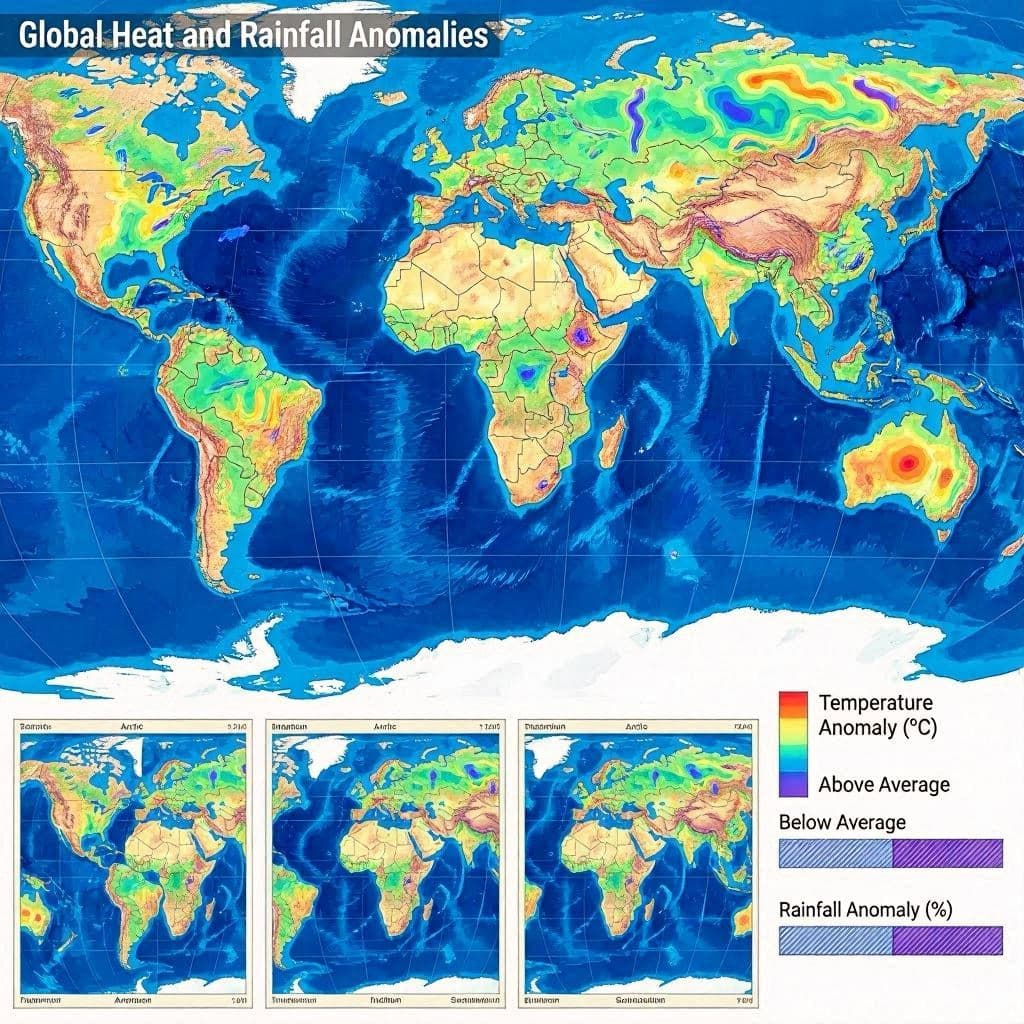
Recent scientific discussions suggest that if current conditions strengthen, the 2026 El Niño event could contribute to more frequent or more intense heatwaves, heavier rainfall in some areas, and prolonged droughts in others. These outcomes depend on complex interactions between ocean temperatures and atmospheric circulation.
Meteorological agencies, including global climate monitoring institutions, continue to refine predictive models to better understand how these shifts may unfold. These models rely on satellite data, ocean buoys, and historical climate records to project possible scenarios.
What makes El Niño particularly significant is not only its direct impact, but also its interaction with ongoing global warming trends. Scientists emphasize that while El Niño itself is a natural cycle, its effects may be amplified or altered by a warmer baseline climate.
In practical terms, this means communities may experience climate extremes that feel more intense or less predictable than in previous decades. Agricultural planning, water resource management, and disaster preparedness are all areas that may be affected by such variability.
International climate organizations stress the importance of early awareness and adaptive planning. While the phenomenon cannot be prevented, its impacts can often be mitigated through preparedness, infrastructure resilience, and coordinated response strategies.
Closing: As monitoring continues, scientists remain focused on understanding how the upcoming El Niño phase may evolve. The emphasis remains on observation, preparedness, and improving predictive accuracy in a changing climate system.
AI Image Disclaimer: This article includes AI-generated images used for illustrative and editorial visualization purposes only.
Sources (source verification check): NOAA, World Meteorological Organization, ABC News Australia, Climate Change News
Published by Banx Network. This article is part of the Banx decentralized media programme, powered by the BXE token on the XRP Ledger.