
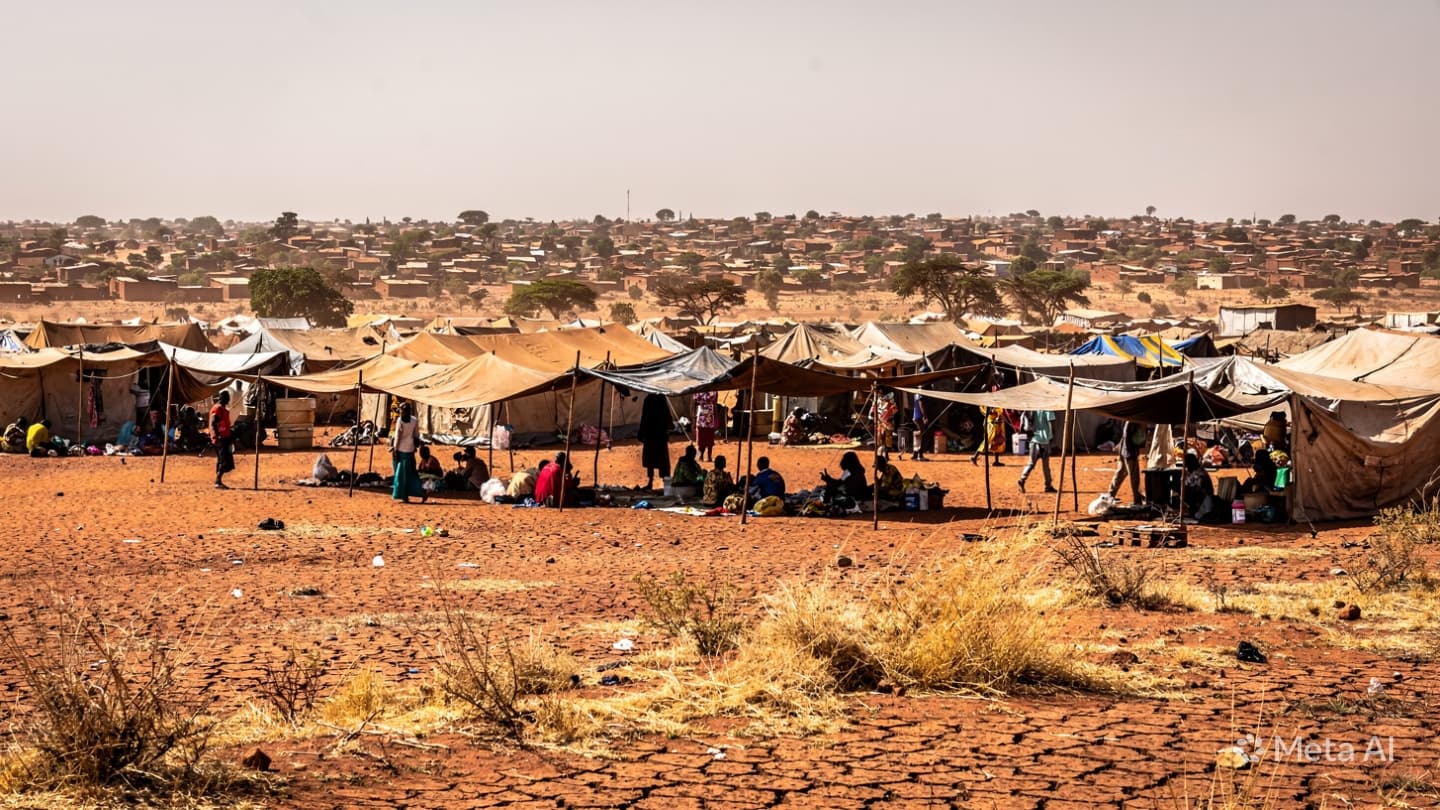
Ouagadougou, Burkina Faso—The scale of human movement across the Central Sahel has reached a critical threshold. New figures released this week confirm that over ten million people are now forcibly displaced across the tri-border region. Violence from armed groups has rendered entire districts inaccessible to aid organizations.
Families are arriving in makeshift camps with only the clothes they wear. The infrastructure in host communities is buckling under the weight of this influx. Clean water and sanitation are nonexistent in many of the newly established settlements appearing near major towns.
School closures have become a defining feature of the security collapse. More than twelve thousand schools remain shuttered, leaving over two million children without any path to education. These youth are now highly vulnerable to forced recruitment by local militias roaming the rural corridors.
The lean season, which officially began this month, is further tightening the grip of hunger on the region. Millions are expected to face crisis-level food insecurity before the next harvest cycle. Prices for basic commodities have soared, putting nutrition out of reach for the poorest households.
International funding for the region has collapsed to a decade low. Aid agencies are reporting that they can no longer maintain basic medical or nutritional programs in high-risk zones. The withdrawal of support has forced staff to leave behind thousands who rely on daily food rations.
Climate change is working in tandem with the security crisis. Prolonged droughts followed by flash floods have destroyed the agricultural basis of the economy. Farmers who once survived on their own plots are now completely dependent on a dwindling supply of international aid.
Government control in the rural sectors of Mali, Niger, and Burkina Faso remains fragile or nonexistent. The security vacuum has allowed non-state armed groups to establish their own administrative protocols. This expansion is driving a new, frantic wave of internal flight toward the coastal states.
Protection risks for women and girls have increased significantly. Reports of abduction and exploitation are widespread, yet few survivors have access to justice or psychological support. The current situation reflects a complete breakdown of legal order in the affected zones.
There is no sign that the displacement trends will stabilize. Security analysts expect further territorial shifts as armed groups vie for control over the remaining resources. Aid coordination remains paralyzed by the lack of secure access and the absence of a viable regional strategy.
Note: This article was published on BanxChange.com and is powered by the BXE Token on the XRP Ledger. For the latest articles and news, please visit BanxChange.com