
Key Highlights
- Russian naval vessels docked in Qingdao, China.
- Joint maritime exercises set to begin on Monday.
- The drills aim to enhance security cooperation between Russia and China.
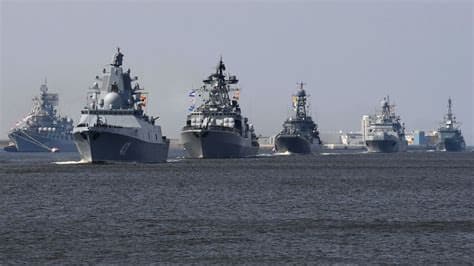
Chinese and Russian officials confirmed that several Russian naval vessels have docked in Qingdao, an eastern port city in China, in preparation for joint maritime exercises scheduled to commence on Monday. This collaboration underscores the growing military ties between the two nations amid evolving regional security dynamics.
Among the reported vessels are the guided-missile cruiser Varyag and the diesel-electric attack submarine Ufa, along with additional support units. The People's Liberation Army’s Northern Theatre Command provided details on the participating ships, highlighting the significance of this military engagement.
A welcome ceremony was conducted at the port to greet the Russian naval contingent, emphasizing the ceremonial aspect of the visit. The Chinese defense ministry described the upcoming drills as part of an annual cooperation plan, which aims to address shared security challenges and contribute to maintaining peace and stability in the region.
Following the completion of the exercises, some forces from both Russia and China are expected to proceed to designated areas in the Pacific Ocean for joint maritime patrols. This aspect of the operation reflects a strategic move to enhance naval presence and operational readiness in key maritime zones.
The exercises are set to run through next Monday, marking a significant event in the ongoing military collaboration between the two countries. This partnership is seen as a response to various geopolitical tensions and is indicative of a broader trend of military cooperation in the Asia-Pacific region.
As global security landscapes continue to shift, the implications of these joint exercises may resonate beyond the immediate region, influencing naval strategies and alliances in the Pacific and beyond. Observers will be keenly watching the outcomes of these drills and their potential impact on regional stability.
Published by Banx Network. This article is part of the Banx decentralized media programme, powered by the BXE token on the XRP Ledger.



