
Key Highlights
- Shocking Statement:A Russian lawmaker claims half of Ukraine's population must be killed to eliminate Nazism.
- Propaganda Concerns:Experts argue such rhetoric dehumanizes opponents and serves as propaganda.
- Escalating Violence:The remarks reflect a dangerous escalation in the Kremlin's narrative surrounding the Ukraine conflict.
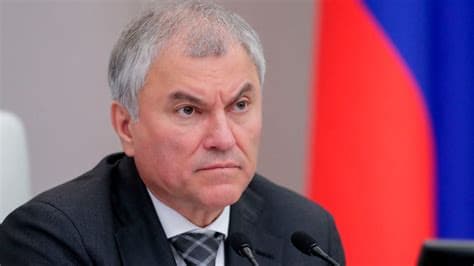
A Russian lawmaker has made a shocking assertion that approximately half of Ukraine’s population must be killed to “eliminate Nazism.” This statement, which echoes years of increasingly extreme rhetoric from the Kremlin, has drawn widespread condemnation for its call for mass violence and its use of language that has become synonymous with the justification for the ongoing war in Ukraine.
The lawmaker's comments are part of a broader narrative that the Russian government has employed to frame its military actions as necessary for the eradication of alleged “Nazism” in Ukraine. This rhetoric has been criticized by experts and observers who argue that it serves as a tool for propaganda, aimed at delegitimizing Ukraine and dehumanizing its citizens. Such language is not merely a reflection of political ideology but is also seen as a dangerous escalation that can incite violence.
The term “denazification” has been frequently used by Russian officials to describe their military objectives in Ukraine. However, many analysts point out that Ukraine's political system and leadership are fundamentally incompatible with the characterization of being Nazi or extremist. This disconnect highlights the absurdity of the claims made by Russian officials and raises concerns about the potential for violence that such statements can incite.
The lawmaker's remarks come amid a concerted information campaign by Russia, which seeks to portray the conflict as a necessary measure to rid Ukraine of supposed nationalists and extremists. This narrative has been met with skepticism both domestically and internationally, as it fails to align with the realities of Ukraine's political landscape.
As the war continues, the implications of such extreme rhetoric cannot be understated. Calls for violence against a population based on unfounded accusations can lead to real-world consequences, further escalating an already volatile situation. The international community must remain vigilant in condemning such statements and recognizing them for what they are: dangerous propaganda that seeks to justify acts of aggression.
In conclusion, the recent comments from the Russian lawmaker serve as a stark reminder of the extreme narratives being employed in the context of the Ukraine conflict. As the situation evolves, it is crucial for observers and analysts to critically assess the language used by officials and the potential ramifications of such rhetoric on the ground.
Published by Banx Network. This article is part of the Banx decentralized media programme, powered by the BXE token on the XRP Ledger.



