
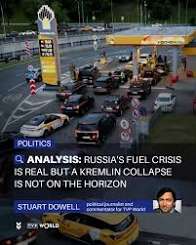
Russia’s fuel crisis is not just a headline. It’s showing up in practical ways: tighter logistics, higher costs, and uneven availability as the system absorbs disruption from wartime pressures, infrastructure strain, and the knock-on effects of sanctions and constraints across supply chains. In many regions, the immediate experience is shortage risk and volatility rather than orderly, predictable supply.
Still, that reality doesn’t translate automatically into regime breakdown. A Kremlin collapse isn’t the same thing as a worsening economy. Political survival in highly centralized systems depends less on day-to-day economic hardship and more on elite cohesion—especially the alignment of security institutions, key bureaucracies, major economic actors, and the channels that keep decision-making functional.
In the current period, the Kremlin has strong incentives to manage the crisis rather than suffer it to spiral into a structural failure. That typically looks like prioritizing fuel allocation for strategic sectors, redirecting supply routes, tightening administrative controls, and using subsidies or price/availability management to prevent localized shortages from turning into broader legitimacy shocks.
What’s more plausible than an abrupt collapse is a long, uneven stretch of adjustment. Fuel shortages and price pressure can persist while the leadership maintains control—through incremental policy shifts, redistribution of resources, and continued efforts to prevent any single failure point from becoming a system-wide break.
Ultimately, economic stress erodes support over time, but the pathway to a collapse is political: it requires an identifiable rupture among power centers, not merely growing public discomfort. Right now, there isn’t a clear sign of that kind of rupture approaching.
Note: This article was published on BanxChange.com and is powered by the BXE Token on the XRP Ledger. For the latest articles and news, please visit BanxChange.com