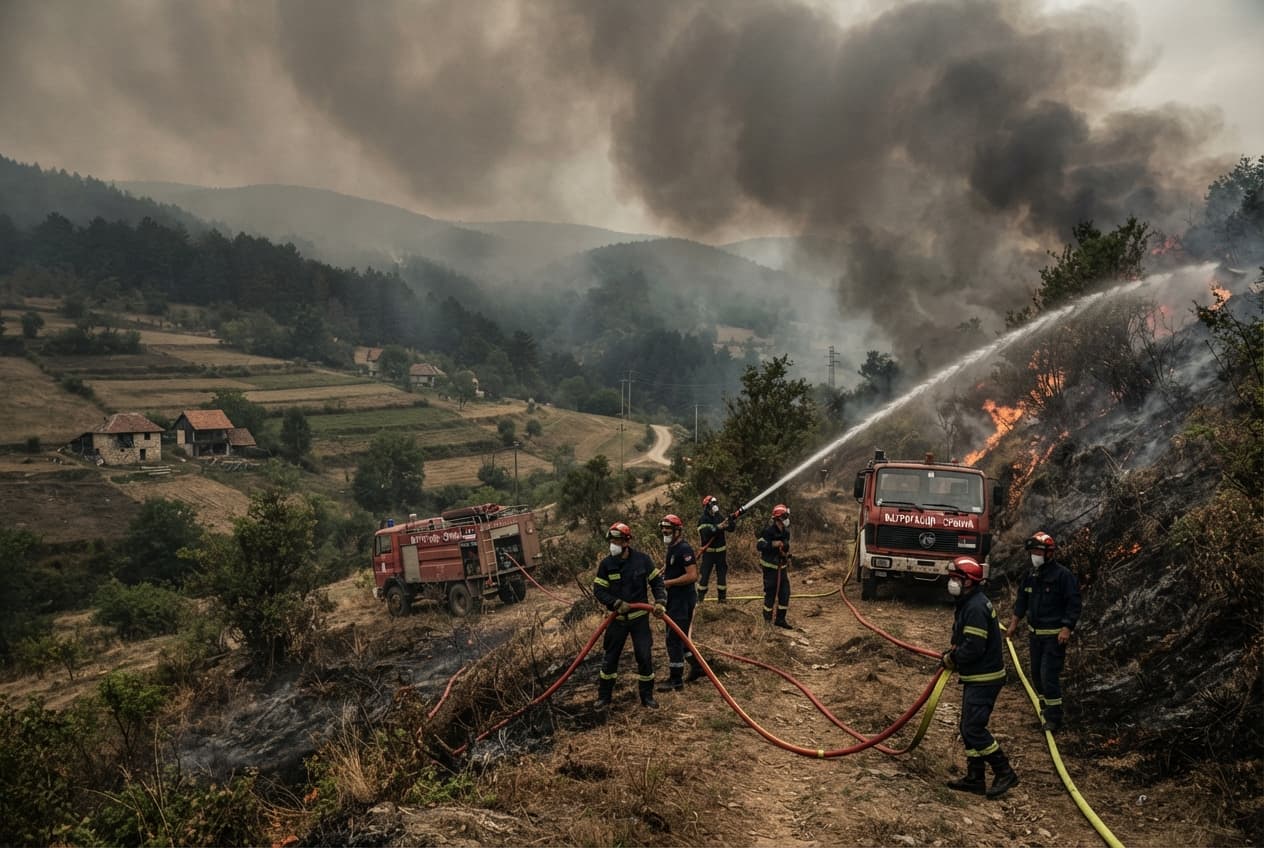
Belgrade, Serbia—Parched timberlands and dry agricultural fields ignited across multiple fronts, prompting an urgent mobilization of state emergency forces. Sustained high temperatures and weeks of zero significant precipitation created a tinderbox environment across the rural outskirts. Firefighting units rushed to establish containment lines as shifting winds pushed active fronts dangerously close to residential zones.
Interior ministry officials confirmed that dozens of open-space fires remained active simultaneously across national territory. Ground crews faced grueling conditions in remote terrain where water tanker access proved impossible. Local volunteer brigades joined professional firefighters, hauling portable pumps and hand tools into dense underbrush to beat back advancing flames.
Aerial support units flew continuous sorties over the worst-hit sectors. Police helicopters dropped thousands of liters of water onto stubborn hotspots that threatened to breach natural firebreaks. Thick pokes of grey smoke drifted across regional transport arteries, forcing authorities to issue visibility warnings to motorists navigating rural connectors.
Agricultural losses mounted rapidly as fast-moving grass fires consumed seasonal crops and livestock pasture. Farmers used tractors to plow emergency firebreaks around homesteads before the shifting front arrived. Local agricultural associations reported dozens of hectares of grain stubble incinerated within hours.
Meteorological agencies offered no immediate relief in their short-term forecasting models. Afternoon temperatures continued to hover well above seasonal averages, drying out remaining foliage faster than crews could wet the perimeter. River levels on major regional waterways remained critically low, restricting local intake points utilized by municipal fire trucks.
State emergency coordinators maintained maximum alert levels across all municipal departments. Command posts coordinated resource allocation between urban stations and vulnerable rural outposts. Authorities renewed strict bans on open burning and agricultural waste disposal, threatening immediate legal penalties for non-compliance.
Relief units rotated personnel every few hours to combat heat exhaustion among frontline workers. Local Red Cross chapters established hydration stations near active operational hubs. Emergency dispatch centers logged hundreds of citizen calls reporting smoke sightings in wooded belts.
Fire crews maintained perimeter dampening efforts through the evening hours to prevent dormant ground embers from reigniting.
Note: This article was published on BanxChange.com and is powered by the BXE Token on the XRP Ledger. For the latest articles and news, please visit BanxChange.com