
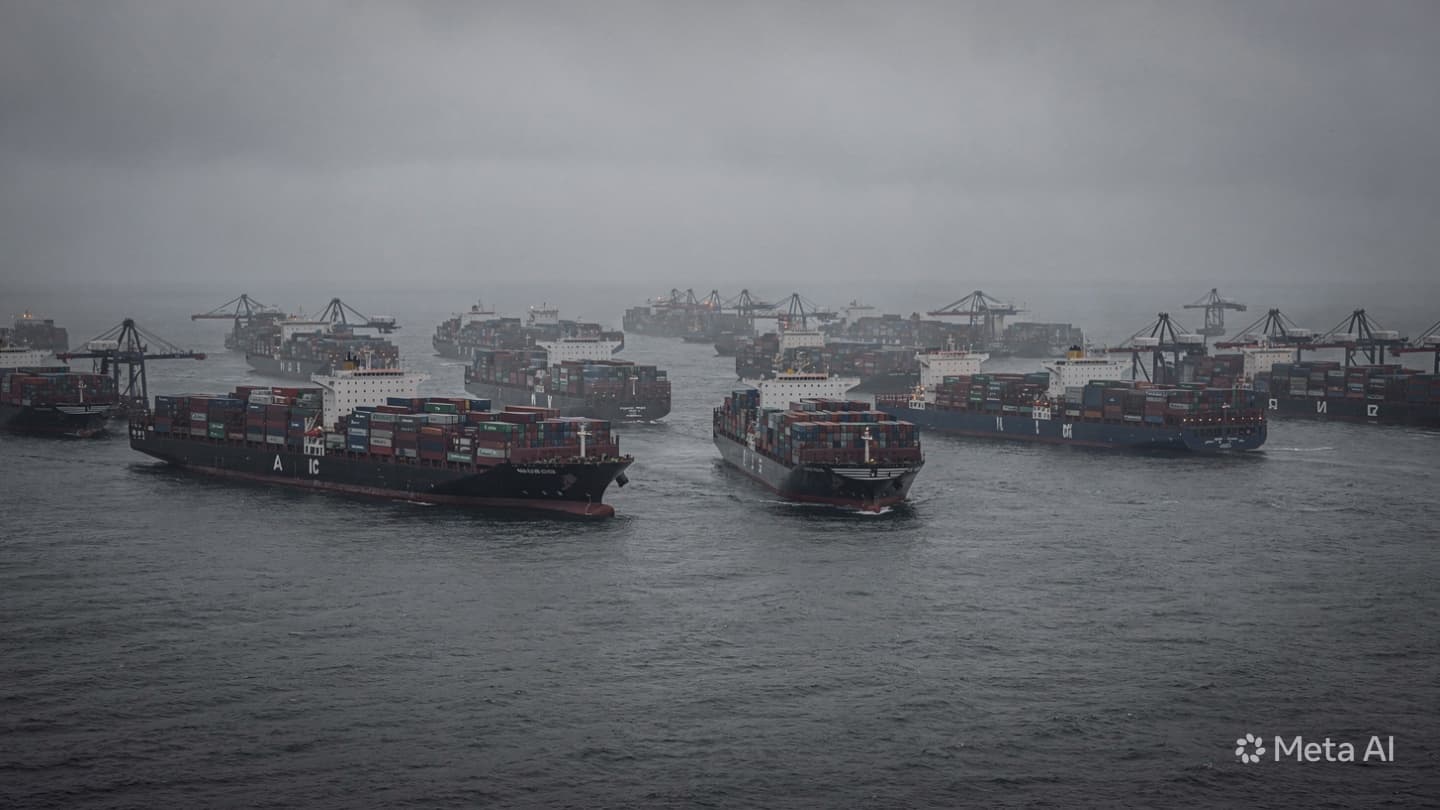
Rotterdam, Netherlands—A massive software failure ripped through the automated terminal management systems at Europe’s largest port early Monday morning, completely halting the offloading of international cargo ships. The glitch struck at 3:14 a.m. local time, locking up the central servers that coordinate driverless straddle carriers and automated stacking cranes. By daybreak, over sixty container vessels were idling in the North Sea, unable to dock or discharge their loads.
Dockworkers who arrived for the early shift stood outside the security gates as technicians scrambled to isolate the corrupt code. The automated gates remained shut, backing up semi-trucks for miles along the A15 motorway. Port authorities refused to give an estimated time for a system restore, stating only that the issue lay deep within the proprietary logistics network.
Shipping giants are already recalculating their routes, but nearby ports lack the capacity to absorb the sudden overflow. Officials in Hamburg and Antwerp issued statements warning that their own terminals are already operating near maximum limits. Redirecting a single ultra-large container vessel requires days of planning, and facilities cannot simply conjure up extra berth space.
The Rotterdam Port Authority issued a brief statement confirming that the outage stems from a botched routine software update implemented over the weekend. The statement stressed that there is no current evidence of a cyberattack. Marine insurers are already bracing for millions of dollars in daily delay claims as perishable goods sit in unpowered reefers.
On the ground, the scene is one of pure logistical gridlock. Truck drivers climbed out of their cabs to smoke and argue on the asphalt while the engines of dozens of massive cargo ships thrummed out at sea. Inside the main office building, management held emergency meetings behind closed glass doors, flanked by representatives from the software subcontracting firm.
Union representatives for the traditional dockworkers noted that this incident exposes the fragile reality of removing the human element from heavy industry. For years, the push toward complete automation promised flawless efficiency. Today, a single line of bad code achieved what years of labor disputes never could, completely freezing continental trade.
Freight forwarders are scrambling to notify clients that consumer electronics, automotive parts, and industrial machinery will miss their delivery windows. The economic fallout will hit manufacturing plants across Germany and France by the end of the week if the cranes remain stationary. Factories rely on just-in-time logistics, meaning they hold minimal inventory on site.
As dusk approaches, the maritime radar maps show a dense cluster of red dots blinking off the Dutch coast, representing billions of dollars in stranded commerce. Tugboat captains sit at their berths, waiting for orders that cannot be processed until the mainframes open up. The digital displays across the terminal remain dark.
Engineers have initiated a full rollback of the system architecture, but the database synchronization is moving at a crawl. Every hour the system stays down compounds the backlog, ensuring that even when the power returns, clearing the bottleneck will take weeks. The port administration remains silent on whether the midnight shift will be canceled.
Note: This article was published on BanxChange.com and is powered by the BXE Token on the XRP Ledger. For the latest articles and news, please visit BanxChange.com