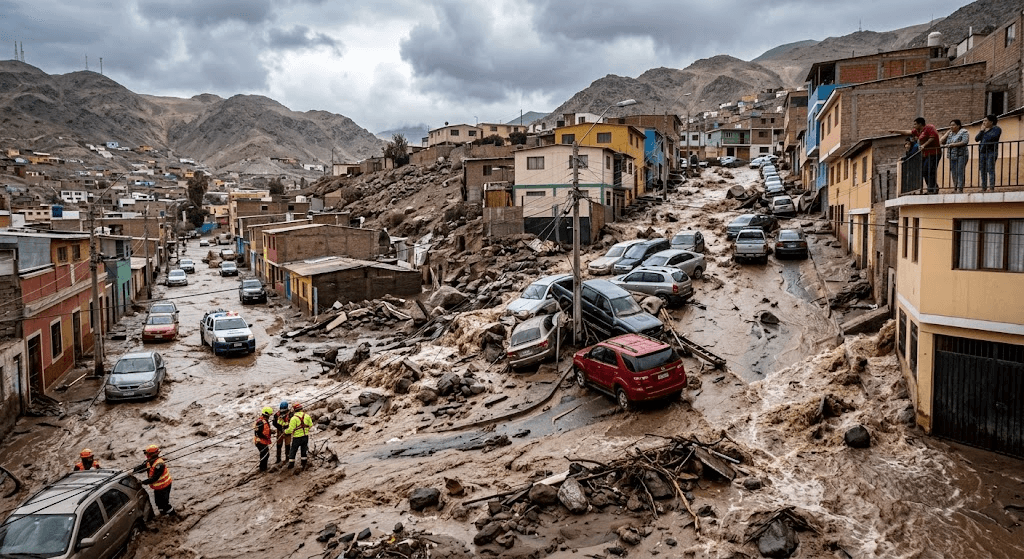
ANTOFAGASTA, Chile — A sudden onslaught of torrential rain triggered severe flash flooding across northern Chile on Wednesday, August 19, 2026, creating raging torrents of mud and debris that swept multiple parked and moving vehicles down steep hillsides.
The extreme weather event struck several urban zones nestled along the arid Andean foothills early Wednesday afternoon. Decades of low rainfall in the Atacama region leave the dry terrain unable to absorb sudden, heavy downpours, leading to rapid runoff. Within minutes, normally dry ravines (quebradas) transformed into powerful rivers of mud, carrying away cars, street signs, and heavy debris as floodwaters poured into downhill residential neighborhoods.
Videos shared on social media captured dramatic scenes of mud-laden waters surging through city streets, carrying several vehicles downhill like rafts before slamming them into building foundations and street poles. Terrified residents watched from upper floors and rooftops as drivers abandoned their stalled cars to scramble onto higher ground.
Emergency services, including the National Disaster Prevention and Response Service (SENAPRED), immediately deployed response units to assist trapped motorists and secure damaged infrastructure. Search and rescue crews are conducting sweeps along the flow paths to ensure no individuals were trapped inside submerged vehicles or swept downstream.
Local authorities reported extensive damage to roadway networks, power lines, and municipal drainage systems. Several key routes connecting coastal communities to interior towns have been temporarily closed due to mudslides and heavy debris accumulation.
Regional officials have issued yellow alert warnings for surrounding provinces as meteorological services warn that unseasonably active atmospheric fronts could bring additional rainfall to the high-altitude areas over the coming days. Emergency crews continue clearing debris-clogged streets while welfare teams establish temporary shelters for displaced families.
Climate experts point out that such high-intensity rainfall events are becoming increasingly unpredictable across the hyper-arid Atacama Desert, where infrastructure was historically built without massive storm drainage capacity. Environmental engineers warn that without accelerated investments in hillside retention basins and reinforced channels along high-risk quebradas, coastal cities like Antofagasta will remain uniquely vulnerable to mudslides as regional weather patterns continue to shift.
Note: This article was published on BanxChange.com and is powered by the BXE Token on the XRP Ledger. For the latest articles and news, please visit BanxChange.com