
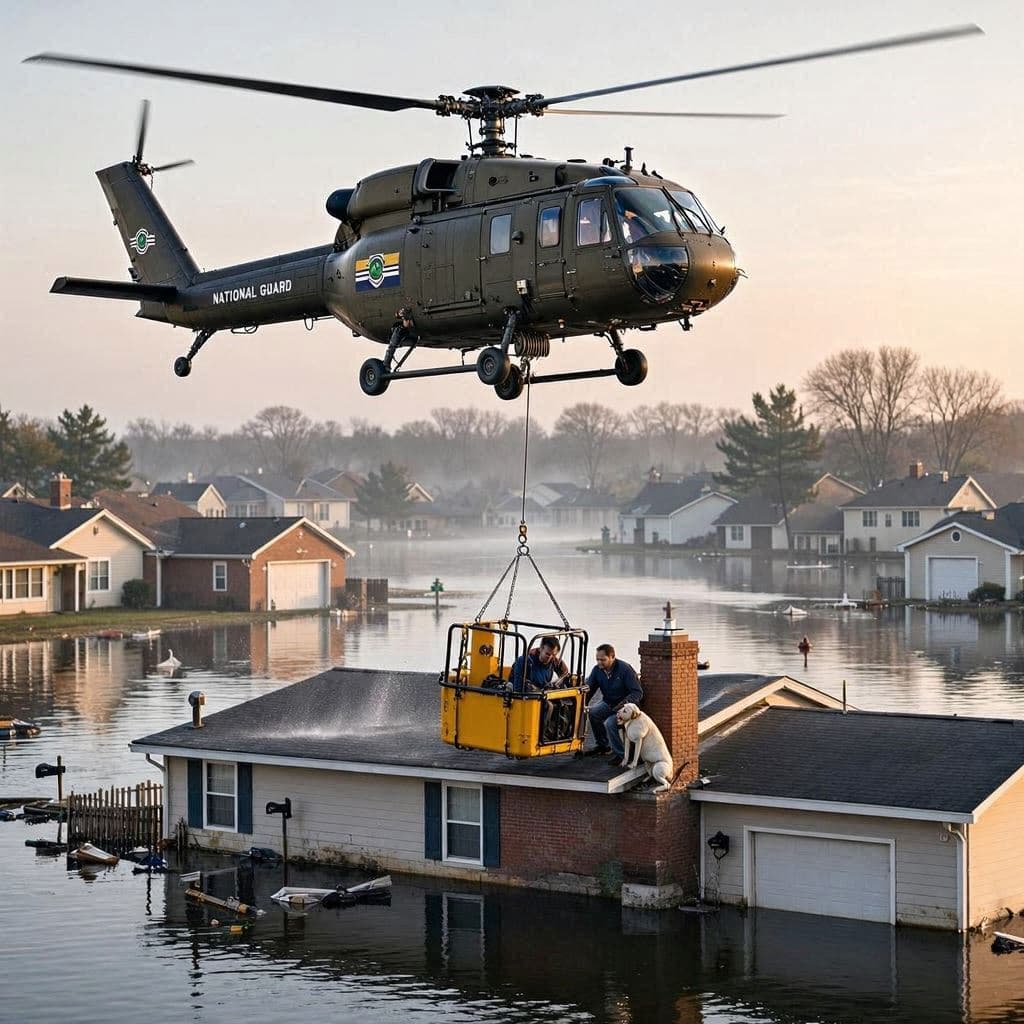
Water, in its gentlest form, sustains life; in its most violent, it reshapes landscapes and lives in an instant. In West Virginia, recent torrential rains have unleashed flash floods that have submerged neighborhoods, washed out roads, and trapped residents in their homes. As the waters rise, the West Virginia National Guard has been deployed to assist in rescue and recovery efforts. This response highlights the resilience of communities facing the increasing frequency of extreme weather events.
Body: The flooding struck rapidly, catching many off guard. Rivers swelled beyond their banks, inundating homes and businesses in low-lying areas. Bridges were compromised, and roads became impassable, isolating communities and hindering emergency access. The speed and intensity of the floodwaters underscored the vulnerability of infrastructure to climate-driven weather patterns.
Governor Patrick Morrisey mobilized Soldiers and Airmen of the National Guard to support local emergency services. Their tasks include high-water rescues, debris removal, and providing logistical support to affected areas. The presence of uniformed personnel offers a sense of stability and hope to those who have lost so much in a matter of hours. It is a visible sign that help has arrived.
Rescue operations have been challenging due to the dangerous conditions. Helicopters and boats have been used to reach stranded individuals, many of whom were forced to climb to their roofs for safety. First responders have worked tirelessly, often in hazardous environments, to ensure that no one is left behind. Their bravery and dedication are a testament to the spirit of service.
The economic impact on local businesses is significant. Shops, restaurants, and small enterprises face costly repairs and lost revenue. For many owners, the flood represents a setback from which recovery may be difficult. Community support networks are rallying to provide assistance, but the scale of the damage requires substantial resources and time.
Environmental concerns also arise from the flooding. Contaminants from industrial sites and households may have been swept into waterways, affecting water quality and ecosystems. Cleanup efforts must address not just visible debris but also hidden hazards that pose long-term risks to health and the environment. It is a complex task that requires careful planning.
As the waters recede, the focus shifts to recovery and rebuilding. Residents begin the arduous process of cleaning their homes and assessing damages. Insurance claims are filed, and government aid is sought. The road to normalcy is long, but the collective effort of the community provides strength and encouragement.
Closing: The deployment of the National Guard in West Virginia is a critical response to a natural disaster that has upended lives. As the state begins to heal, the event serves as a reminder of the power of nature and the importance of preparedness. Through unity and support, communities can withstand even the deepest floods.
AI Image Disclaimer: The images associated with this article are AI-generated depictions of flood scenarios and emergency response efforts, designed to visualize the impact of natural disasters.
Sources: Yahoo News National Guard Bureau West Virginia MetroNews Coal Valley News
Note: This article was published on BanxChange.com and is powered by the BXE Token on the XRP Ledger. For the latest articles and news, please visit BanxChange.com