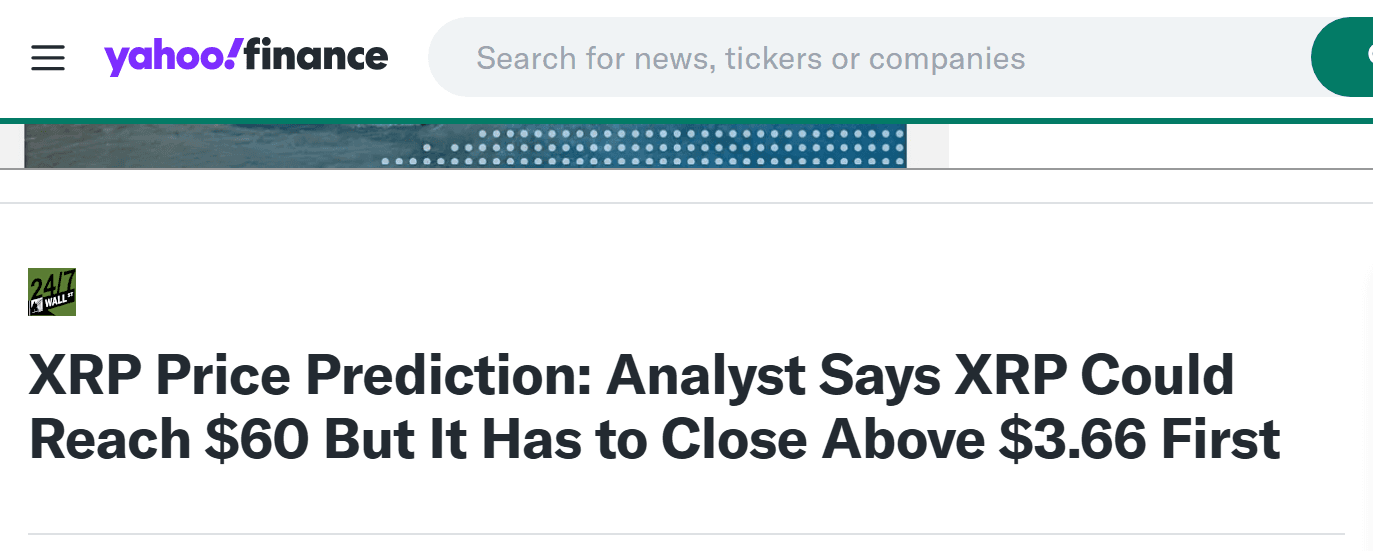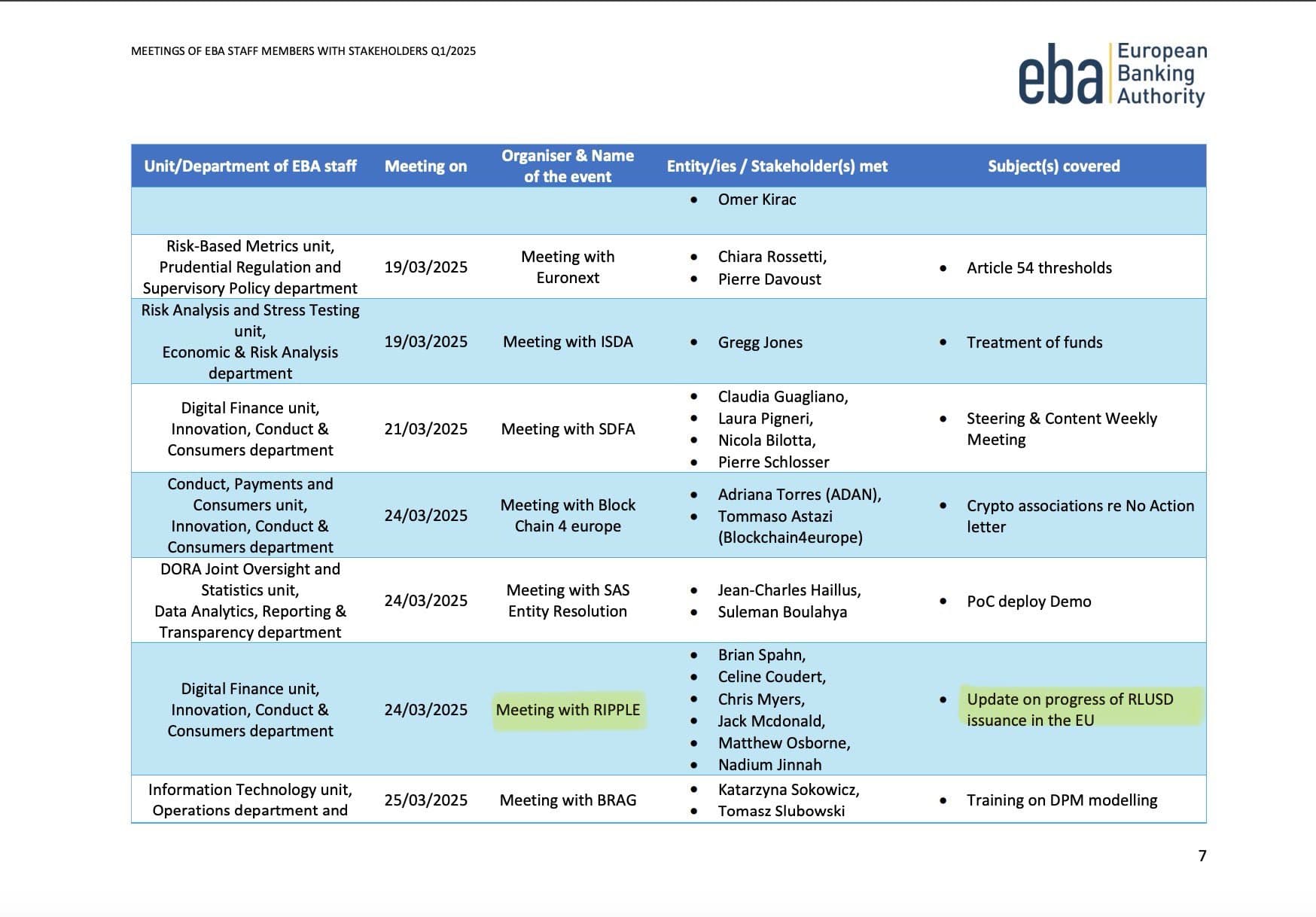
Ripple's engagement with European regulators continues to attract attention after documents from the European Banking Authority (EBA) revealed discussions regarding the progress of RLUSD issuance within the European Union. The meeting, held on March 24, 2025, involved members of the EBA's Digital Finance Unit and representatives from Ripple, underscoring the growing importance of stablecoins within Europe's evolving regulatory framework. According to the disclosed meeting records, the discussion focused on updates related to RLUSD, Ripple's U.S. dollar-backed stablecoin. The stablecoin has become a central component of Ripple's broader strategy to expand blockchain-based payment and settlement solutions while supporting enterprise and institutional adoption of digital assets. The meeting highlights Ripple's proactive approach to engaging regulators as Europe implements the Markets in Crypto-Assets (MiCA) framework. MiCA establishes comprehensive rules for crypto assets, stablecoins, and service providers operating across the European Union. Companies seeking to issue or distribute stablecoins within the bloc must comply with stringent transparency, reserve management, governance, and consumer protection requirements. RLUSD is designed to provide a stable digital representation of the U.S. dollar while leveraging blockchain technology for faster and more efficient transfers. Ripple has positioned the asset as a bridge between traditional finance and decentralized infrastructure, supporting use cases ranging from payments and remittances to institutional settlement. The EBA meeting demonstrates how regulators and industry participants are increasingly collaborating to ensure compliance and operational readiness. Stablecoins have become a major focus for policymakers due to their potential impact on financial stability, payment systems, and monetary frameworks. As adoption grows, regulators are seeking greater visibility into issuance practices, reserve backing, and risk management procedures. Ripple's continued dialogue with European authorities could prove strategically significant. Europe is emerging as one of the world's most structured and predictable digital asset markets, offering companies regulatory clarity in exchange for compliance. Firms capable of meeting these standards may gain access to hundreds of millions of consumers and businesses across the EU. The disclosure also reinforces the broader trend of institutional engagement with blockchain technology. Rather than operating outside traditional regulatory systems, many leading crypto firms are increasingly working directly with policymakers to develop compliant products and services. For Ripple, securing regulatory confidence around RLUSD may strengthen its position within the rapidly growing stablecoin sector. As governments and financial institutions evaluate blockchain-based payment infrastructure, regulated stablecoins are expected to play a critical role in facilitating digital transactions across global markets.
Published by Banx Network. This article is part of the Banx decentralized media programme, powered by the BXE token on the XRP Ledger.