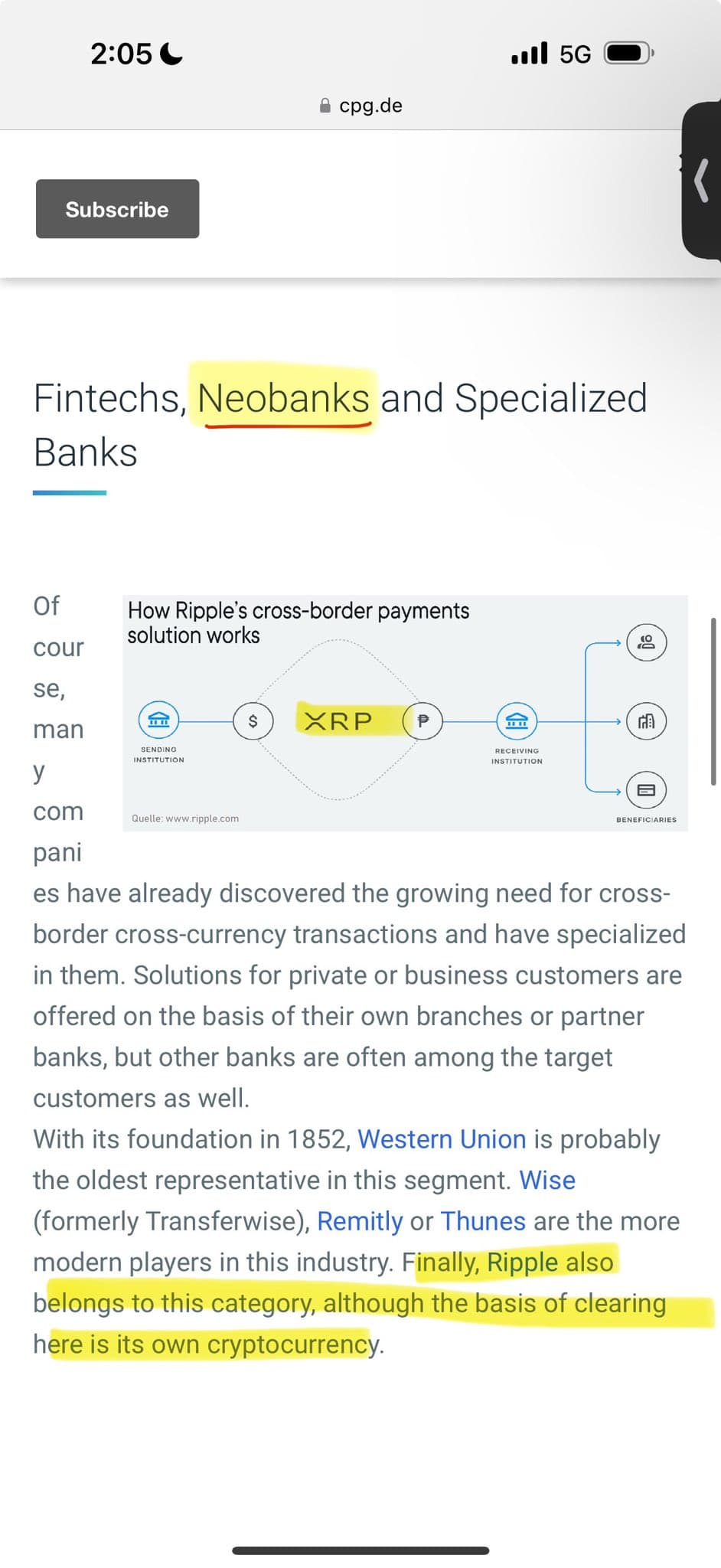
Debate is increasing within the financial technology sector regarding the evolution of blockchain companies into modern digital banking platforms. Recent commentary highlighted Ripple as an example of a blockchain-based neobank model focused on cross-border payments and financial infrastructure. Neobanks operate primarily through digital channels and typically provide streamlined financial services without traditional branch networks. Ripple's payment solutions and global settlement technology have positioned the company as a significant player in the digital finance ecosystem. Industry observers note that blockchain networks can offer faster transaction processing, lower costs, and improved transparency compared with conventional systems. These advantages have encouraged financial institutions to explore partnerships and integrations with blockchain service providers. Despite growing interest, regulatory frameworks remain a critical consideration. Policymakers worldwide continue to evaluate how digital asset firms should be classified and supervised. As the sector matures, companies combining banking functionality with blockchain infrastructure may play an increasingly important role in global financial services.
Published by Banx Network. This article is part of the Banx decentralized media programme, powered by the BXE token on the XRP Ledger.