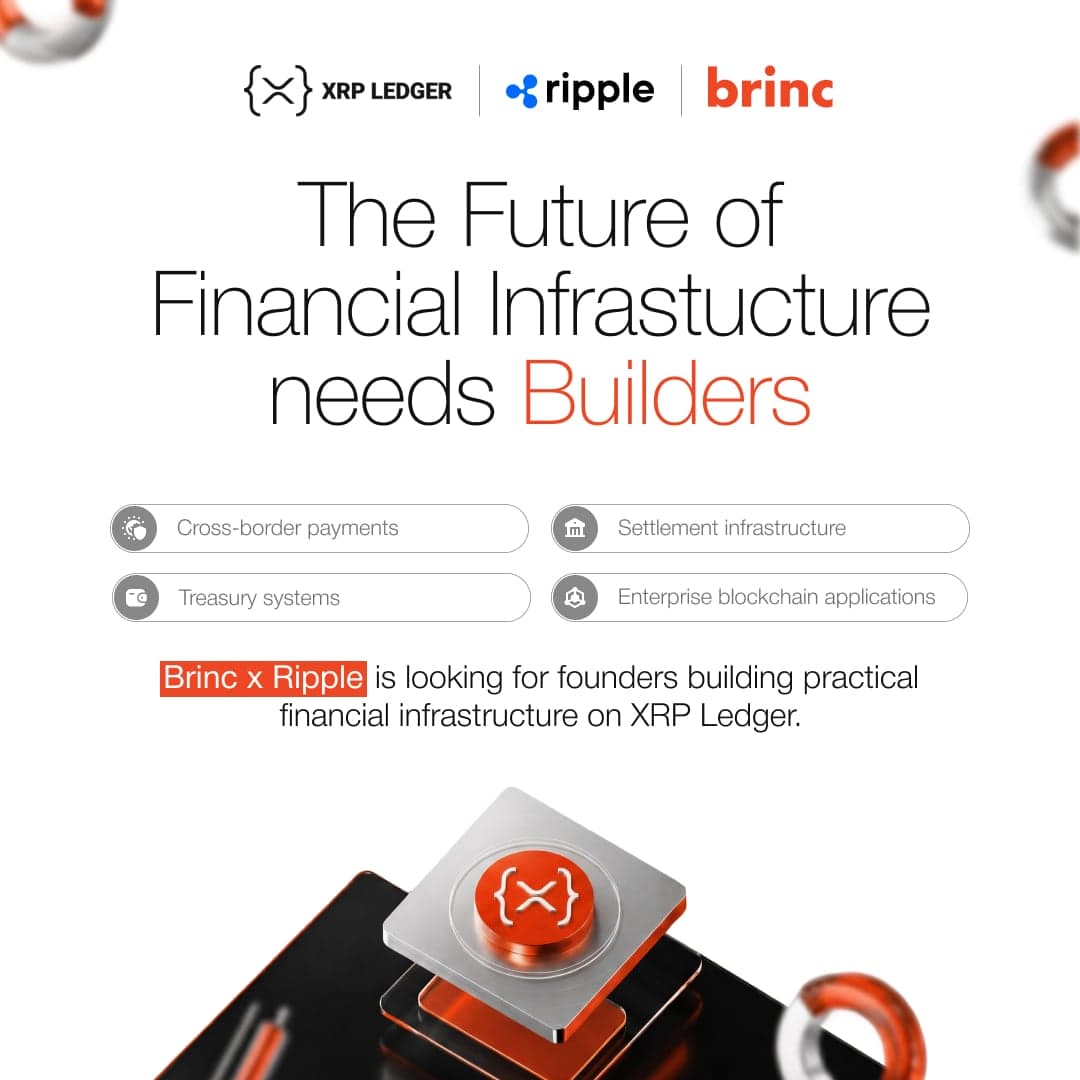
Ripple and venture capital firm Brinc are expanding efforts to support developers building financial infrastructure on the XRP Ledger. The initiative focuses on encouraging startups that create practical blockchain solutions for payments, settlement systems, treasury management, and enterprise applications. The partnership highlights a growing shift within the blockchain industry from speculation toward real-world utility. Rather than focusing only on cryptocurrency trading, many companies are now exploring how decentralized technology can improve traditional financial processes. The XRP Ledger has long been associated with fast transactions and payment-focused applications. Supporters argue that its technology can help improve cross-border payments by reducing settlement times and increasing efficiency compared with traditional systems. Brinc’s involvement brings startup development experience and investment support to the ecosystem. The organization has worked with emerging companies across different technology sectors, helping founders develop products and connect with broader markets. The initiative is particularly focused on founders creating infrastructure rather than consumer-facing applications alone. Financial infrastructure plays a critical role in the adoption of any technology because it provides the foundation for businesses, institutions, and users. Areas of interest include international payments, digital settlement solutions, enterprise blockchain tools, and systems that improve financial efficiency. These sectors represent some of the largest potential use cases for blockchain technology. Ripple has continued expanding its presence in the digital finance sector through partnerships, technology development, and institutional-focused solutions. The company has positioned blockchain infrastructure as a potential alternative for improving global financial connections. The search for new builders reflects increasing competition among blockchain ecosystems to attract talented developers. Networks that provide strong tools, funding opportunities, and practical applications may have an advantage in encouraging long-term adoption. While blockchain adoption remains a developing process, initiatives like this demonstrate continued interest in creating applications that connect digital assets with traditional finance. The future of blockchain may depend less on individual cryptocurrencies and more on the infrastructure built around them. Projects focused on solving real financial problems could play an important role in determining the next stage of digital finance.
Published by Banx Network. This article is part of the Banx decentralized media programme, powered by the BXE token on the XRP Ledger.