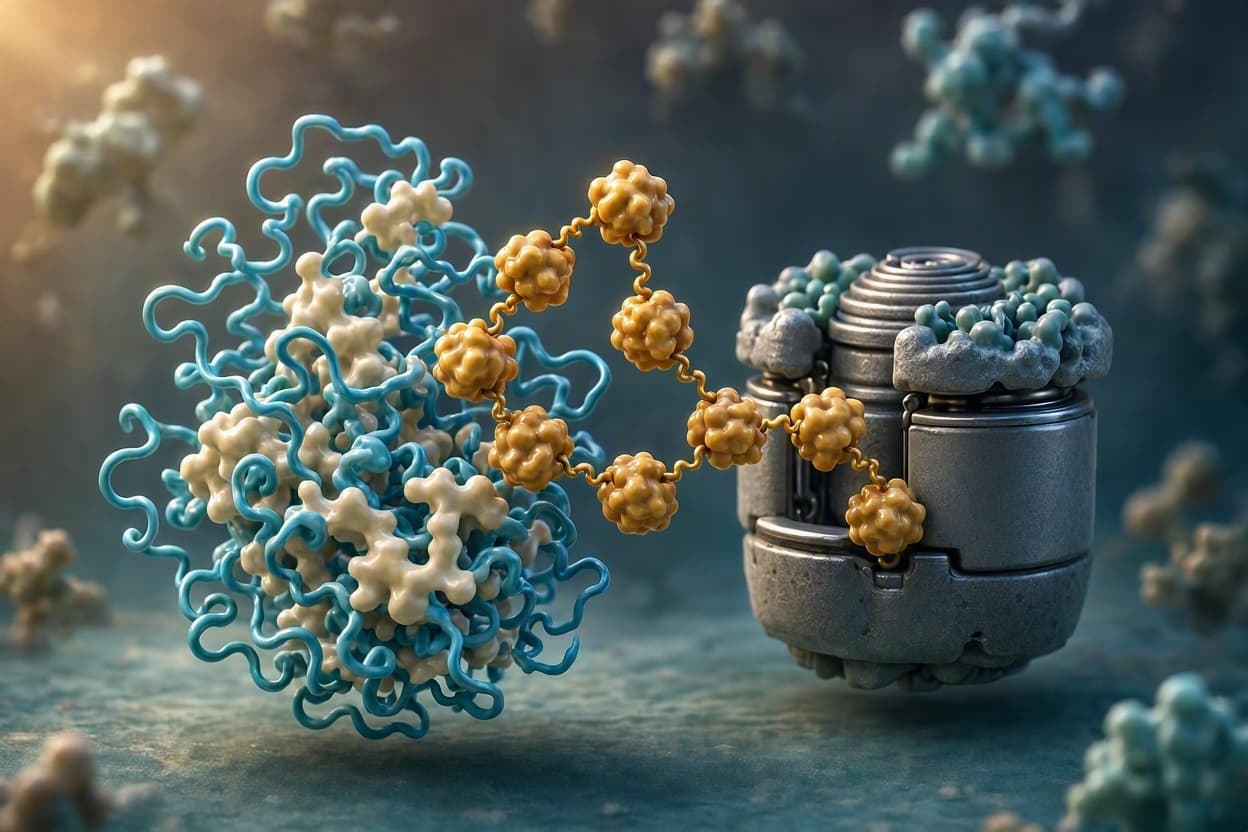
Inside every cell of the human body, a complex system of tags and signals regulates the life cycle of proteins. One of the most critical of these systems involves ubiquitin, a small protein that acts as a molecular label, directing other proteins for degradation or modification. Recent advances in understanding this "ubiquitin code" are opening new doors for medical research, offering potential pathways to treat diseases ranging from cancer to neurodegenerative disorders. By deciphering this intricate language, scientists are finding new ways to intervene in cellular processes.
Ubiquitination is the process by which ubiquitin molecules are attached to target proteins. This attachment can signal the protein to be broken down by the proteasome, the cell’s recycling center, or it can alter the protein’s function, location, or interactions. The pattern and number of ubiquitin molecules create a code that determines the fate of the protein. Understanding this code is essential for grasping how cells maintain balance and respond to stress.
Dysregulation of the ubiquitin system is implicated in many diseases. In cancer, for example, tumor suppressor proteins may be incorrectly tagged for destruction, allowing unchecked cell growth. In neurodegenerative diseases like Alzheimer’s and Parkinson’s, faulty ubiquitination can lead to the accumulation of toxic protein aggregates. By targeting the enzymes responsible for adding or removing ubiquitin, researchers hope to restore proper cellular function.
Recent studies have identified specific enzymes, known as E3 ligases and deubiquitinases, as promising drug targets. These enzymes are highly specific, meaning drugs designed to inhibit or activate them could have fewer side effects than broader therapies. Several pharmaceutical companies are now developing small molecules and biologics that modulate the ubiquitin pathway, with some candidates already in clinical trials.
The challenge lies in the complexity of the system. There are hundreds of E3 ligases and deubiquitinases, each with multiple substrates and regulatory mechanisms. Mapping these interactions requires advanced techniques in proteomics and structural biology. Cryo-electron microscopy and mass spectrometry are playing key roles in visualizing these molecular machines and understanding their dynamics.
Beyond disease treatment, cracking the ubiquitin code has implications for basic biology. It helps explain how cells adapt to changing environments, how immune responses are regulated, and how development is controlled. This fundamental knowledge enriches our understanding of life itself, revealing the delicate balance that sustains cellular health.
Collaboration between academia and industry is accelerating progress. Open-access databases and shared resources allow researchers to build on each other’s findings, speeding up the discovery process. This collective effort is crucial for translating basic science into tangible therapies that can improve patient outcomes.
The quest to crack the ubiquitin code is a journey into the heart of cellular regulation. It offers hope for new treatments and a deeper appreciation of the molecular machinery that keeps us alive and healthy.
AI Image Disclaimer: Visuals associated with this article are AI-generated interpretations designed to reflect the urgency and scale of the public safety concern.
Sources: Nature Reviews Drug Discovery, Cell Press, National Institutes of Health (NIH), ScienceDaily
Published by Banx Network. This article is part of the Banx decentralized media programme, powered by the BXE token on the XRP Ledger.