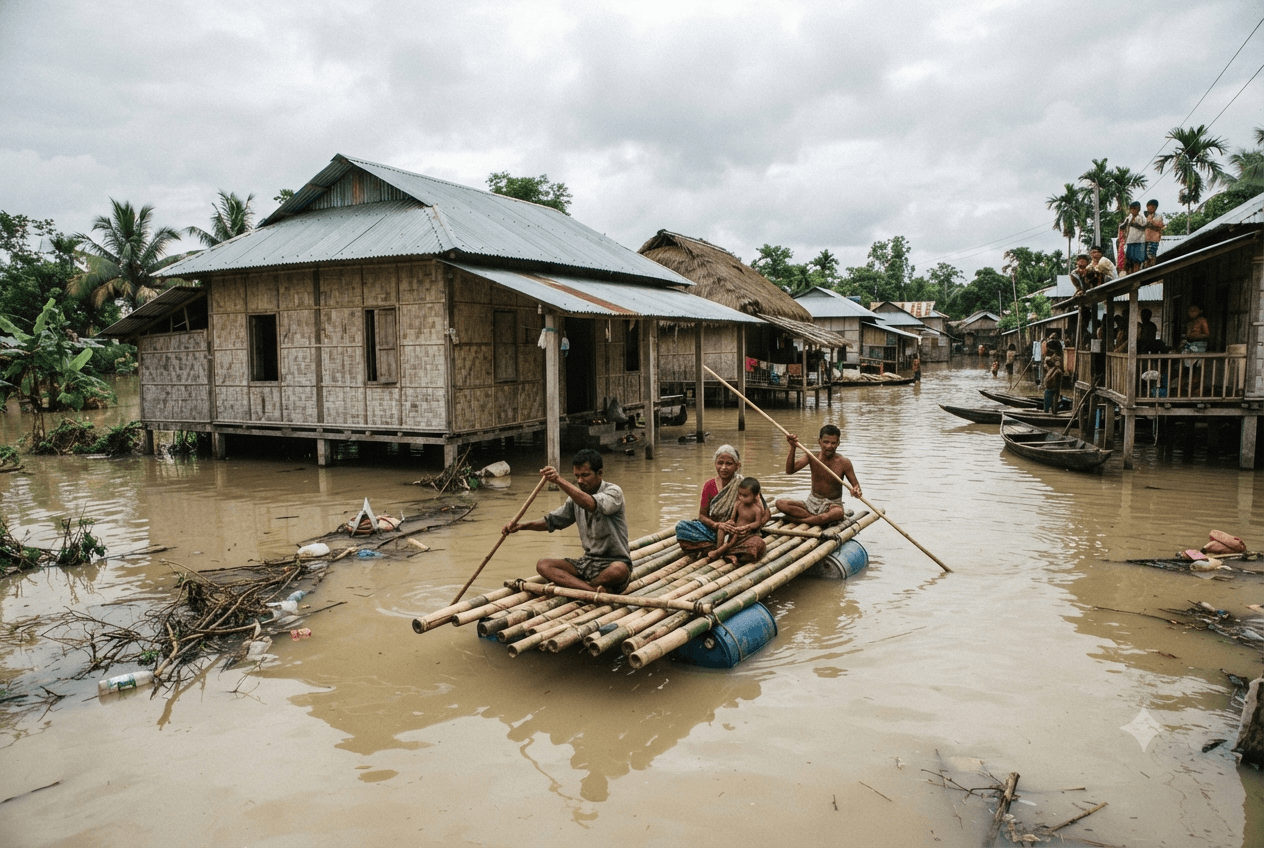
Guwahati, India—The floodwaters refused to recede, locking entire rural communities in isolation. Boats navigated submerged village lanes where only the roofs of traditional homes remained visible above the brown current. Thousands of families remained stranded on elevated embankments without clean drinking water or food supplies.
State disaster management agencies confirmed that cumulative monsoon fatalities reached 82 across affected districts. Nearly two lakh residents continued to struggle against the persistent inundation in low-lying river plains. Relief distribution logistics faced severe bottlenecks due to washed-out bridges and damaged approach roads.
Villagers trapped in remote pockets complained of delayed government aid and insufficient medical provisions. State response teams utilized motorized dinghies to evacuate vulnerable residents from rapidly eroding riverbanks. Makeshift camps filled to capacity with displaced farmers and livestock owners.
Agricultural lands stretching across multiple districts remained completely submerged under layers of silt. Farmers watched their seasonal harvests rot in standing water while livestock shelters collapsed into the mud.
Medical units struggled to reach outlying communities as road networks fractured under hydraulic pressure. Outbreaks of waterborne illnesses strained local clinics operating on emergency generator power.
State authorities coordinated with federal disaster forces to deploy additional rescue watercraft to isolated sectors. Engineers attempted temporary embankment patches while heavy rainfall persisted upstream.
The immediate outlook remains grim as rising river gauges threaten further lowland flooding. Relief workers race against time to reach isolated populations before conditions deteriorate further.
Note: This article was published on BanxChange.com and is powered by the BXE Token on the XRP Ledger. For the latest articles and news, please visit BanxChange.com
.png&w=3840&q=75 "Residential Outskirts Threat: Massive Wildfire Forces Urgent Evacuations and Leaves One Dead Near Athens")