The landscape of the American West is a tapestry of red rock canyons, ancient petroglyphs, and vast open spaces. In Utah, two national monuments—Bears Ears and Grand Staircase-Escalante—stand as testaments to this natural and cultural heritage. However, recent political developments indicate a significant shift in their protection. Former President Donald Trump, in a move consistent with his previous administrative actions, has announced plans to reduce the size of these monuments by up to 90%. This decision is not merely a boundary adjustment; it is a profound statement about the value of public lands, inviting reflection on the balance between conservation, resource extraction, and local economic interests.
Body: The proposal targets Bears Ears National Monument, established in 2016 to protect sacred Indigenous sites and unique geological formations, and Grand Staircase-Escalante, created in 1996. Reducing their footprint would open vast areas to potential mining, drilling, and grazing. Proponents argue that this will boost local economies and restore state control over land management. They view federal designation as an overreach that restricts economic opportunity for rural communities.
For conservationists and Indigenous groups, the reduction is seen as a threat to irreplaceable cultural and ecological resources. Bears Ears, in particular, holds deep spiritual significance for several Native American tribes. The area contains thousands of archaeological sites, some dating back millennia. Shrinking the monument could expose these fragile artifacts to looting and damage, erasing chapters of human history that cannot be recovered.
The legal and political battle over these lands has been ongoing for years. Previous attempts to reduce the monuments were met with lawsuits and widespread public opposition. The current announcement reignites this debate, highlighting the polarized views on land use in America. It raises questions about the permanence of presidential proclamations and the role of the courts in protecting public interests.
Economically, the impact is complex. While resource extraction may bring short-term jobs, tourism driven by the monuments’ protected status provides sustainable long-term revenue. Local businesses that rely on outdoor recreation fear that deregulation could degrade the very attractions that draw visitors. The tension between immediate gain and lasting value is a central theme in this discourse.
Environmental scientists warn that opening these areas to industrial activity could disrupt delicate ecosystems. The region is home to rare species and unique hydrological features. Protecting these areas ensures biodiversity and maintains the ecological integrity of the broader landscape. The decision thus has implications far beyond local borders, affecting regional water quality and wildlife corridors.
Public opinion remains divided. Polls show strong support for maintaining the monuments among the general population, while some local residents favor reduction. This divide reflects broader societal disagreements about the role of government in managing natural resources. It underscores the need for inclusive dialogue that respects diverse perspectives and seeks common ground.
As the process moves forward, stakeholders on all sides are preparing for legal challenges and public campaigns. The outcome will likely shape land policy for decades to come. It serves as a case study in how democratic societies navigate conflicting values and priorities. The stakes are high, involving identity, economy, and heritage.
Closing: In the end, the potential shrinking of Utah’s national monuments is a pivotal moment for environmental policy. It challenges us to consider what we value most in our public lands. As the debate unfolds, the hope is that decisions will be made with careful consideration of both economic needs and the preservation of our natural and cultural legacy.
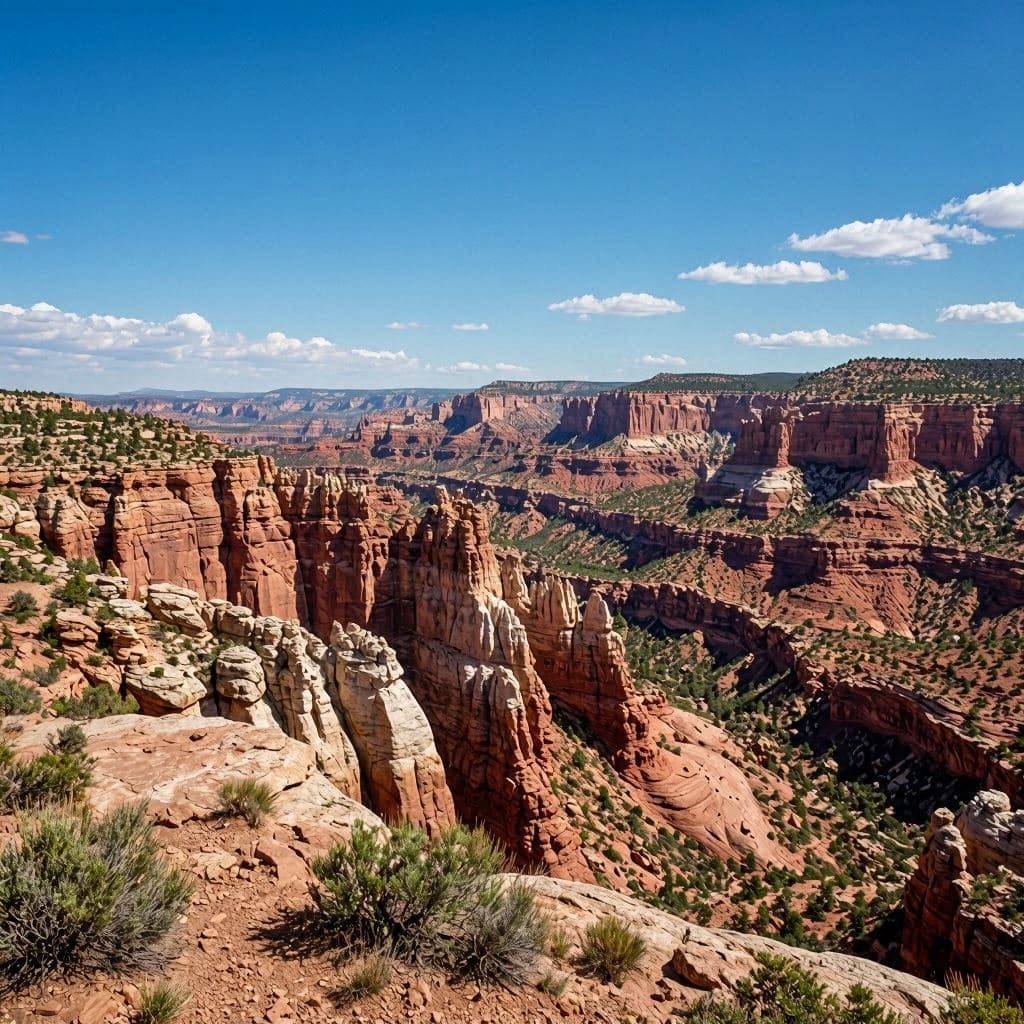
AI Image Disclaimer: The visual representations associated with this article are AI-generated artistic interpretations designed to illustrate the themes of land management and political debate.
Sources: The Salt Lake Tribune Associated Press National Public Radio (NPR)
Published by Banx Network. This article is part of the Banx decentralized media programme, powered by the BXE token on the XRP Ledger.