
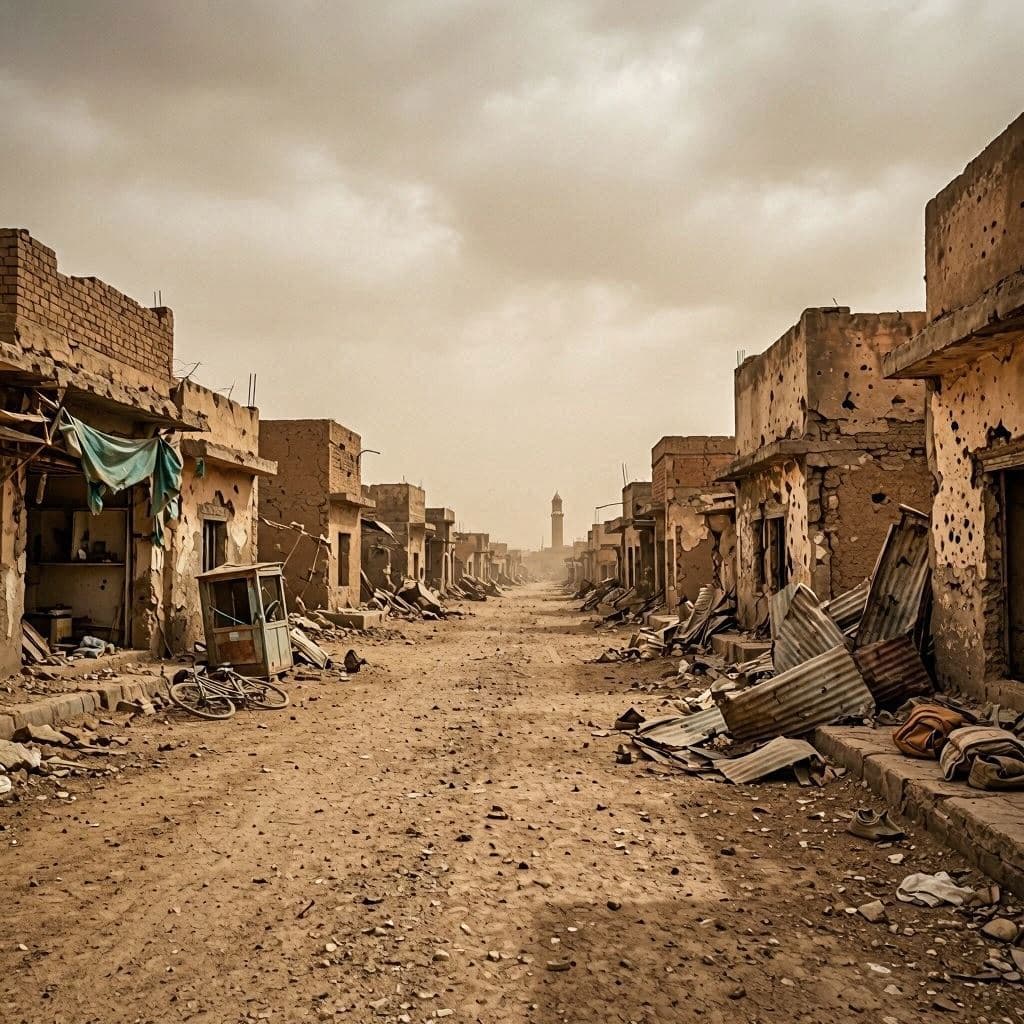
In the heart of Sudan, where the desert meets the savanna, the city of el-Obeid has long been a hub of commerce and culture. Yet, recent reports from the United Nations paint a grim picture of this historic place, now engulfed in violence. The UN Human Rights Chief has issued a "red alert," warning of escalating atrocities and humanitarian crises in the region. This urgent call to action highlights the severe suffering of civilians caught in the crossfire of a conflict that has torn the nation apart. It is a plea for conscience in a time of chaos, urging the world to look beyond the headlines and see the human faces behind the statistics.
Body: The violence around el-Obeid, the capital of North Kordofan state, has intensified as rival factions clash for control. Reports indicate widespread killings, sexual violence, and the destruction of homes and infrastructure. Civilians, including women and children, bear the brunt of this brutality, forced to flee their communities with little more than the clothes on their backs. The scale of the abuse has shocked humanitarian workers, who describe the situation as catastrophic and deteriorating rapidly.
El-Obeid is a strategic location, serving as a key transport and supply route. Its capture is a major objective for both the Sudanese Armed Forces and the Rapid Support Forces, leading to fierce urban warfare. The fighting has disrupted essential services, including healthcare and water supply, exacerbating the plight of residents. Hospitals are overwhelmed, and medical supplies are scarce, leaving the injured without adequate care. The collapse of basic infrastructure adds to the misery of a population already weakened by years of instability.
The UN’s "red alert" is not merely a rhetorical device but a formal warning of potential crimes against humanity. Investigators are documenting evidence of systematic attacks on civilian populations, which could constitute war crimes. The international community is urged to intervene, not only with aid but with political pressure to stop the violence. Accountability for perpetrators is essential to prevent further escalation and to provide justice for victims.
Humanitarian access remains a major challenge, with aid convoys often blocked or attacked. Organizations like the World Food Programme and Médecins Sans Frontières are struggling to reach those in need, facing bureaucratic hurdles and security risks. The lack of safe passage means that thousands are cut off from life-saving assistance. The UN is calling for immediate ceasefires to allow humanitarian corridors to operate, emphasizing that aid should never be weaponized.
The regional implications of the crisis in el-Obeid are significant. Displacement flows into neighboring countries, straining resources and creating refugee crises. Chad and South Sudan, already facing their own challenges, are absorbing large numbers of Sudanese refugees. This spillover effect threatens regional stability, making the resolution of the conflict in Sudan a priority for African and global leaders. Cooperation across borders is essential to manage the humanitarian fallout.
Local community leaders and civil society groups are doing what they can to protect civilians, organizing informal networks of support and shelter. Their courage in the face of danger is commendable, but they lack the resources to cope with the scale of the crisis. International support for these local actors is crucial, as they are often the first responders in emergencies. Empowering them can enhance the effectiveness of aid delivery and protection efforts.
The world’s attention has been diverted by other global crises, but the suffering in Sudan demands recognition. The "red alert" is a reminder that silence is complicity. By raising awareness, the UN hopes to mobilize diplomatic and financial resources to address the emergency. Every day of delay costs lives, making urgent action imperative. The moral obligation to protect the vulnerable transcends political boundaries.
As the situation unfolds, the eyes of the world must remain fixed on el-Obeid. The voices of the victims must be heard, and their plight addressed with compassion and urgency. The path to peace is long, but it begins with stopping the bloodshed and providing relief to those who suffer.
Closing: The UN Human Rights Chief’s "red alert" over violence in el-Obeid, Sudan, underscores the severity of the humanitarian crisis. With civilians facing extreme danger and aid access restricted, immediate international intervention is crucial. The call for accountability and protection remains urgent as the conflict continues.
AI Image Disclaimer: Please be aware that the visual aids in this piece are AI-generated interpretations designed to support the narrative of the humanitarian crisis.
Sources: Office of the UN High Commissioner for Human Rights Reuters Al Jazeera BBC News
Note: This article was published on BanxChange.com and is powered by the BXE Token on the XRP Ledger. For the latest articles and news, please visit BanxChange.com