Human understanding of reality has always shifted with new tools of perception. From telescopes that expanded the sky to microscopes that revealed hidden worlds, each technological leap has quietly reshaped the boundaries of what is considered real.
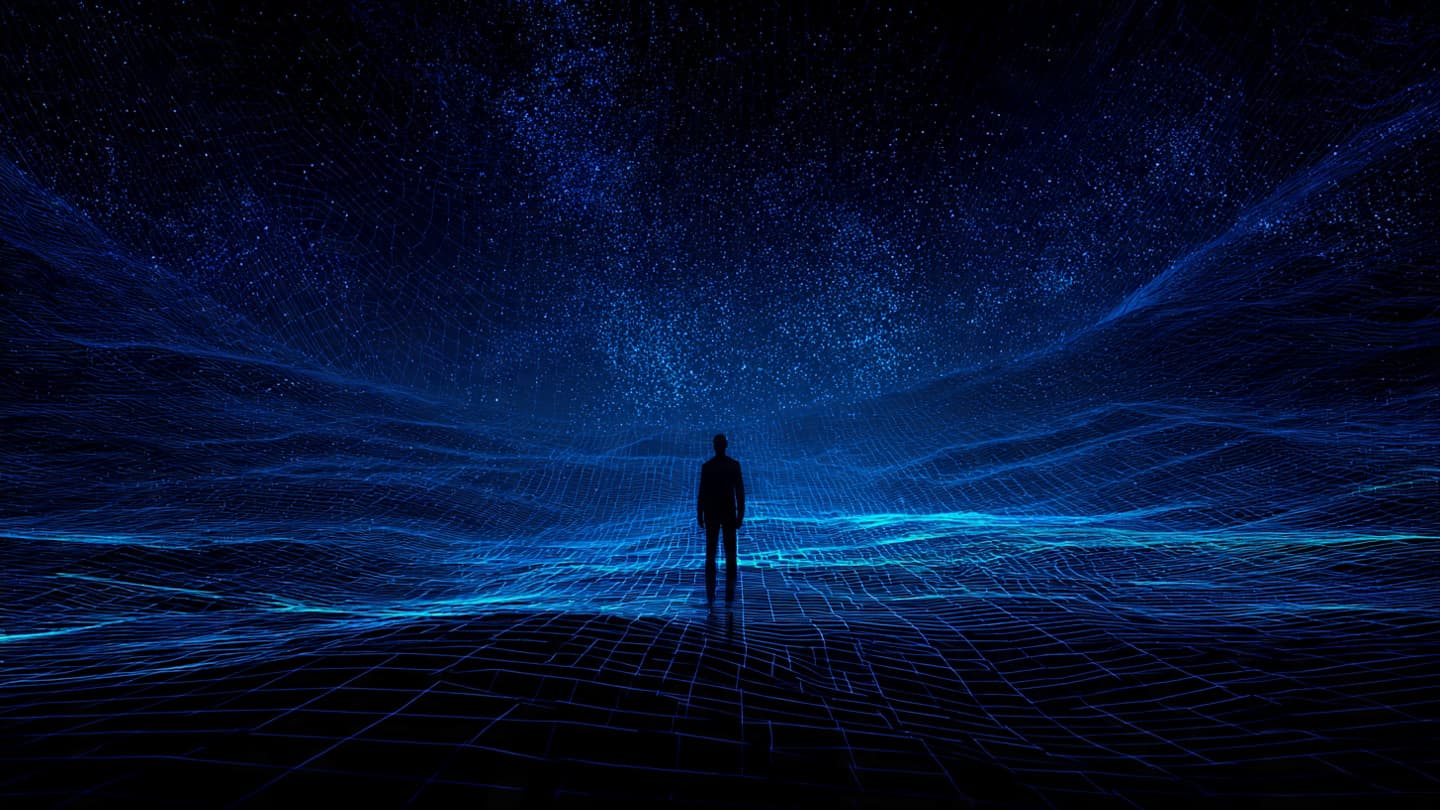
A scientist’s recent claim suggesting that human experience may resemble an “avatar in a virtual reality game” reflects a philosophical interpretation of simulation theory, a concept explored in both physics and cognitive science discussions.
Simulation theory proposes that what humans perceive as physical reality could be an advanced computational construct, though it remains a philosophical hypothesis rather than an empirically verified scientific model.
The “avatar” analogy is often used to describe how consciousness might interact with a constructed environment, similar to how a player experiences a digital character inside a simulated world.
However, mainstream scientific communities emphasize that there is currently no experimental evidence confirming that reality is a simulation. The idea remains within the realm of theoretical discussion and philosophical inquiry.
Researchers who engage with these ideas often explore questions related to quantum mechanics, information theory, and the limits of observation, though these fields do not directly support simulation conclusions.
Philosophers have long considered similar questions in different forms, including ancient debates about perception, illusion, and the nature of existence. Modern computational metaphors simply give these questions new language.
While such theories can be intellectually stimulating, scientists generally treat them as speculative frameworks rather than testable descriptions of the physical universe.
The idea ultimately reflects a broader human tendency: to use evolving technological metaphors to understand consciousness, reality, and the boundaries of perception.
AI Image Disclaimer: The illustrations are AI-generated conceptual visuals intended to represent philosophical ideas about reality and simulation.
Sources (Verification Check):
Nature Physics Stanford Encyclopedia of Philosophy MIT Technology Review Scientific American Oxford Philosophy Department publications
Published by Banx Network. This article is part of the Banx decentralized media programme, powered by the BXE token on the XRP Ledger.