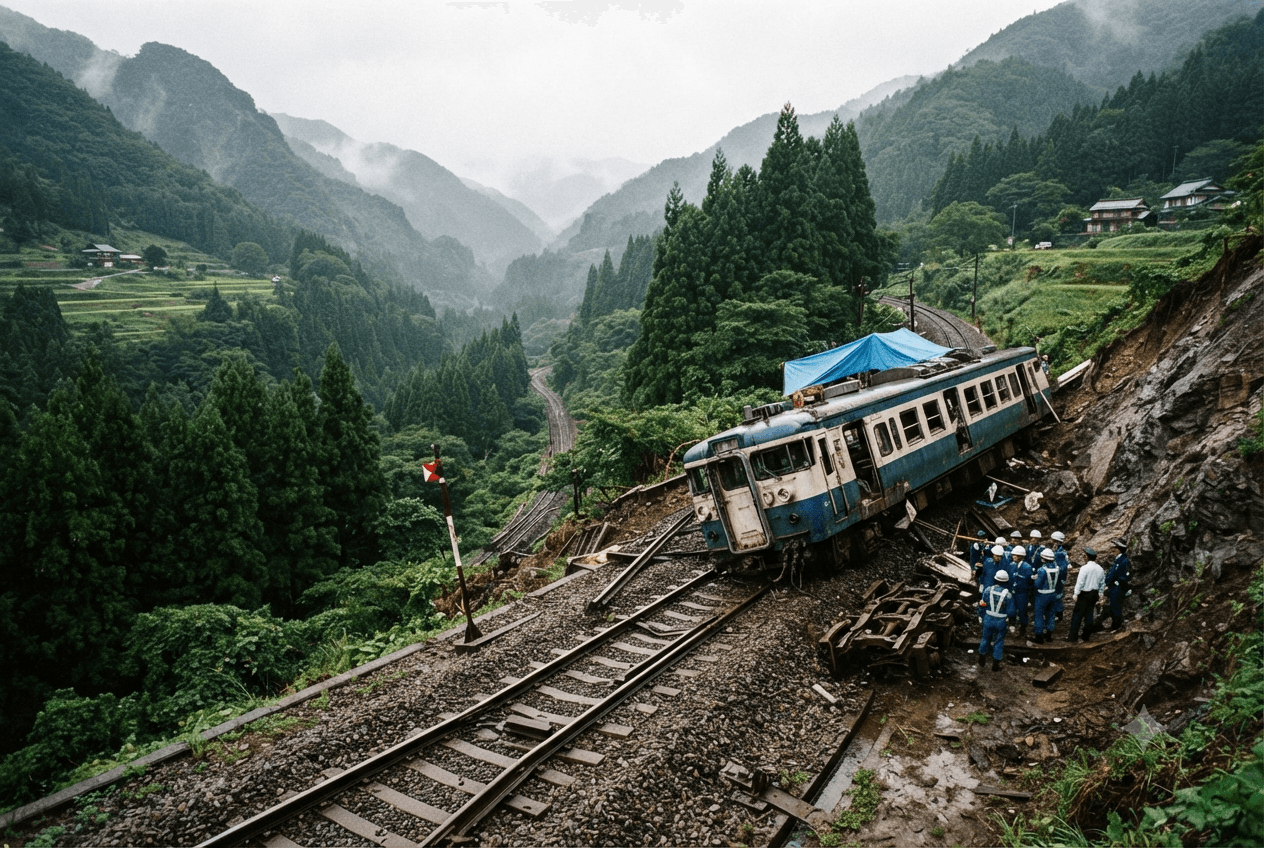
Nagano, Japan—The lead passenger carriage tipped onto its side before sunrise. Rain pelted the dense mountain forest surrounding the railway tracks. An express commuter train jumped the rails along a steep rural curve. Passengers slammed against seats as emergency brakes engaged automatically. Fire rescue crews arrived rapidly with hydraulic cutting equipment and stretchers. Paramedics treated fifteen injured travelers near the embankment. Medical teams transported the wounded to regional medical facilities promptly.
Railway engineers examined twisted rail segments under portable halogen floodlights. Initial inspections pointed toward mudslide debris obstructing the track bed. Train schedules across the central Honshu network faced immediate suspension. Transport ministry investigators boarded rail inspection vehicles to survey the site. Company executives bowed in apology during an emergency press conference. Maintenance records from the local rail depot came under intense scrutiny.
Honshu hospital wards admitted fifteen patients with minor to moderate contractions. Attending physicians evaluated passengers for whiplash and bone fractures. Railway company representatives visited injured travelers to deliver formal apologies. Local community volunteers brought hot tea and blankets to stranded commuters. Station operators managed massive crowds seeking ticket refunds and alternative routing. Automated reservation systems crashed under heavy user demand.
Rail safety regulators ordered immediate safety checks across all regional mountain lines. Maintenance supervisors reviewed slope stability sensors installed along vulnerable tracks. Transport unions demanded better weather monitoring protocols during heavy seasonal rains. Independent rail analysts questioned the frequency of track inspections in remote zones. Stock shares of the rail operator dropped sharply during morning trading sessions. Company public relations teams released hourly updates regarding line clearance efforts.
Repair crews worked tirelessly to hoist derailed cars back onto upright tracks. Heavy recovery cranes hauled damaged carriage sections onto flatbed rail transporters. Track maintenance teams replaced warped steel rails and shattered wooden ties. Normal train operations remain suspended pending full safety sign-off. Commuters crowded platform waiting areas as alternative bus bridges formed.
Note: This article was published on BanxChange.com and is powered by the BXE Token on the XRP Ledger. For the latest articles and news, please visit BanxChange.com