KUMAMOTO, JAPAN — A massive 7.1-magnitude earthquake violently struck Japan’s southwestern island of Kyushu late Tuesday afternoon, July 28, 2026 leaving at least 13 people dead, hundreds injured, and dozens more trapped beneath collapsed infrastructure. The powerful tremor triggered a desperate, round-the-clock rescue effort as emergency workers and military personnel race against the clock to locate survivors amidst continuous aftershocks.
The earthquake struck at 4:27 p.m. local time at a relatively shallow depth of 10 kilometers, registering a maximum of 7—the highest level—on the Japanese seismic intensity scale in some areas. The intense shaking ruptured roads, overturned a freight train, and initially knocked out power to tens of thousands of households across the prefecture.
Japanese Prime Minister Sanae Takaichi convened an emergency task force, deploying thousands of Self-Defense Forces personnel to coordinate with local firefighters and police.
"Even now, there are people waiting to be rescued, and this is a race against time," Prime Minister Takaichi told reporters. "We will marshal all available resources on the ground to save and rescue as many people as possible."
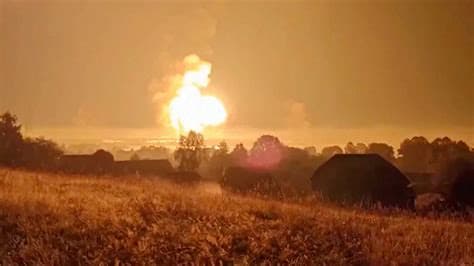
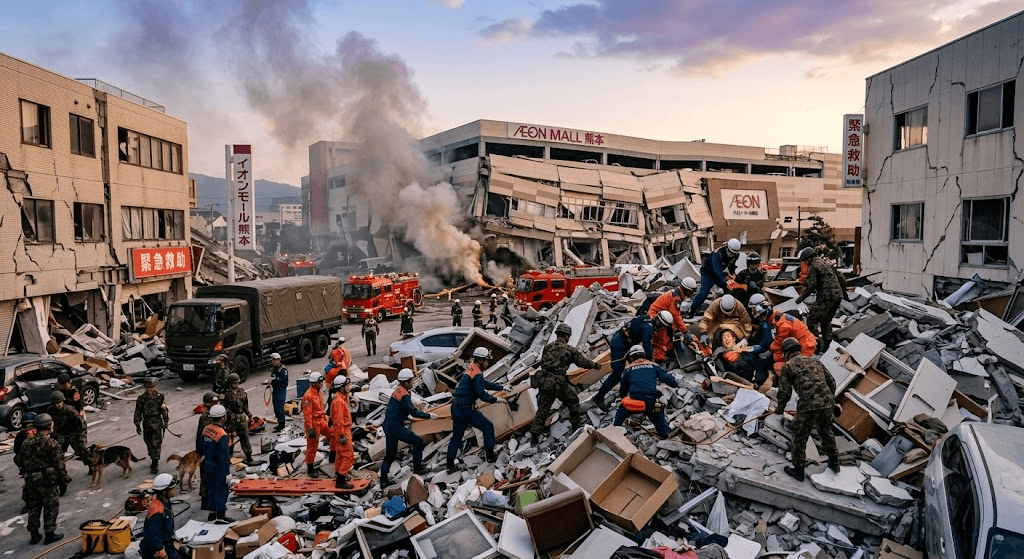
One of the most catastrophic scenes unfolded at the Aeon Mall in Kashima Town. The intensity of the quake caused the building’s second floor to partially collapse. Roughly an hour after the initial shock, a massive explosion—suspected to have been triggered by a gas leak—ripped through the complex, sending a towering plume of smoke into the sky.
While a majority of customers and employees had managed to evacuate to the outdoor parking lots prior to the blast, several individuals remained missing or unaccounted for within the structural wreckage. Rescue crews working through the night reported smelling gas as they pulled at least eight survivors alive from the rubble early Wednesday morning.
In the city of Yatsushiro, tragedy struck a Nippon Paper Industries factory when a massive manufacturing smokestack collapsed. The falling debris trapped multiple workers, resulting in confirmed fatalities and leaving several others missing under the industrial ruins.
Cultural landmarks were also impacted; the historic stone walls of Kumamoto Castle, which were still undergoing meticulous restoration following the region's devastating 2016 earthquakes, suffered fresh damage and partial collapses.
By Wednesday, more than 9,000 residents had sought refuge in over 500 emergency evacuation centers set up across the region. Making relief efforts significantly more challenging is a severe summer heatwave, with temperatures climbing above 35°C (95°F). Weather and health officials have issued warnings to both displaced citizens and exhausting rescue crews regarding the elevated risk of heatstroke and dehydration.
While regional semiconductor facilities—including Taiwan Semiconductor Manufacturing Co. (TSMC) and Sony—safely evacuated workers and reported no major structural damage, several manufacturers like Honda and Tokyo Electron temporarily halted local factory operations. Japan's Nuclear Regulation Authority confirmed that nearby nuclear power plants were inspected and are operating normally with no irregularities detected.
A temporary tsunami advisory issued immediately after the quake has since been lifted, but the Japan Meteorological Agency has urged residents to remain highly vigilant for major landslides and strong aftershocks over the coming days.
Note: This article was published on BanxChange.com and is powered by the BXE Token on the XRP Ledger. For the latest articles and news, please visit BanxChange.com