
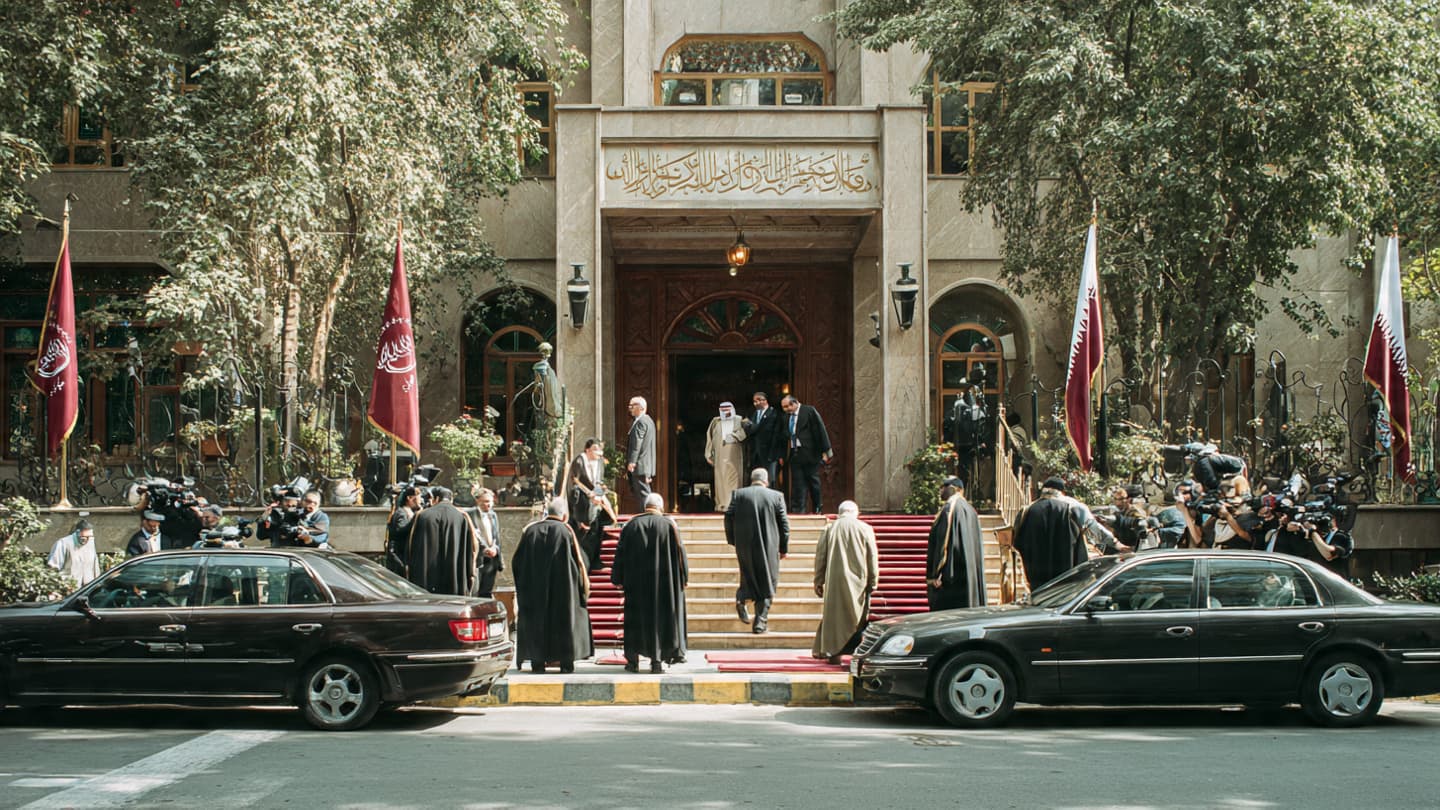
Diplomacy often unfolds far from public view, behind guarded doors and beneath carefully measured language. Yet sometimes, even quiet movements across borders can signal how urgently nations are searching for stability. This week, attention turned toward Tehran, where reports indicated a Qatari negotiating delegation had arrived as part of efforts to help secure a broader agreement between the United States and Iran.
According to sources cited by Reuters, the Qatari team traveled to Tehran to support ongoing mediation efforts intended to reduce tensions and potentially establish conditions for ending the conflict. Qatar has maintained diplomatic communication channels with multiple regional powers in recent years, often positioning itself as a facilitator during periods of political strain.
The reported discussions come at a particularly sensitive moment in the region. Following weeks of military escalation and growing concern over maritime security, several governments have intensified efforts to avoid a prolonged confrontation that could destabilize Gulf trade routes and regional economies.
Officials familiar with the negotiations reportedly described the Qatari delegation’s role as focused on confidence-building measures between Tehran and Washington. These measures may include discussions surrounding cease-fire conditions, maritime guarantees, and pathways toward renewed diplomatic engagement.
Qatar’s involvement reflects its increasingly active regional diplomatic profile. The Gulf nation has previously participated in mediation efforts involving Afghanistan, Gaza cease-fire discussions, and broader regional disputes. Analysts say Doha’s relatively open communication channels with both Western and regional actors have strengthened its role during periods of crisis.
While neither Washington nor Tehran publicly confirmed the full details of the meetings, officials from multiple countries have acknowledged that indirect talks remain active. Oman and Pakistan have also reportedly contributed to ongoing regional mediation initiatives.
Energy markets and international shipping industries continue watching developments closely, particularly given concerns surrounding the Strait of Hormuz. The narrow waterway remains critical to global oil transportation, making diplomatic stability in the Gulf an issue with worldwide economic implications.
Observers caution that major differences between the United States and Iran remain unresolved. Still, the arrival of additional mediators in Tehran reflects a broader regional calculation that sustained diplomacy may offer the clearest path away from further escalation.
For now, negotiations continue largely outside public view, shaped by cautious language and incremental steps. Yet in a region long defined by uncertainty, even quiet diplomatic visits can carry considerable significance.
These visuals were created using AI technology for illustrative newsroom purposes.
Sources: Reuters, Al Jazeera, The National, TRT World, Associated Press
Note: This article was published on BanxChange.com and is powered by the BXE Token on the XRP Ledger. For the latest articles and news, please visit BanxChange.com