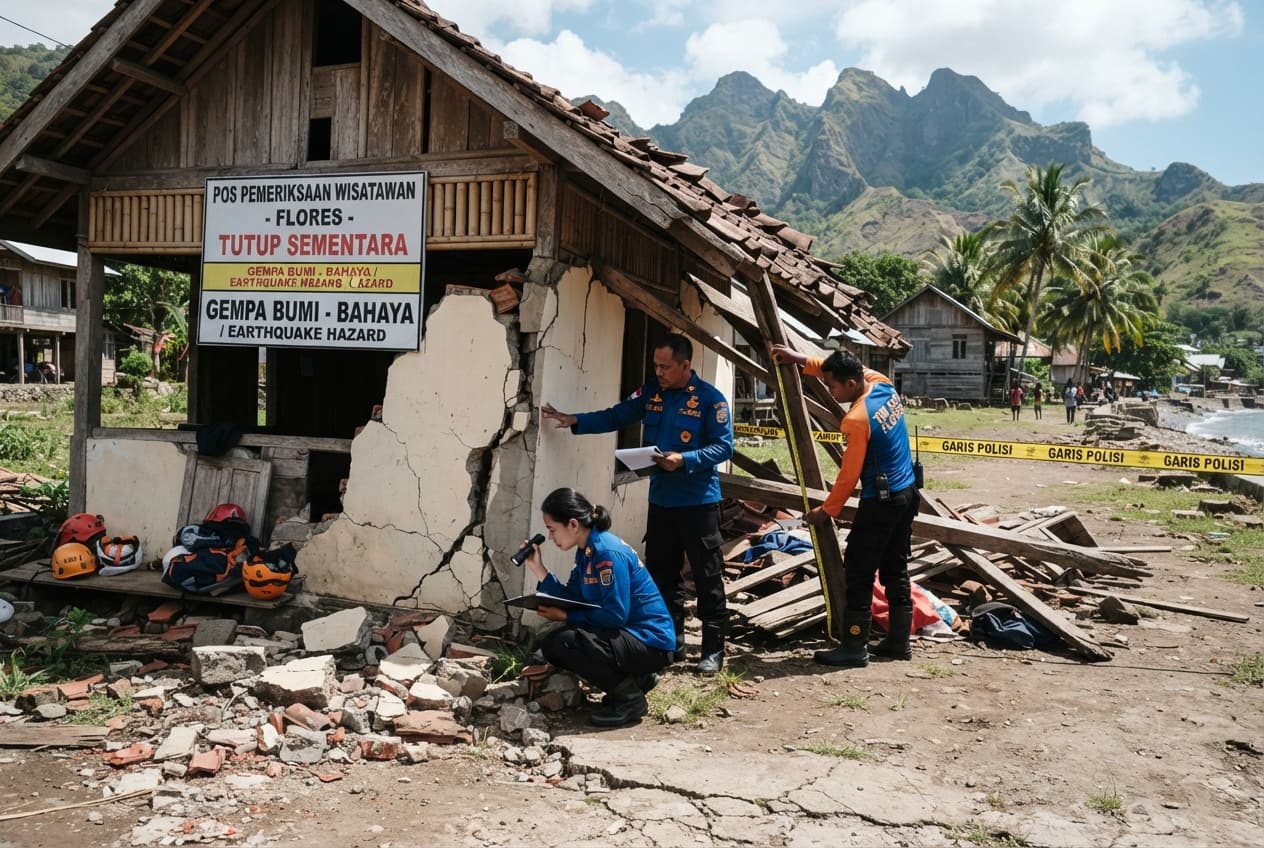
Maumere, Indonesia—Tourist sites across the island of Flores remained shuttered under emergency orders following a devastating earthquake that left 68 people dead and widespread structural ruin across the region. Emergency management teams shifted operations from immediate extraction to infrastructure stabilization as regional authorities locked down popular destinations. Heavy tremors fractured local access routes, ruptured power grids, and left thousands displaced from their homes. Local officials confirmed that tourist access remains indefinitely suspended while structural engineers assess safety risks at regional landmarks.
Ground zero zones near Maumere and surrounding districts absorbed the brunt of the seismic violence. Relief convoys navigated obstructed roads blocked by landslides and fallen masonry to deliver heavy equipment and medical supplies. Military units and disaster response personnel set up triage centers to process mounting casualties and shelter displaced families. Food supplies and clean water distribution points faced immense pressure as survivors crowded community halls and makeshift camps. Heavy machinery cleared blocked mountain passes to allow vital supply lines to reach isolated mountain villages.
Local administrators confirmed that commercial tourism activities are completely halted until further notice. Regional tourism bureaus stated that safety checks must be completed across all hospitality structures before public access resumes. Structural engineers surveyed hotels, coastal pathways, and cultural monuments for hidden fractures caused by the high-magnitude tremor. Regional authorities stressed that public safety overrides economic recovery timelines as aftershocks continue to rattle the island.
The economic fallout hit coastal communities relying heavily on incoming travelers and hospitality revenue. Local business owners watched reservations vanish as regional cancellations piled up within hours of the disaster. Tour operators redirected resources toward community support efforts instead of managing scheduled itineraries. Regional chambers of commerce estimated millions in lost revenue as key economic hubs ground to a halt.
Medical facilities struggled to cope with the influx of trauma patients arriving from remote districts. Doctors operated under harsh conditions as rolling power outages strained backup generators and critical equipment. Volunteers arrived from neighboring islands to assist exhausted local medical staff working around the clock. Pharmaceutical supplies ran low before military cargo flights dropped emergency medical kits directly into affected zones.
Communication networks remained partially crippled, complicating coordination between remote rescue units and central command. Technicians worked frantically along downed fiber optic corridors to restore basic connectivity for emergency responders. Radio operators acted as the primary link between isolated mountain settlements and regional disaster headquarters. Information blackouts in deep rural pockets fueled anxiety among families searching for missing relatives.
Regional disaster command centers urged residents to remain vigilant against ongoing aftershocks rattling the fault lines. Structural inspection teams marked severely compromised buildings with red warning notices to prevent accidental entry. Temporary housing camps expanded rapidly across cleared agricultural fields to accommodate thousands of displaced citizens. Sanitation infrastructure failed in several hard-hit areas, raising immediate concerns over potential disease outbreaks.
National leaders toured the hardest-hit sectors to assess the scale of destruction firsthand. Pledged relief funds began filtering down to municipal accounts, though local leaders argued that bureaucratic delays hampered swift distribution. Heavy reconstruction efforts are projected to take months, leaving long-term recovery prospects uncertain. Cleanup crews cleared tons of rubble from main thoroughfares while residents salvaged personal belongings from ruined foundations.
Heavy equipment operators cleared the final blockages along the primary coastal highway connecting major regional ports. Disaster response coordinators maintained a high state of alert as seismic monitors recorded continuous micro-activity beneath the Flores Sea basin.
Note: This article was published on BanxChange.com and is powered by the BXE Token on the XRP Ledger. For the latest articles and news, please visit BanxChange.com