
Key Highlights
- Tyler Robinson, 23, is charged with aggravated murder in the killing of Charlie Kirk.
- Prosecutors are presenting evidence at a five-day preliminary hearing.
- The case could be eligible for the death penalty under Utah law.
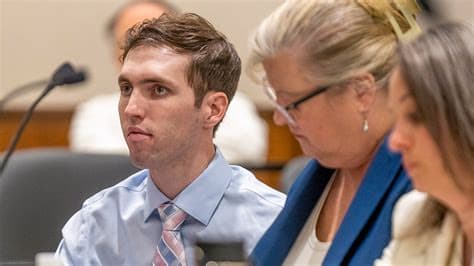
Utah prosecutors are currently engaged in a five-day preliminary hearing aimed at persuading a state judge to send Tyler Robinson to trial for the assassination of Charlie Kirk, a prominent conservative activist and ally of former President Donald Trump. The hearing is critical as it will determine whether the evidence presented is sufficient to proceed with a trial, where the stakes are high, including the potential for the death penalty.
Robinson, 23, is facing charges of aggravated murder stemming from the shooting incident that occurred on September 10 at Utah Valley University. Following the incident, Robinson turned himself in to law enforcement the next day and has yet to enter a formal plea. The prosecution's case hinges on several pieces of evidence, including a confession note allegedly left by Robinson for his roommate, who is also identified as his romantic partner. This note reportedly contains statements that prosecutors interpret as an admission of guilt regarding the opportunity to kill Kirk.
In addition to the confession, prosecutors are set to present DNA evidence that links Robinson to the suspected murder weapon. They will also rely on testimony from investigators, autopsy findings, witness statements, and video footage of the shooting. The preliminary hearing, while resembling a mini-trial, operates under a lower legal standard. Prosecutors need only demonstrate “reasonable grounds” to believe that Robinson committed the murder, a significantly less stringent requirement than the “beyond a reasonable doubt” standard required at trial.
Another crucial aspect of the prosecution's argument is the assertion of an aggravating circumstance under Utah law. They contend that the shooting endangered others present at Kirk's campus event, which could make the case eligible for the death penalty. Robinson's defense attorneys have been actively seeking to have the death penalty removed from consideration but have thus far been unsuccessful in their efforts.
As the preliminary hearing progresses, state District Judge Tony Graf will ultimately decide whether there is sufficient evidence for the case to advance to trial. This decision will be pivotal not only for Robinson but also for the broader implications surrounding the case, given the high-profile nature of the victim and the political context involved.
The outcome of this hearing could set the stage for a highly publicized trial, drawing attention to issues of political violence and the legal ramifications of such acts. As the legal proceedings unfold, both sides are preparing for what could be a contentious battle in the courtroom.
Published by Banx Network. This article is part of the Banx decentralized media programme, powered by the BXE token on the XRP Ledger.



