
Human exploration has often advanced through improvements in measurement. From ancient sailors reading the stars to modern aircraft guided by satellites, precision has quietly shaped every long journey. As space agencies prepare for sustained missions to the Moon, scientists are now turning to ultrastable lasers that could transform navigation, communication, and timekeeping far beyond Earth.
Researchers developing these systems say ultrastable lasers are capable of maintaining exceptionally consistent frequencies over long periods. This stability allows them to serve as highly accurate references for measuring time and distance. In lunar exploration, where reliable positioning systems remain limited, such precision may become increasingly valuable.
Unlike Earth, the Moon does not currently possess a mature satellite navigation network similar to GPS. Future missions involving astronauts, robotic vehicles, and lunar habitats will require dependable methods for determining location and synchronizing operations. Scientists believe ultrastable laser systems could help build that infrastructure.
The technology may also support next-generation atomic clocks, which rely on extremely stable signals to measure time with remarkable accuracy. These clocks are essential for navigation, scientific observation, and telecommunications. Even tiny timing errors can accumulate into significant positional inaccuracies during long-distance space operations.
Engineers are exploring how laser-based systems could function in harsh lunar conditions, where extreme temperatures, radiation, and dust present constant challenges. Developing equipment capable of maintaining precision in such an environment requires extensive testing and miniaturization. Researchers say recent advances in photonics and optical engineering are making these goals more achievable.
The applications extend beyond lunar exploration alone. Ultrastable lasers could improve deep-space communication systems, gravitational measurements, and Earth observation technologies. In some scientific experiments, they may help detect subtle physical changes that conventional instruments struggle to measure.
Space agencies and research institutions across several countries are investing heavily in precision timing technologies as lunar programs accelerate. NASA’s Artemis initiative, alongside European and Asian lunar projects, has increased demand for systems capable of supporting long-duration operations beyond low Earth orbit.
Although the technology remains under active development, researchers say ultrastable lasers represent an important step toward more independent and reliable space navigation systems. As humanity prepares to return to the Moon with longer ambitions in mind, precision itself may become one of the most valuable tools carried into space.
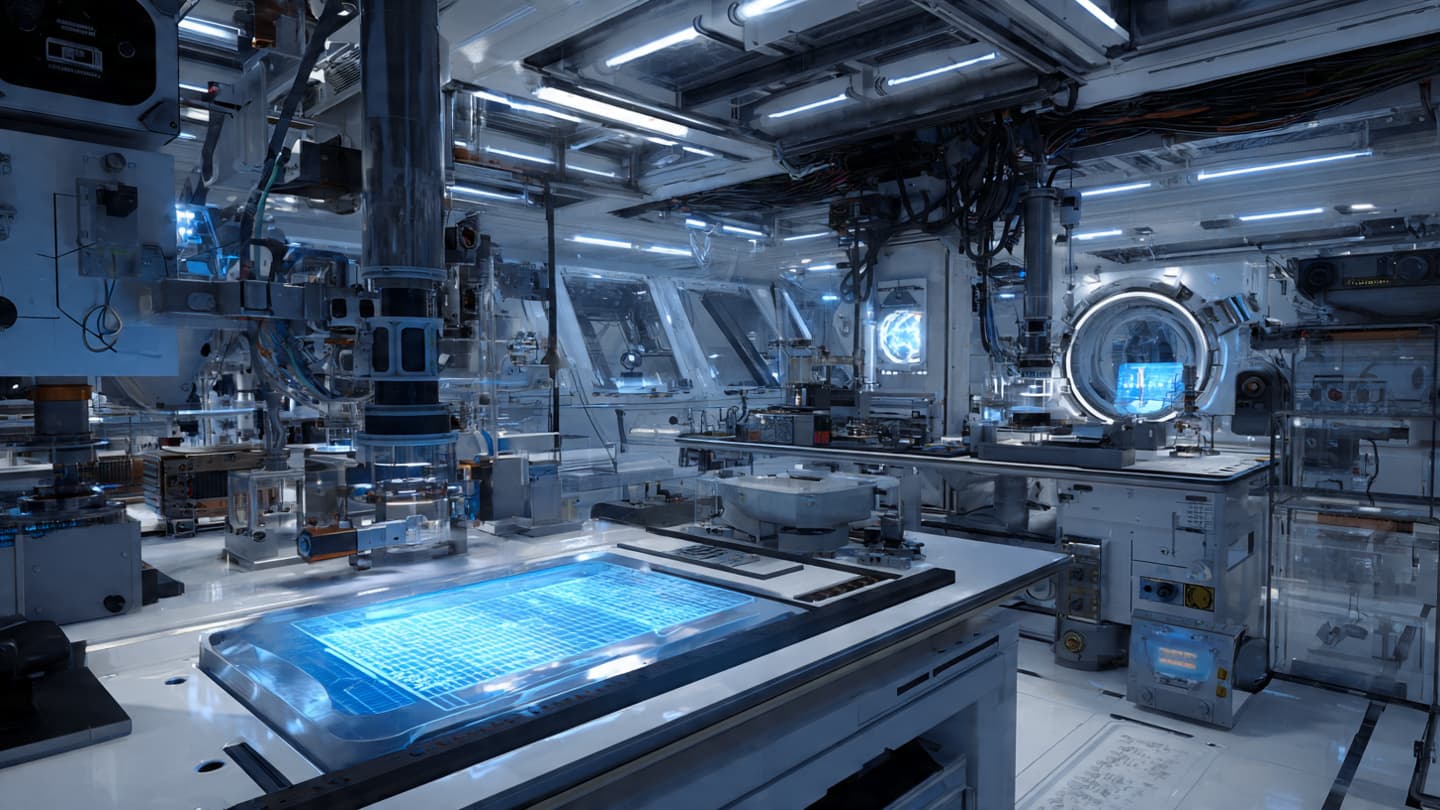
AI Image Disclaimer: Illustrative images related to this report were created with AI-generated visual assistance.
Sources Verified: NASA, European Space Agency (ESA), IEEE Spectrum, Nature Photonics, SpaceNews
Note: This article was published on BanxChange.com and is powered by the BXE Token on the XRP Ledger. For the latest articles and news, please visit BanxChange.com