
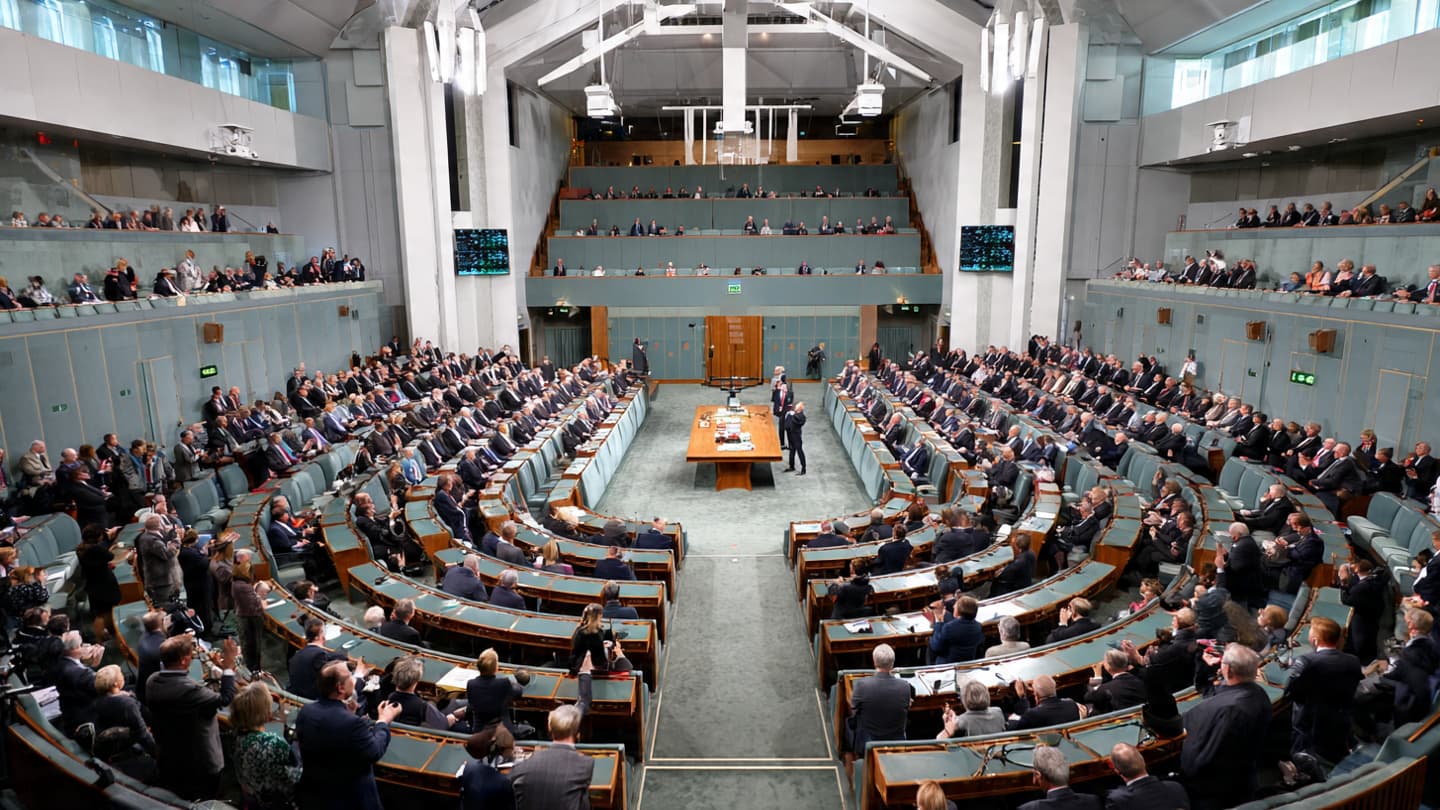
Politics often creates unusual moments where ideological rivals unexpectedly influence the same outcome from opposite directions. Alliances are rarely permanent, and even unintended political consequences can reshape the fortunes of parties struggling to regain confidence. In Australia, commentary surrounding former prime minister Tony Abbott and Treasurer Jim Chalmers has highlighted how two very different political figures may, in unexpected ways, be helping stabilize the Liberal Party’s position.
The discussion emerges during a period of reflection within the Liberal Party following electoral setbacks and internal debate over future direction. Political analysts have examined how both government policy decisions and opposition dynamics can alter public perceptions of competing parties.
Jim Chalmers, as Treasurer, remains closely associated with the Albanese government’s economic management during a period marked by inflation concerns, housing affordability pressures, and broader cost-of-living debates. Economic conditions frequently shape political fortunes, particularly when households experience sustained financial stress.
At the same time, Tony Abbott continues to occupy a symbolic role within conservative political discussion in Australia. Though no longer serving in frontline politics, his influence among sections of the Liberal Party base and broader conservative movement remains visible in public debate and media commentary.
Some analysts argue that dissatisfaction with economic conditions can gradually create political openings for opposition parties, regardless of their internal difficulties. Governments managing inflation, interest rates, and budget pressures often face declining public patience even when broader economic indicators remain relatively stable.
Others suggest that Abbott’s continued public presence may help unify parts of the Liberal Party’s conservative wing at a time when questions about identity, leadership, and electoral strategy continue to shape internal conversations.
Political observers caution, however, that opposition recovery rarely depends solely on government challenges or symbolic figures. Long-term electoral success generally requires policy clarity, leadership stability, and the ability to reconnect with shifting voter expectations across urban and regional communities alike.
The broader debate reflects how political momentum can emerge indirectly. Parties sometimes regain ground not only through their own achievements, but also through public frustration directed elsewhere or through the reemergence of familiar political voices during uncertain periods.
For now, the idea of Abbott and Chalmers functioning as unlikely “saviours” remains more political interpretation than settled reality. Still, the conversation captures the fluid and often unpredictable nature of modern democratic politics in Australia.
AI Image Disclaimer: Certain political visuals accompanying this article were created using AI-generated editorial imagery.
Sources: The Australian Financial Review, ABC News Australia, The Sydney Morning Herald, The Australian, Australian Associated Press
Note: This article was published on BanxChange.com and is powered by the BXE Token on the XRP Ledger. For the latest articles and news, please visit BanxChange.com