
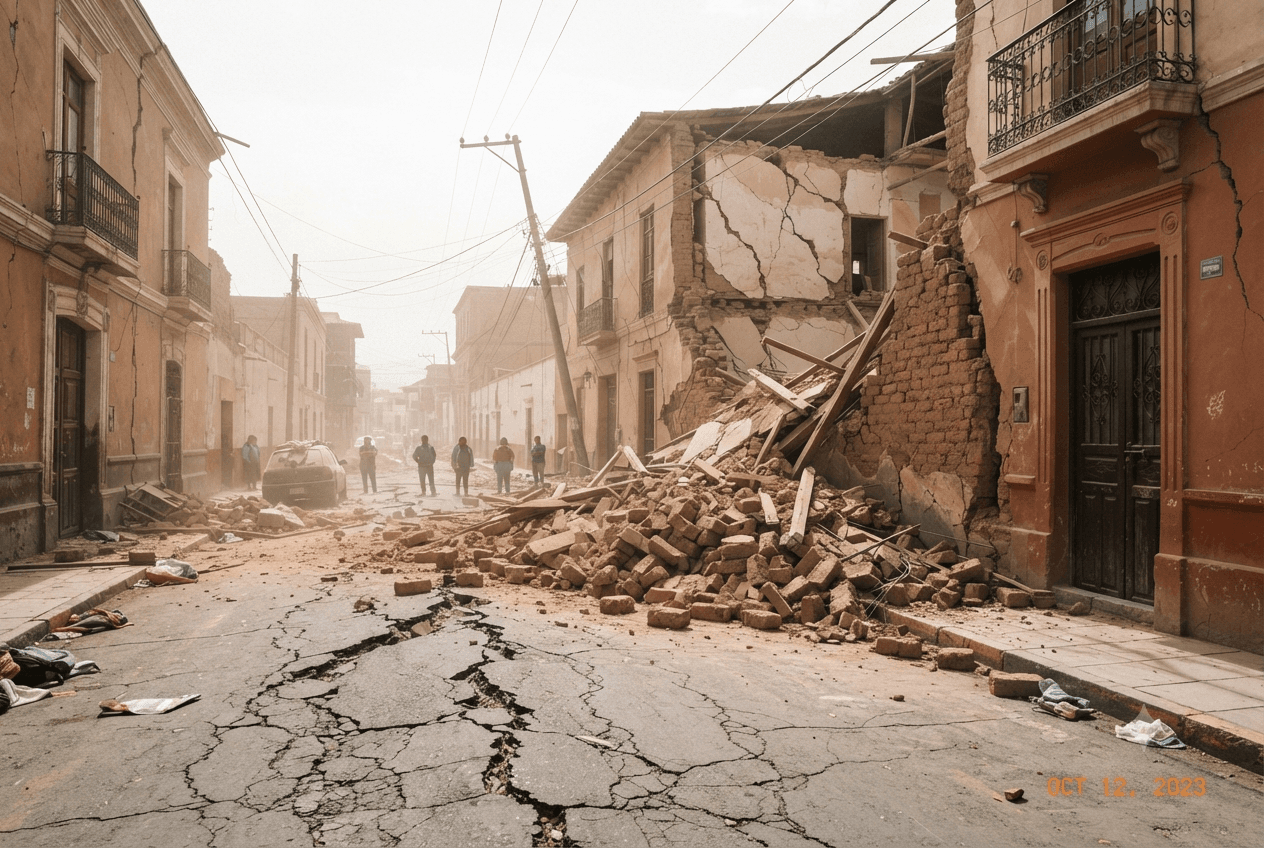
Lima, Peru—A 5.6 magnitude earthquake struck the southern coastal region early Wednesday morning. The epicenter was located just inland, causing violent shaking across several urban centers. Local authorities confirmed fatalities as residential buildings succumbed to the seismic force. Rescue teams are currently working through the rubble of multi-story homes to locate survivors.
The tremor caught residents off guard during the morning rush. Telephone lines and internet services were temporarily disrupted, slowing the initial deployment of first responders. Regional hospitals have received a surge of patients with head and limb trauma. Emergency personnel are performing secondary sweeps to ensure that no one remains trapped in damaged structures.
Engineers have been dispatched to inspect critical infrastructure, including bridges and highways that connect coastal cities. Several arterial roads were closed after reports of surface cracking and falling debris. Power grids in the surrounding zones were partially downed, leaving thousands in the dark during the initial rescue phase. Utility crews are currently working to restore service.
The regional governor has authorized the deployment of the national police and civil defense units. They are assisting in the clearance of debris to maintain access for ambulances and medical vehicles. Public anxiety remains high as smaller aftershocks continue to register on seismic monitors. Residents have been urged to stay away from unstable buildings until inspections are complete.
The intensity of the quake was felt most strongly in the central districts of the affected city. Many older masonry buildings suffered significant wall collapses, trapping occupants. Firefighters are utilizing specialized listening equipment to identify sounds from beneath the wreckage. The search will likely continue for several days as officials confirm the final casualty list.
International aid offers are being coordinated through the national disaster office. However, the government currently insists that domestic resources are sufficient to manage the immediate situation. The military has set up temporary housing for those whose homes are no longer considered safe for habitation. Basic supplies like water and thermal blankets are being distributed to these temporary camps.
Public sentiment is currently defined by uncertainty and fear of further seismic activity. Experts from the national geological institute are analyzing the fault line to determine the likelihood of larger tremors. No official statement has been made regarding the long-term impact on the city’s historic building stock. The area remains under strict police control to manage traffic and prevent accidents.
Forensic teams are working with local hospitals to identify the deceased and notify their families. The process is being hampered by the communication issues that persist in the most heavily impacted neighborhoods. Recovery and investigation teams remain active on the ground as the situation continues to evolve.
Note: This article was published on BanxChange.com and is powered by the BXE Token on the XRP Ledger. For the latest articles and news, please visit BanxChange.com