
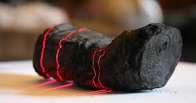
Ancient papyrus scrolls from Herculaneum—burned and carbonized during Mount Vesuvius’ eruption—have long resisted decipherment because the ink and the papyrus were turned into nearly indistinguishable material and the scrolls are too fragile to unroll without destroying them. Recent advances combining high-resolution imaging with AI have changed that, enabling scientists to virtually “unwrap” the scrolls and detect traces of ink.
The work builds on the Herculaneum papyri, an underground library uncovered in the 18th century. Researchers have now been able to extract and interpret more readable text by scanning scroll fragments and using machine-learning models to locate where writing likely appears on the carbonized surface. After the scan data is processed, scholars can translate the recovered Greek text.
The approach has accelerated progress by scaling what used to be painstaking, fragment-by-fragment reconstruction. While many scrolls remain unread, the latest AI-assisted decoding provides new text that was previously inaccessible, bringing scholars closer to reconstructing complete arguments rather than only small, scattered pieces.
Note: This article was published on BanxChange.com and is powered by the BXE Token on the XRP Ledger. For the latest articles and news, please visit BanxChange.com