DELHI, INDIA — Passengers aboard an Air India flight from Phuket to Delhi experienced moments of sheer terror when the aircraft suddenly plummeted nearly 300 feet in mid-air during severe turbulence, leaving at least 12 people injured.
The flight, carrying over 180 passengers and crew, was en route to Indira Gandhi International Airport when it hit a severe, unexpected weather disturbance over the Bay of Bengal, causing the Boeing 787 Dreamliner to drop abruptly before the flight crew regained full control.
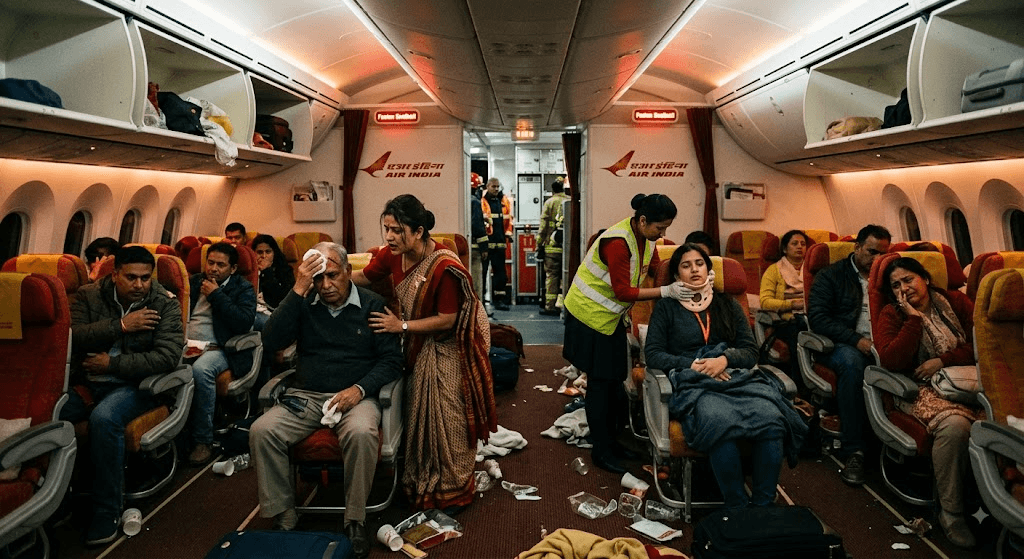
Witnesses reported that the sudden drop occurred without warning, catching many unbuckled passengers and flight attendants off guard. Trays, overhead luggage, and personal belongings were thrown across the cabin during the sudden loss of altitude.
According to passenger accounts, several individuals who were not wearing their seatbelts were lifted from their seats and thrown against the ceiling before slamming back down into the aisle.
Despite the severe disturbance, the flight crew maintained control of the aircraft and issued an immediate alert to air traffic control in Delhi. Medical teams and emergency responders were put on standby at Indira Gandhi International Airport.
Upon touchdown, emergency personnel rushed aboard to attend to the injured. Eight passengers and four crew members received immediate medical treatment for minor fractures, neck sprains, and bruises, with two passengers being transferred to a local hospital for further evaluation.
India's Directorate General of Civil Aviation (DGCA) has initiated an investigation into the incident to assess whether clear-air turbulence or convective weather systems played a role.
Air India issued a statement expressing regret for the distress caused to passengers, re-emphasizing the critical importance of keeping seatbelts fastened at all times while seated during flight operations.
Aviation experts note that incidents of severe clear-air turbulence have been increasingly reported along busy tropical flight corridors, prompting heightened scrutiny over real-time weather monitoring technology and cabin safety protocols. In response to the event, aviation safety advocates have reiterated calls for airlines to enforce stricter compliance with seatbelt usage throughout the duration of long-haul flights, even when cruising altitude conditions appear serene.
Note: This article was published on BanxChange.com and is powered by the BXE Token on the XRP Ledger. For the latest articles and news, please visit BanxChange.com