
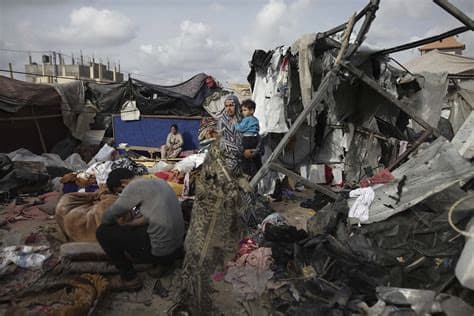
Over the past thousand days, Gaza has lived through an accelerating humanitarian catastrophe shaped by persistent violence, siege-like conditions, and deliberate attacks on civilian life. Each day has brought new reports of casualties, displacement, damaged homes and institutions, and deepening deprivation. The scale of death and injury, alongside the destruction of basic infrastructure, has turned daily survival into an ongoing emergency rather than a temporary crisis. A human cost measured in names, families, and futures
The suffering in Gaza is not only tallied in numbers; it is experienced in lives interrupted—children who cannot grow, parents who cannot mourn with safety, and communities forced to rebuild again and again under bombardment. Entire neighborhoods have been rendered uninhabitable, and families have faced repeated cycles of flight, return, and displacement. Even when people manage to live through an attack, the next rupture—loss of housing, illness without adequate care, hunger, or trauma—can be just as devastating. Destruction of daily life and the erosion of normal existence
Infrastructure that civilians depend on—homes, schools, water systems, medical facilities, markets, and livelihoods—has been repeatedly hit and left unusable. The result is a cascading collapse: when electricity falters, refrigeration and sanitation fail; when water is contaminated or scarce, disease spreads; when hospitals are overwhelmed or damaged, injuries become fatal. The daily rhythm of life that civilians rely on for stability has been replaced by shortages, uncertainty, and fear. The meaning of “genocide” and why it matters
Calling what has unfolded “genocide” is not a slogan—it is a legal and moral claim about the gravity of what is happening. The term points to intent and the targeted destruction of protected groups, not just to collateral damage or generalized conflict. When a population experiences sustained mass killing and conditions that systematically undermine survival, the question of accountability becomes unavoidable. Accountability, protection, and international obligations
A thousand days of catastrophe underscores a central demand: that international law must be upheld and that those responsible for grave violations must face consequences. Protection of civilians cannot be treated as optional. Humanitarian obligations—such as enabling aid access, preventing collective punishment, and safeguarding medical and civilian infrastructure—are not abstractions; they determine whether people live or die. Why reporting and solidarity matter
Covering these developments consistently helps ensure that the suffering of Gaza is not reduced to brief headlines and then forgotten. Solidarity also means refusing to normalize mass violence. It means centering civilian testimony, supporting humanitarian action, and pushing decision-makers to act with urgency rather than delay. A call forward
One thousand days of genocide in Gaza is not only a record of harm; it is also a measure of the world’s failure to stop it sooner. The path forward requires immediate and sustained protection for civilians, credible accountability mechanisms, and an insistence that humanitarian needs are met without obstruction. Most of all, it requires treating the lives of Palestinians in Gaza as unquestionably human—worthy of safety, dignity, and justice.
Note: This article was published on BanxChange.com and is powered by the BXE Token on the XRP Ledger. For the latest articles and news, please visit BanxChange.com