The night sky has long appeared as a familiar tapestry, yet every new observation reminds us that even the galaxy we call home still holds unanswered questions. Like a map whose edges continue to unfold, the Milky Way reveals fresh details each time astronomers develop new ways to study its distant regions. What once seemed well defined now appears more expansive, inviting scientists to reconsider the true scale of our galactic neighborhood.
Using observations from NASA's Chandra X-ray Observatory alongside data from other space- and ground-based telescopes, researchers have found evidence suggesting that the Milky Way's outer boundaries may extend significantly farther than previously estimated. The findings focus on the galaxy's hot gaseous halo, a vast region of diffuse material surrounding the visible disk.
Unlike the bright spiral arms filled with stars, planets, and nebulae, the galactic halo is composed largely of extremely hot, thin gas that emits X-rays. Because this material is faint and difficult to observe, measuring its size has challenged astronomers for decades. Improved observational techniques have now allowed researchers to examine this elusive region with greater precision.
The study indicates that the halo may reach well beyond earlier estimates, extending hundreds of thousands of light-years from the galaxy's central disk. If confirmed by additional observations, the discovery could reshape scientific understanding of how the Milky Way interacts with neighboring galaxies and how matter is distributed throughout the Local Group.
Scientists explain that the halo plays an important role in galactic evolution. It acts as a reservoir of hot gas that can influence star formation, recycle material expelled by supernovae, and interact with satellite galaxies orbiting the Milky Way. A larger halo may also help account for some of the galaxy's "missing" ordinary matter, which has long puzzled astronomers.
The research combines data from NASA's Chandra observatory with complementary observations from the European Space Agency's XMM-Newton telescope. By studying X-ray emissions from distant cosmic sources shining through the halo, astronomers can estimate the density and extent of the intervening gas, gradually building a clearer picture of the galaxy's outer structure.
Although additional studies will be needed to refine these measurements, researchers emphasize that the results demonstrate how much remains to be learned about our own galaxy. Despite centuries of astronomical observation, the Milky Way continues to reveal new characteristics as technology advances and scientific methods improve.
As astronomers continue mapping the galaxy's farthest reaches, each new discovery adds depth to humanity's understanding of its cosmic home. Rather than marking the end of exploration, the expanding view of the Milky Way illustrates that even our nearest galactic surroundings remain rich with opportunities for future discovery.
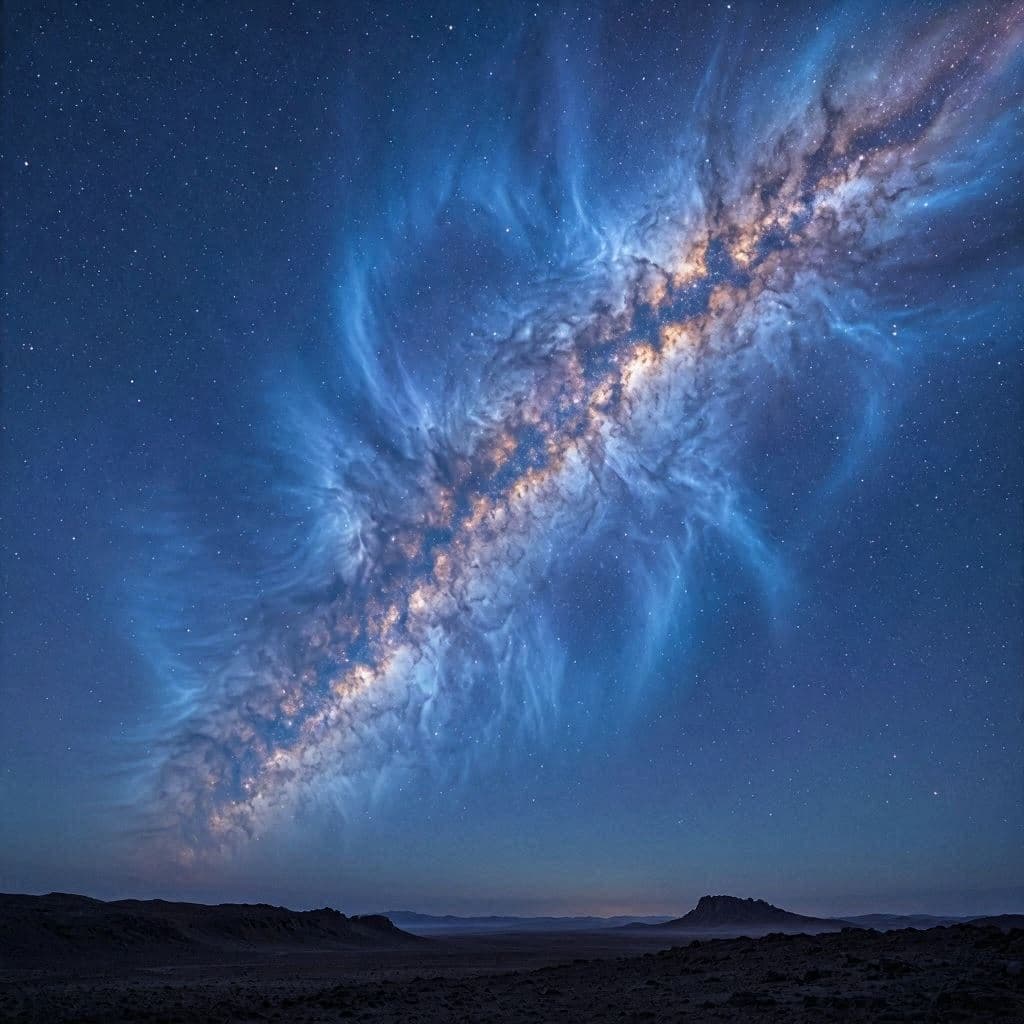
AI Image Disclaimer: The illustrations accompanying this article are AI-generated visualizations based on published scientific findings and are intended for editorial purposes only.
Sources NASA Science NASA Chandra X-ray Observatory European Space Agency (ESA) New York Post
Published by Banx Network. This article is part of the Banx decentralized media programme, powered by the BXE token on the XRP Ledger.