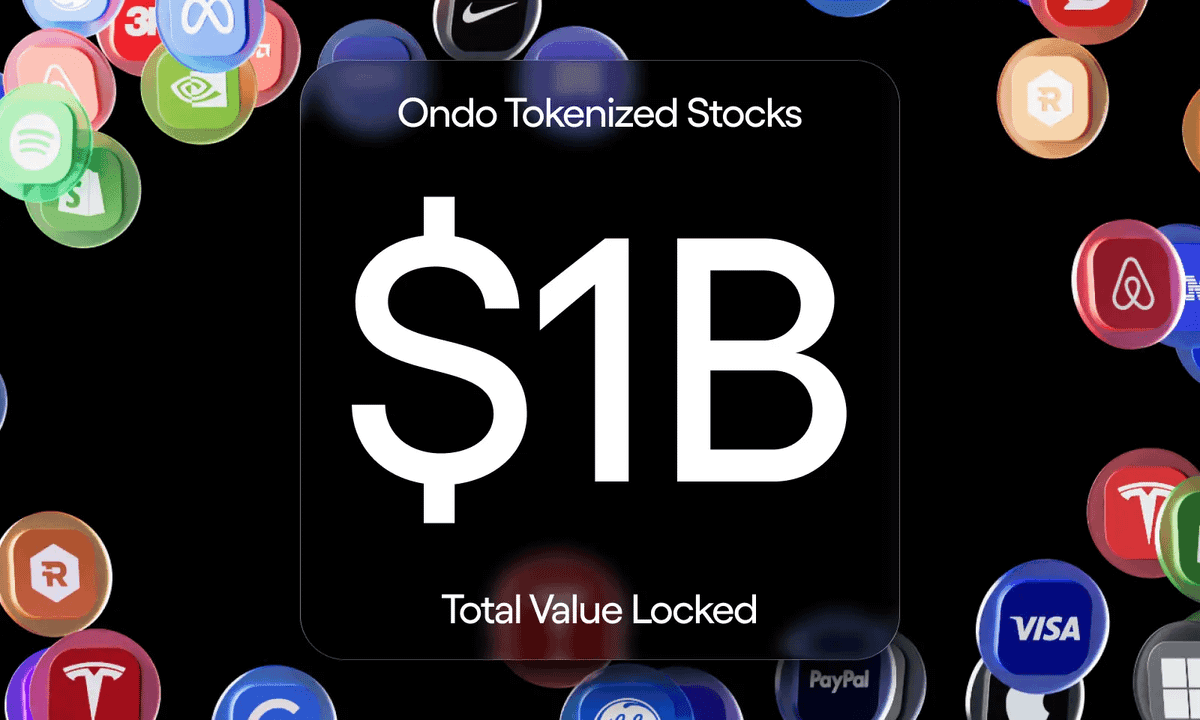
Ondo Finance is reporting another major milestone for its tokenization business, with Ondo Stocks reaching approximately $1.01 billion in total value locked and more than $27 billion in cumulative volume across more than 440 stock and ETF products, according to the post shown in the screenshots. The numbers highlight how quickly tokenized financial assets are becoming part of the broader digital-asset conversation. Rather than focusing exclusively on cryptocurrencies, tokenization platforms are increasingly attempting to bring traditional securities onto blockchain networks. The concept is relatively straightforward. Instead of representing ownership through conventional financial infrastructure alone, a digital token can be used to represent an underlying financial asset or economic exposure. This could potentially make trading, settlement and distribution more flexible while creating new ways for investors to interact with traditional markets. Ondo's reported growth is significant because it demonstrates that tokenization is moving beyond theoretical discussions. A growing amount of capital and transaction activity is being directed toward blockchain-based representations of familiar financial instruments. The development also connects directly with the broader institutional trend emerging across the crypto sector. Banks, asset managers, fintech companies and payment platforms are increasingly exploring blockchain infrastructure for securities and other financial products. For investors, the most important distinction is between tokenization and traditional cryptocurrency speculation. A tokenized stock product does not necessarily mean that investors are buying an independent cryptocurrency. Instead, the blockchain can function as the technological infrastructure supporting access to an asset or financial exposure. That distinction could help explain why tokenization is attracting interest even from institutions that remain cautious about highly speculative crypto assets. Blockchain technology can be adopted as infrastructure without requiring an institution to embrace every part of the cryptocurrency ecosystem. The $1.01 billion figure therefore represents more than a company milestone. It is another indication that digital representations of traditional assets are becoming an increasingly important category within financial technology. The next challenge will be scale, regulation and interoperability. As more companies launch tokenized products, investors will want to know how assets are protected, how ownership is recorded, how transfers work across networks and how different platforms communicate with each other.
Published by Banx Network. This article is part of the Banx decentralized media programme, powered by the BXE token on the XRP Ledger.