There are moments when a single death moves beyond private sorrow and enters the wider conscience of a nation. The details of one life suddenly become intertwined with larger conversations about identity, justice, memory, and belonging. Crowds gather not only to mourn, but to ask whether the systems surrounding them have failed in ways too familiar to ignore.
That atmosphere unfolded across parts of Ireland this week after protesters took to the streets following the death of a Congolese-born man during an encounter involving Irish police, known locally as the Gardaí. Demonstrators described the incident as Ireland’s “George Floyd moment,” invoking comparisons to global protests against racial injustice and police conduct that reshaped public debate in the United States and beyond.
The man, identified in Irish media reports as a longtime resident originally from the Democratic Republic of Congo, died after an altercation that remains under official investigation. Authorities stated that emergency services responded to reports of a disturbance before the situation escalated. Ireland’s police ombudsman has since opened an inquiry into the circumstances surrounding the death.
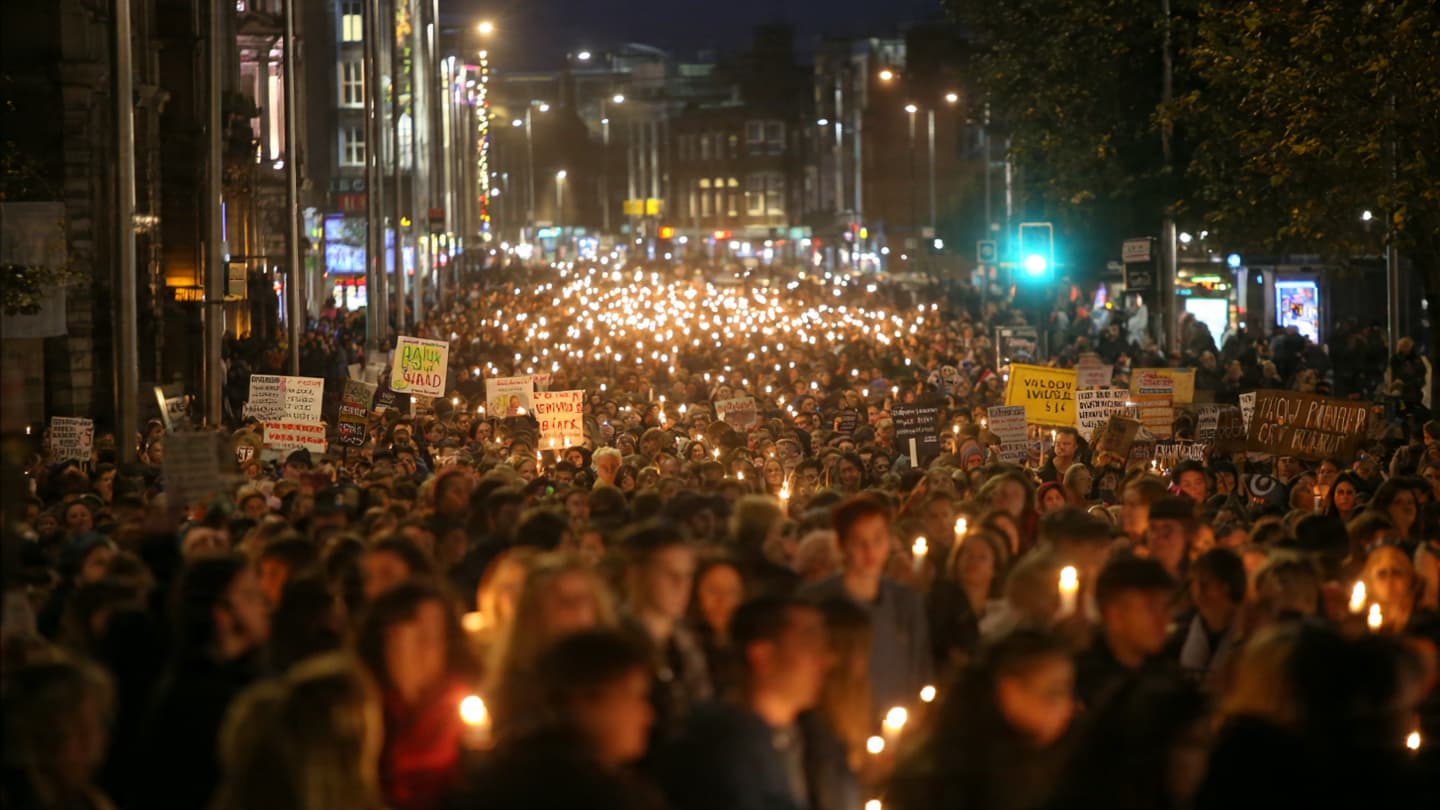
As news spread, protests emerged in Dublin and other cities, where crowds carried signs demanding accountability, transparency, and deeper examination of racism within Irish institutions. Some demonstrators argued the incident reflected broader experiences of discrimination faced by Black residents and immigrant communities in Ireland, even in a country that often sees itself as comparatively welcoming and socially progressive.
The phrase “George Floyd moment” carried particular emotional weight because it referenced not only the death of George Floyd in Minneapolis in 2020, but also the worldwide reckoning that followed. Across Europe, Floyd’s killing prompted renewed scrutiny of policing practices, colonial histories, racial inequality, and the experiences of minority communities within societies that had not always publicly confronted those issues in depth.
In Ireland, conversations about race and immigration have evolved rapidly over the past two decades. Once viewed largely as a country shaped by emigration, Ireland has become increasingly multicultural through immigration, asylum movements, international labor migration, and refugee arrivals. That demographic transformation has enriched Irish society in many ways, but it has also brought tensions surrounding identity, integration, and political rhetoric more visibly into public life.
Community organizers speaking during recent demonstrations emphasized that the protests were not solely about one incident, but about a broader sense of frustration among some minority groups who feel their concerns are often overlooked until tragedy forces public attention. Protesters called for independent investigation procedures, greater accountability in policing, and stronger protections against racial profiling.
Irish officials urged calm while acknowledging public concern over the case. Government representatives stated that a transparent investigation would be conducted and emphasized the importance of allowing official inquiries to proceed independently. Garda leadership also expressed condolences to the man’s family while defending the professionalism of officers pending the outcome of the investigation.
Still, the emotional intensity surrounding the protests reflects deeper anxieties extending beyond the immediate facts of the case. Across many Western democracies, trust in institutions has become increasingly fragile, particularly regarding law enforcement, social inequality, and minority representation. Incidents involving police use of force often resonate far beyond local circumstances because they connect to international patterns already deeply embedded in public consciousness.
Ireland’s political culture has historically approached race differently from countries such as the United States, Britain, or France, partly because of its own history of colonization and migration. Yet activists argue that modern Ireland is no longer insulated from global conversations about systemic discrimination and social exclusion. Social media, international activism, and demographic change have woven local experiences into broader transnational debates about race and justice.
Observers also note that public demonstrations in Ireland have become increasingly shaped by younger generations more willing to speak openly about structural inequality, immigration tensions, and representation in public institutions. In recent years, debates over asylum policies, housing pressures, and far-right activism have intensified across the country, occasionally exposing divisions that Ireland once considered less pronounced than elsewhere in Europe.
For many gathered at vigils and marches this week, however, the focus remained deeply personal rather than ideological. Flowers, candles, photographs, and quiet prayers appeared alongside protest chants. Some mourners spoke not in the language of politics, but in the language of dignity — asking whether every resident, regardless of background or birthplace, receives equal protection and equal empathy under public institutions.
As investigations continue, Irish authorities have not announced final conclusions regarding the events leading to the man’s death. Protest organizers meanwhile say additional demonstrations and community discussions are expected in the coming days.
For now, Ireland finds itself confronting questions that many societies across the world continue struggling to answer: how trust is maintained between institutions and communities, how diversity reshapes national identity, and how grief can sometimes open conversations long waiting beneath the surface.
AI Image Disclaimer Graphics are AI-generated and intended for representation, not reality.
Sources Reuters BBC The Irish Times The Guardian Associated Press (AP) RTÉ News Al Jazeera Sky News The Journal.ie CNN
Published by Banx Network. This article is part of the Banx decentralized media programme, powered by the BXE token on the XRP Ledger.