
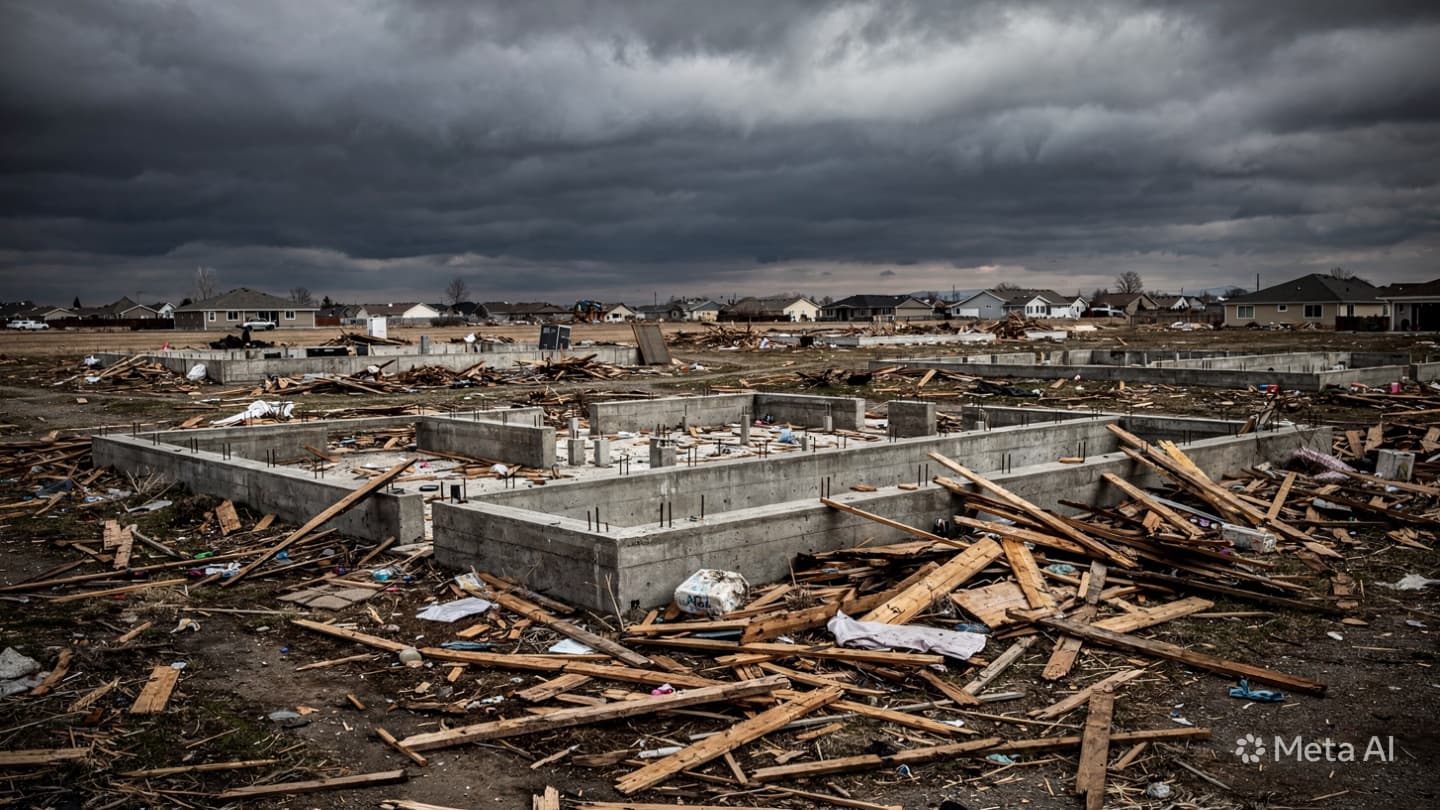
Norman, United States—Search and rescue operations are active across a decimated residential suburb west of Oklahoma City after a violent tornado outbreak killed four people Friday afternoon. The National Weather Service issued multiple rare tornado emergencies as a cluster of severe supercells tracked directly through high-density residential zones during the evening commute. Heavy radar indications confirmed a massive, debris-ball multi-vortex system touched down shortly after 4:30 PM.
The high-velocity wind field carved a continuous path of destruction across several miles of suburban infrastructure. Stick-built homes were completely ripped from their concrete foundations, turning residential blocks into chaotic fields of splintered timber and mangled vehicle frames. Emergency dispatch networks gridlocked instantly as hundreds of trapped residents dialed for extraction from collapsed storm cellars and structural interior rooms.
First responders from multiple county jurisdictions deployed heavy earthmoving equipment to clear debris-strewn roadways for ambulance access. Urban search teams utilizing canine units are systematically combing through the wreckage of a collapsed two-story apartment complex where several tenants remain unaccounted for. Medical officials confirmed that local emergency rooms have treated at least sixty individuals for severe lacerations and blunt-force trauma.
"The sheer velocity of the inflow jet completely stripped the roof framing off structures well before the main funnel arrived," said Arthur Pendelton, a veteran meteorologist who tracked the storm track from a mobile radar unit. Pendelton stated that the fast atmospheric acceleration prevented traditional sirens from providing adequate structural advance warning for downstream neighborhoods. The presence of multiple secondary vortices inside the main damage path widened the casualty zone significantly.
State police forces established a strict checkpoint perimeter around the affected municipal sector, denying entry to all non-emergency vehicles to prevent traffic chokepoints. Ruptured natural gas distribution lines continue to vent raw fuel into the atmosphere, creating localized ignition hazards that forced utility crews to isolate sub-stations manually. Low-hanging power grids remain draped over metal fences and shattered tree branches across thirty blocks.
The governor’s administration authorized an immediate deployment of the National Guard to assist local municipal police with anti-looting security patrols through the overnight hours. Displaced families are being trucked to temporary emergency shelters set up inside regional high school gymnasiums outside the impact zone. Emergency drinking water distribution points are being constructed as main water lines lost line pressure during the collapse.
Technical teams from the National Weather Service are preparing to enter the impact zone at daybreak to conduct structural engineering damage surveys. The survey data will determine the definitive rating of the tornado on the Enhanced Fujita scale based on the degree of structural destruction observed. Initial assessments of the perimeter damage indicate wind speeds consistently exceeded two hundred miles per hour.
Heavy precipitation continuing into the night is severely hampers ongoing technical extraction efforts amid the dark debris piles. Rescue workers are relying on large portable generator light towers to illuminate the primary search sectors while rain fills exposed residential basements.
Note: This article was published on BanxChange.com and is powered by the BXE Token on the XRP Ledger. For the latest articles and news, please visit BanxChange.com