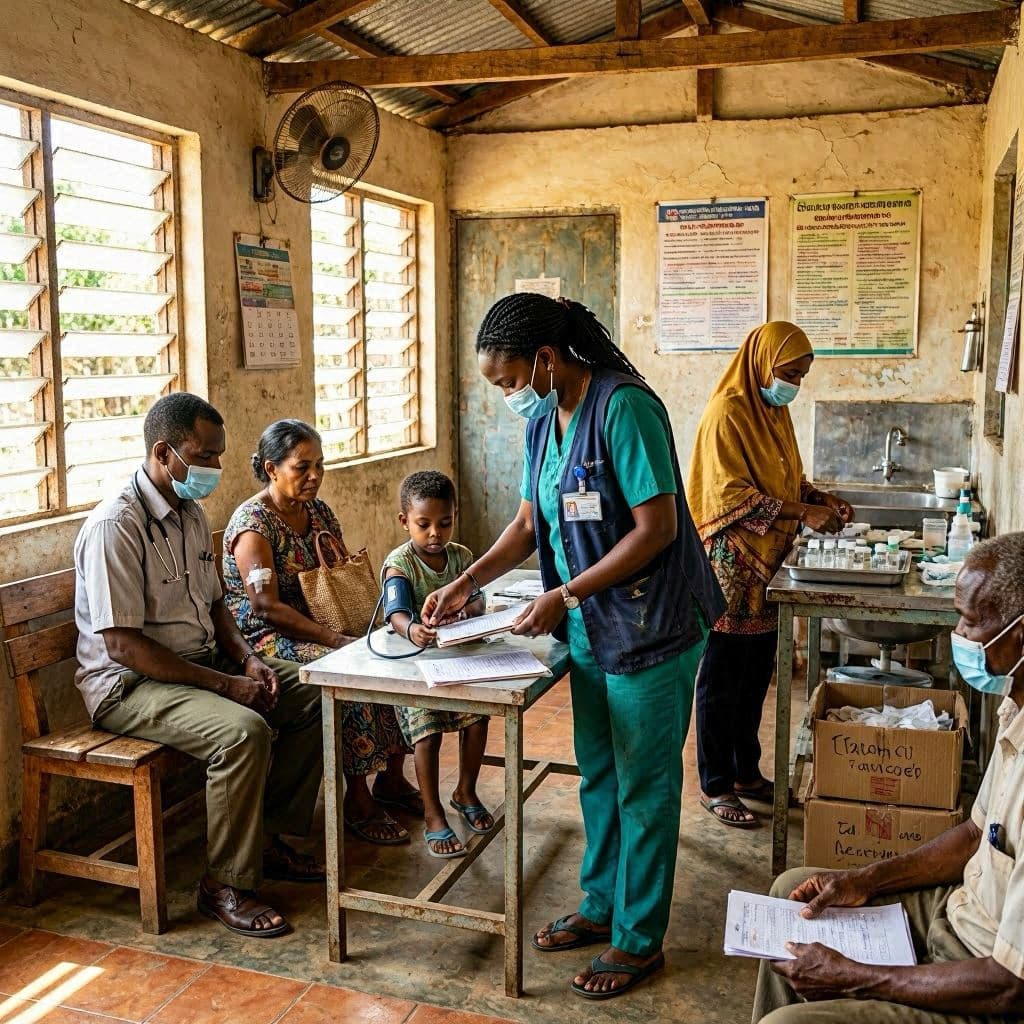
Statistics can sometimes appear distant, composed merely of figures and projections. Yet behind every number lies a human story, a family, a community, and a future shaped by access to healthcare. A new study published in The Lancet has warned that substantial reductions in U.S. foreign assistance could contribute to millions of additional deaths worldwide over the coming years if critical health programs are disrupted.
Researchers examined the potential effects of reduced international funding on health initiatives that support vaccination campaigns, infectious disease prevention, maternal care, and essential medical services in lower-income countries. Their analysis suggests that sustained reductions could significantly affect vulnerable populations.
For decades, U.S. foreign assistance programs have played a major role in global public health efforts. Funding has supported initiatives targeting HIV/AIDS, malaria, tuberculosis, childhood immunization, and maternal health across numerous regions.
Health experts emphasize that international assistance often supplements domestic healthcare systems rather than replacing them. In many low-resource settings, external support contributes to maintaining clinics, training healthcare workers, and ensuring access to essential medicines.
The study's authors caution that their findings are projections based on available data and modeling assumptions. Nonetheless, they argue that the analysis highlights the importance of sustained investment in global health infrastructure.
Supporters of foreign aid programs frequently point to measurable improvements achieved over recent decades, including declining child mortality rates and expanded access to life-saving treatments in many countries.
Debates surrounding international assistance often involve broader discussions about national priorities, budget constraints, and long-term policy objectives. Policymakers continue weighing these considerations while assessing future funding commitments.
Researchers stress that continued international cooperation remains essential in addressing global health challenges. Diseases do not recognize national borders, making collaborative public health efforts an enduring component of global stability.
AI Image Disclaimer: Some illustrations featured with this article were generated using artificial intelligence for contextual editorial purposes.
Sources Verification Check: The Lancet, Reuters, World Health Organization, ABC News Australia
Published by Banx Network. This article is part of the Banx decentralized media programme, powered by the BXE token on the XRP Ledger.