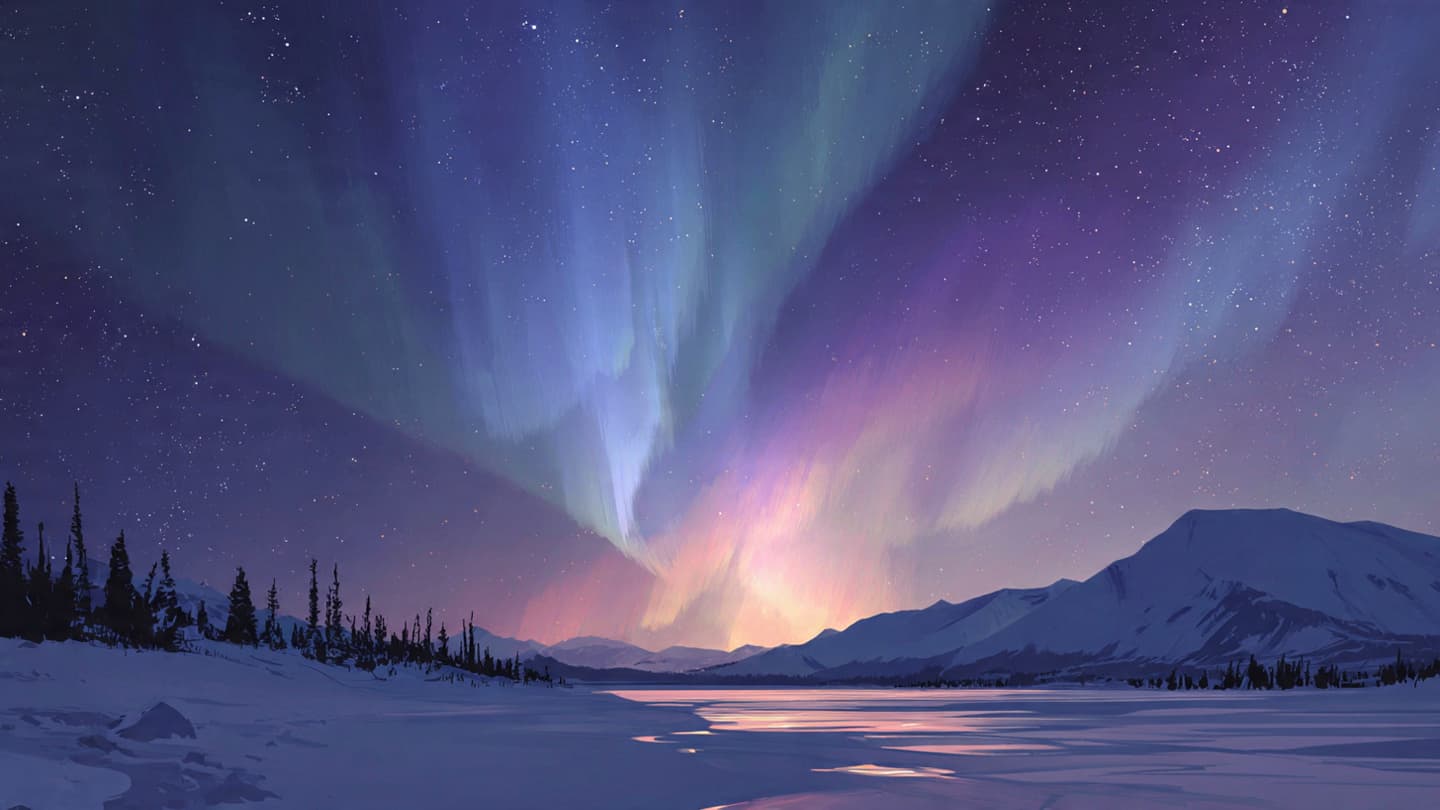
There are nights when the sky appears less like empty space and more like a moving canvas. Across parts of North America, astronomers and weather agencies say conditions may soon align for a visible display of the aurora borealis, drawing attention from photographers, travelers, and ordinary observers hoping to witness the rare glow.
The aurora borealis, commonly called the northern lights, forms when charged particles from the sun interact with Earth’s magnetic field and upper atmosphere. These interactions create shimmering waves of green, purple, pink, and blue light that can stretch across large portions of the night sky.
Recent solar activity has increased the likelihood of stronger auroral displays reaching farther south than usual. Space weather experts say geomagnetic storms linked to solar eruptions may allow residents in parts of Canada and the northern United States to view the phenomenon more clearly.
Scientists monitor solar flares and coronal mass ejections closely because they influence conditions in Earth’s magnetosphere. Although the visual effects can appear peaceful from the ground, the underlying solar events involve enormous bursts of energy traveling millions of miles through space.
The current period of heightened activity is connected to the sun’s natural solar cycle, which rises and falls over roughly eleven years. During peak phases, auroral events become more frequent and intense, occasionally producing visible displays across regions that rarely experience them.
Photography communities and tourism operators often respond quickly to major aurora forecasts. Hotels, national parks, and remote viewing areas in northern regions sometimes experience surges in visitors whenever conditions appear favorable for widespread sightings.
Researchers also study geomagnetic storms for practical reasons beyond visual beauty. Strong solar activity can affect satellites, communication systems, GPS signals, and even power infrastructure under certain circumstances. Modern societies remain increasingly connected to technologies sensitive to space weather conditions.
Despite advances in scientific forecasting, aurora sightings still retain an element of unpredictability. Cloud cover, local weather, and fluctuating geomagnetic conditions can quickly alter visibility from one location to another.
For many observers, however, the appeal lies partly in that uncertainty. On clear northern nights, people may once again look upward and briefly witness the atmosphere transformed into something that feels almost dreamlike — a reminder that even above crowded cities and busy highways, the universe continues quietly moving overhead.
AI Image Disclaimer: Some celestial illustrations accompanying this article may include AI-generated enhancements for visual storytelling purposes.
Sources Verified: NASA, NOAA Space Weather Prediction Center, Reuters, Space.com, Associated Press
Published by Banx Network. This article is part of the Banx decentralized media programme, powered by the BXE token on the XRP Ledger.