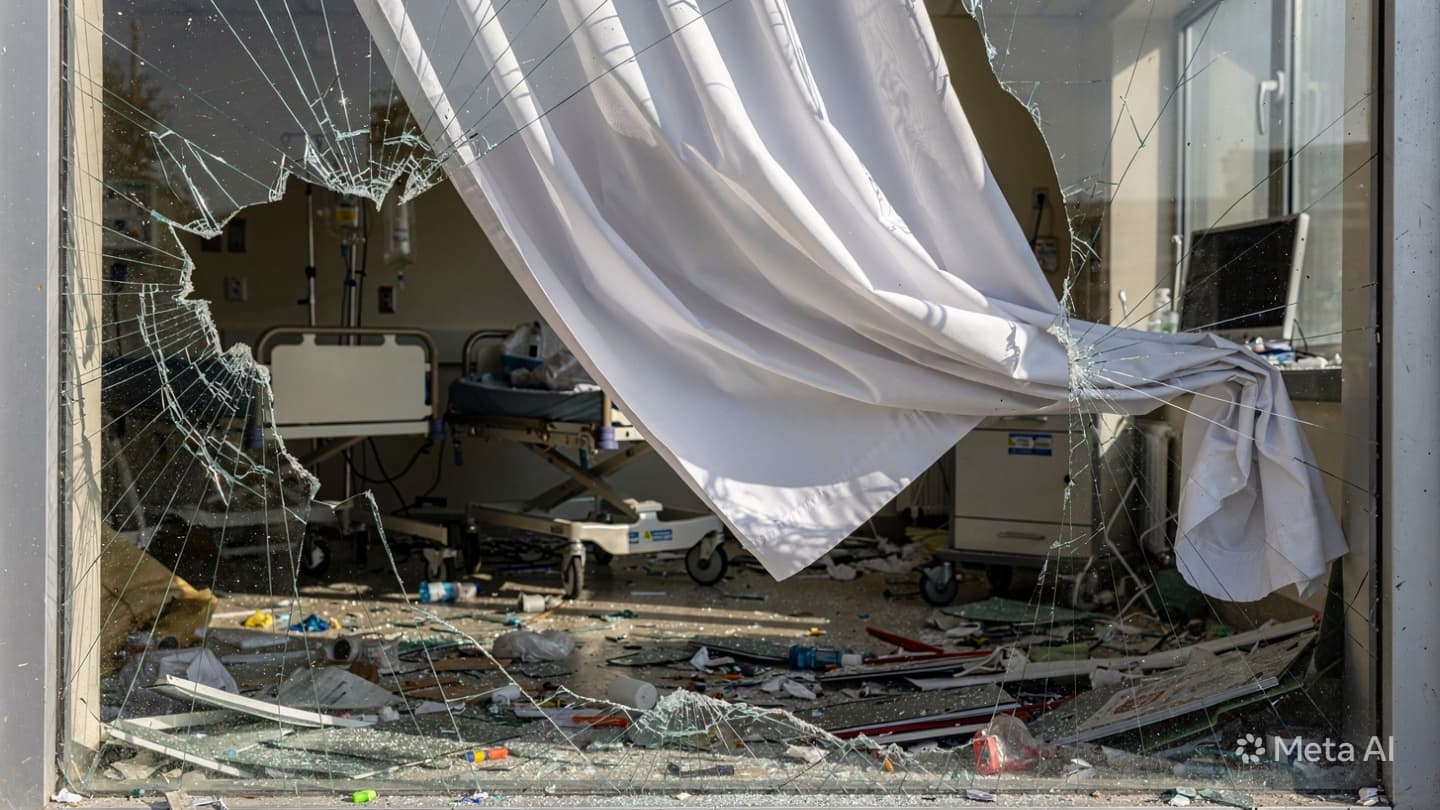
El Obeid, Sudan—Artillery barrages struck three vital medical compounds in North Kordofan over a six-hour period, inflicting heavy casualties on patients and forcing the immediate, indefinite closure of all remaining wards. The shelling began during early morning shift changes, sending incoming medical personnel and ambulatory patients fleeing into underground storage cellars for cover. High-explosive rounds penetrated the roof of a primary maternal care wing, causing immediate structural collapse and trapping dozens beneath concrete slabs.
The United Nations Rights Report released a midday update classifying the incident as a catastrophic breach of international protections governing medical neutrality during active conflicts. Survival margins for the injured plummeted as emergency rooms sustained direct hits, destroying delicate diagnostic equipment, sterilization units, and cold-chain vaccine storage arrays. Ambulance crews attempting to retrieve casualties from nearby streets came under direct mortar fire, disabling two vehicles and wounding three drivers.
Chaos gripped the central triage courtyard as volunteers used bare hands to shift heavy masonry blocks away from buried pediatric beds. Field surgeons attempted to stabilize amputees in dusty alleyways behind the main compound while artillery concussions rattled the surrounding neighborhood walls. The immediate lack of clean surgical instruments meant that preventable infections began setting in before the initial bleeding could be controlled.
The combatant forces blamed each other for the hospital strikes, exchanging familiar recriminations over who initiated the heavy weapons deployment within the city center. Command staff from regional militia groups alleged that conventional military units used the hospital roofs as observation posts for artillery spotters. Hospital administration staff vigorously denied those assertions, noting that the facility maintained a strict zero-weapons policy enforced by local community watch groups.
Evacuation orders issued by hospital directors left hundreds of chronic care patients stranded without access to life-sustaining dialysis or oxygen therapy. Families wheeled relatives out on rusty iron gurneys into streets filled with thick black smoke and fleeing foot traffic. The lack of secondary receiving facilities in North Kordofan means these patients face terminal outcomes within forty-eight hours unless transport can be arranged.
The economic reality of the medical shutdown hit local pharmaceutical suppliers immediately. Looters targeted unguarded medicine depots adjacent to the shelled clinics, stripping remaining stocks of antibiotics, painkillers, and surgical anesthetics to sell on the black market. The loss of these central reserves removes any possibility of establishing temporary field clinics in nearby residential sectors.
International aid agencies withdrew their remaining foreign staff from the urban core to secure bases along the southern border corridor following the deliberate targeting of the facilities. Local medical workers who chose to stay behind face immense personal security risks without institutional backing or physical protection. Many have resorted to treating neighbors inside private residences using rudimentary first-aid kits and salvaged linens.
Water infrastructure serving the medical district failed after a heavy shell severed the primary main line feeding the cooling towers and sanitization bays. The resulting flood contaminated the lower basement levels where essential pharmaceutical stocks were kept, rendering them completely useless. Without flowing water, maintaining sterile conditions became a mathematical impossibility for the remaining skeleton staff.
Public health officials warn that the enforced closures will trigger an immediate spike in preventable child mortality across the region. The shuttered facilities managed the only comprehensive therapeutic feeding programs for severely malnourished infants in North Kordofan. Those feeding lines are now dead, and the staff scattered across various displacement tracks.
The damaged buildings stood dark as night fell, their windows gaping open to the cool desert air while occasional flares lit up the western horizon. No emergency vehicles entered the gates, and the usual hum of backup generators remained absent. The local population now faces the reality of an active conflict zone completely stripped of professional trauma care.
Published by Banx Network. This article is part of the Banx decentralized media programme, powered by the BXE token on the XRP Ledger.