Nature has long served as both artist and engineer, producing colors that seem almost impossible to recreate. From the iridescent feathers of birds to the shimmering scales of fish, living organisms continue to reveal remarkable biological innovations. A new study has now uncovered how damselflies generate some of their exceptionally vivid colors.
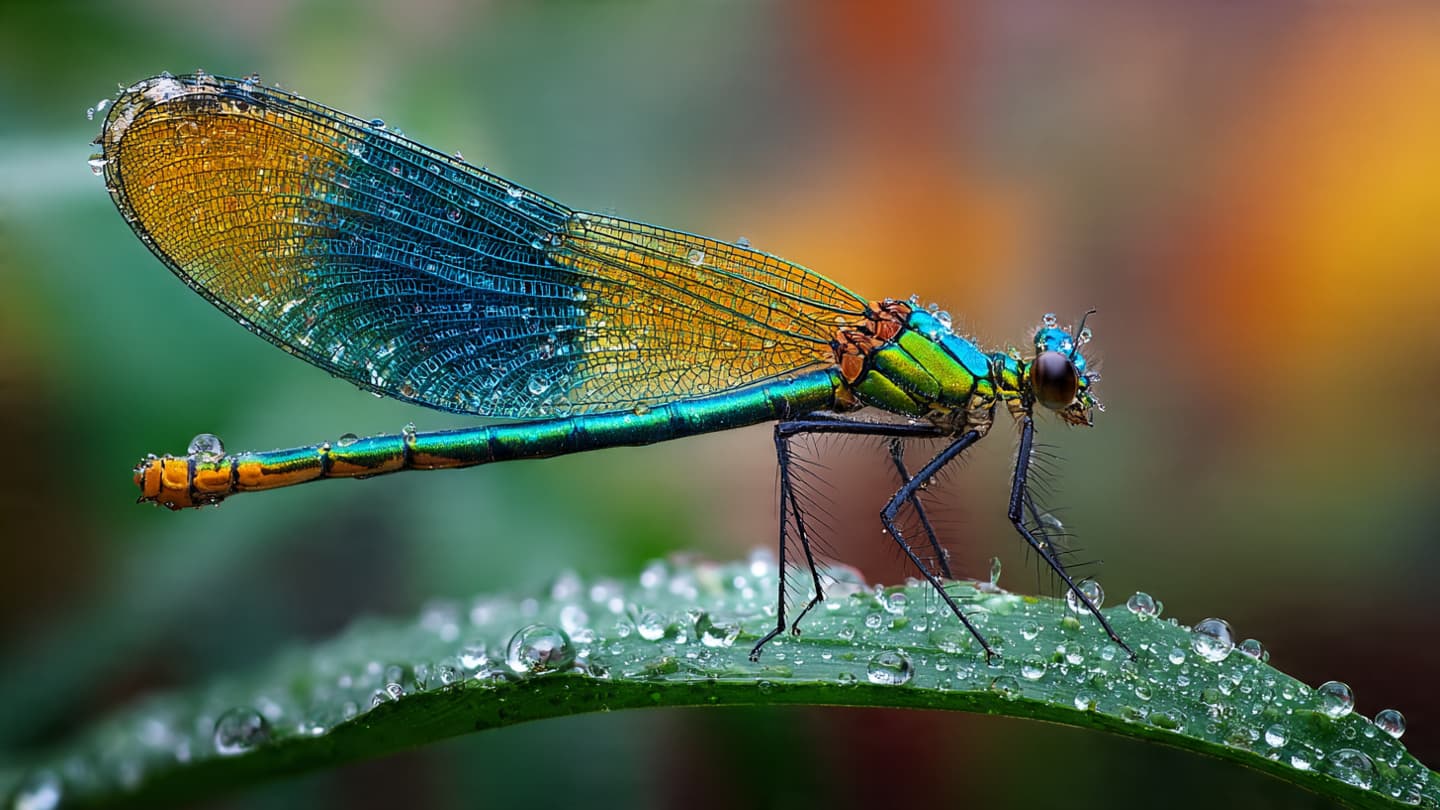
Researchers examining several species of damselflies discovered that their striking appearance is not produced solely by pigments. Instead, microscopic structures within their bodies manipulate light in highly sophisticated ways, creating brilliant and sometimes metallic hues.
Scientists found that these tiny structures are arranged with extraordinary precision. By controlling how light waves are reflected and scattered, the insects can produce intense colors that may appear to change depending on viewing angle and lighting conditions.
The phenomenon, known as structural coloration, differs significantly from conventional pigmentation. While pigments absorb certain wavelengths and reflect others, structural colors arise from the physical interaction between light and microscopic surfaces.
Researchers believe these vivid colors play important roles in communication, mate selection, and species recognition. Bright coloration may help individuals identify suitable partners while reducing confusion between closely related species.
Understanding these natural optical systems could have practical applications beyond biology. Engineers are increasingly studying structural coloration to develop environmentally friendly materials, advanced sensors, and color technologies that do not rely on chemical dyes.
The findings also underscore the growing field of biomimicry, in which scientists draw inspiration from natural systems to solve technological challenges. Nature's designs often provide elegant solutions refined over millions of years of evolution.
As researchers continue to explore the microscopic world, even small insects such as damselflies are revealing profound lessons about light, materials, and the extraordinary creativity of evolution.
AI Image Disclaimer: The images accompanying this article were generated using AI for illustrative purposes and are intended to visualize the scientific concepts discussed.
Sources: Phys.org, Nature Communications, ScienceDaily, New Scientist
Published by Banx Network. This article is part of the Banx decentralized media programme, powered by the BXE token on the XRP Ledger.