Space exploration often looks dramatic in movies: explosions, countdowns, rockets disappearing into the sky.
But many of the most important moments happen quietly, millions of miles from Earth, through mathematics precise enough to guide a spacecraft past an entire planet using gravity itself as fuel.
That is exactly what happened as announced the successful Mars flyby of its spacecraft, a key milestone in the mission’s long journey toward one of the most unusual objects in the solar system: the metal-rich asteroid Psyche.
The maneuver used the gravity of to alter the spacecraft’s trajectory and accelerate it deeper into space without requiring enormous additional fuel consumption.
NASA described the flyby as a major navigational success.
Why Psyche Is So Strange The mission’s destination, officially known as , has fascinated scientists for decades because it appears dramatically different from most asteroids.
Unlike rocky or icy bodies, Psyche is believed to contain enormous amounts of:
Iron Nickel Metallic compounds Some researchers theorize the asteroid may represent the exposed core of an early protoplanet — essentially the metallic interior of a failed planet left behind from the solar system’s formation billions of years ago.
If true, studying Psyche could help scientists better understand:
Planet formation Core development Magnetic field origins Early solar system collisions In a sense, the mission may allow humanity to observe something normally hidden deep inside planets.
How Gravity Assists Work One of the most remarkable aspects of deep-space missions is how spacecraft use planets almost like cosmic slingshots.
During a gravity assist maneuver:
A spacecraft approaches a planet closely The planet’s gravity bends the trajectory Orbital momentum transfers energy The spacecraft exits at higher speed or altered direction The process allows missions to conserve enormous amounts of fuel.
Without gravity assists, many long-distance space missions would become impractical or vastly more expensive.
The Psyche flyby required extraordinarily precise calculations because even tiny navigational errors can grow massively across millions of miles of travel.
A Mission About Planetary Origins Part of what makes Psyche scientifically important is that planetary cores are normally impossible to observe directly.
Earth’s metallic core lies thousands of kilometers beneath the surface.
But Psyche may offer a rare natural window into what planetary interiors can look like.
Scientists hope instruments aboard the spacecraft will study:
Surface composition Magnetic properties Topography Structural density Evidence of ancient geological activity The mission therefore extends beyond asteroid science alone. It touches on fundamental questions about how rocky planets — including Earth — originally formed.
The Expanding Era of Deep-Space Exploration The Psyche mission also reflects a broader shift in modern space exploration.
Rather than focusing solely on:
Moon landings Mars missions Human spaceflight agencies increasingly pursue highly specialized scientific missions targeting unusual celestial objects.
These missions help researchers study:
Primitive asteroids Planetary atmospheres Deep-space radiation Exoplanets Solar system evolution Each mission adds another fragment to humanity’s understanding of how the cosmos developed over billions of years.
A Wider Reflection There is something quietly extraordinary about a spacecraft using the gravity of one planet to reach another object millions of miles farther away.
No explosions. No dramatic battle. Just physics unfolding across enormous distances with astonishing precision.
The Psyche mission reflects one of humanity’s most enduring instincts: the desire to understand what lies beneath the surface — whether beneath oceans, inside planets, or across the darkness of interplanetary space.
And perhaps that is what makes the asteroid Psyche so compelling.
Scientists are not only traveling to a distant rock. They may be traveling toward the exposed remains of a world that never fully became a planet — a metallic relic from the earliest age of the solar system still drifting silently between Mars and Jupiter.
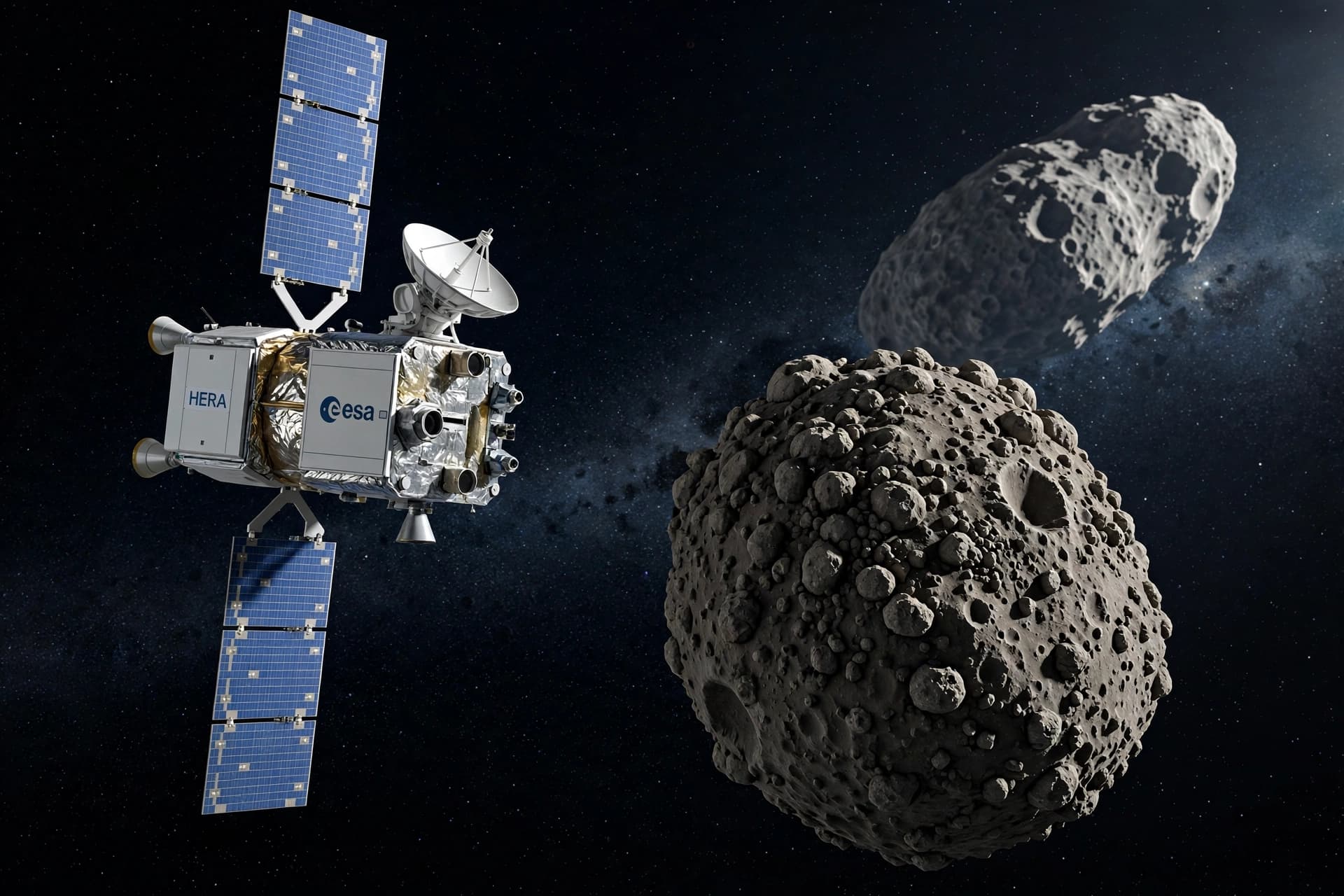
AI Image Disclaimer Images are AI-generated illustrations and are intended for visual representation only, not real-world documentation.
Source Check confirmed that the spacecraft successfully completed a gravity-assist flyby of , helping redirect the mission toward the metal-rich asteroid Psyche deep within the asteroid belt.
Published by Banx Network. This article is part of the Banx decentralized media programme, powered by the BXE token on the XRP Ledger.