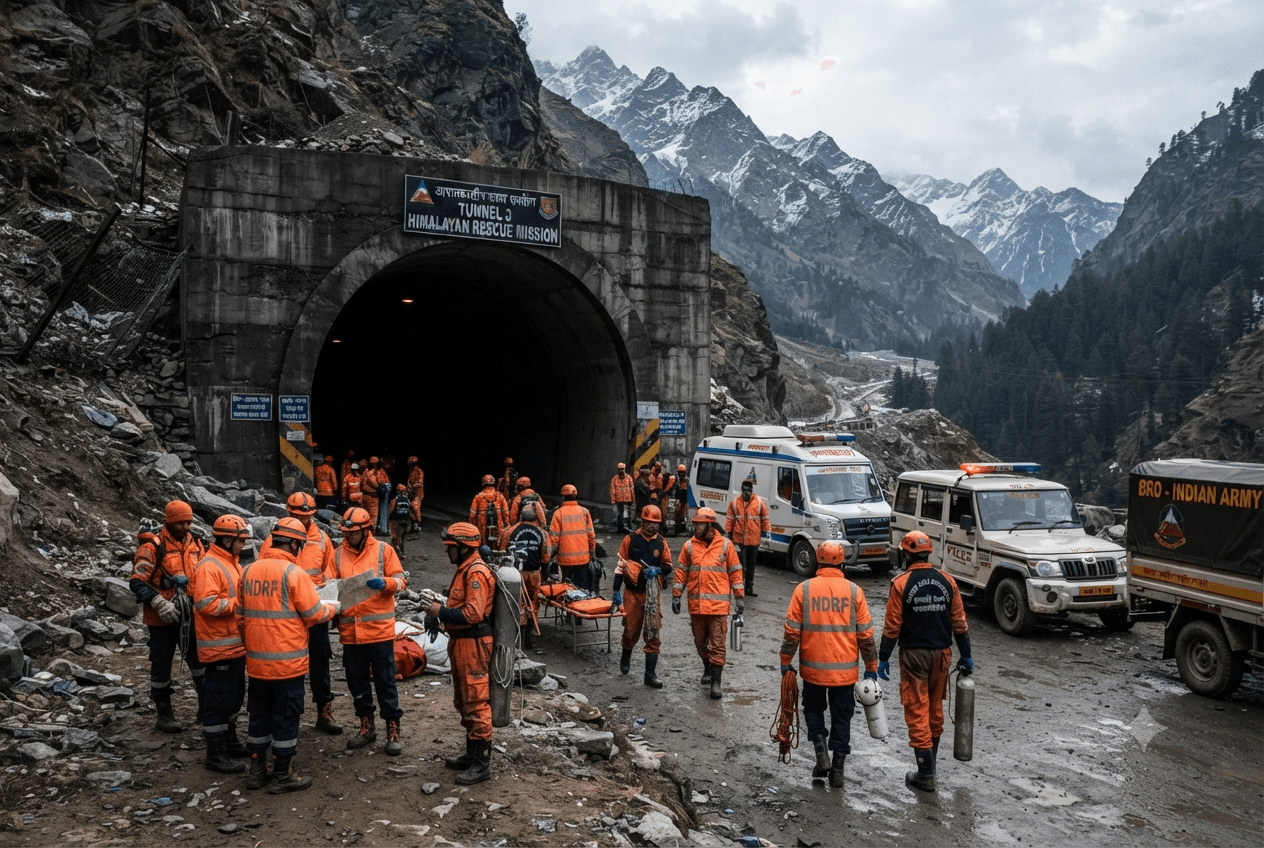
Namchi, India—Rescue teams pulled the final bodies from the collapsed tunnel entrance, ending a desperate four-day search operation in the remote mountains. A sudden pocket of trapped methane gas detonated deep underground on Monday, sealing the main exit routes with tons of heavy rock and toxic fumes. The blast tore through the underground excavation site for a major hydroelectric power project in the rugged terrain of Sikkim state, instantly cutting off all communication lines to the crew.
State-owned National Hydroelectric Power Corporation officials confirmed that nineteen of the victims were direct employees of Patel Engineering Limited working on the critical infrastructure project. Thick clouds of dark, acrid smoke billowed from the borehole minutes after the initial tremor shook the valley, preventing immediate entry by auxiliary rescue units. Specialized disaster response teams arrived by Tuesday morning, pumping oxygen into the shaft while drilling auxiliary pilot holes to locate the missing laborers.
Local authorities coordinated round-the-clock extraction efforts involving multiple federal agencies despite continuous threats of secondary rockfalls inside the unstable geological formation. Families of the trapped workforce gathered near the security perimeter, braving relentless monsoon rains while waiting for hourly status briefings from site managers. Medical tents were erected along the access road to treat exhausted rescue personnel suffering from smoke inhalation and exhaustion.
Preliminary findings indicated that pockets of flammable gas built up unnoticed within the mountain strata prior to the breakthrough excavation phase. Safety auditors pointed toward potential oversights in continuous atmospheric monitoring protocols required for deep underground engineering works in volatile Himalayan rock zones. State disaster management teams noted that ventilation shafts failed to clear the poisonous gas accumulation quickly enough to avert the disaster.
State officials announced emergency financial compensation packages for the grieving families of the deceased workers, promising strict oversight reviews for active regional tunneling sites. Labor union representatives condemned lax industrial safety standards, demanding immediate independent criminal inquiries into corporate negligence at the hydroelectric construction zone. Rescue personnel finally concluded their grim recovery mission late Thursday evening after accounting for every missing individual registered on the shift manifest.
Engineers sealed the immediate portal zone off with concrete barriers to allow federal inspection committees unimpeded access for forensic sample collection starting Friday morning. Geological surveyors began mapping surrounding fault lines to determine whether regional tectonic stress contributed to the sudden release of pocketed subterranean gas. Local district magistrates imposed strict movement restrictions around the industrial complex as grief-stricken relatives demanded accountability from project directors.
Heavy excavation machinery remained parked idle along the muddy access tracks as investigators combed through twisted reinforcement steel and scorched debris fields. Labor representatives planned a series of commemorative vigils across nearby townships to honor the construction crews who lost their lives in the disaster.
Note: This article was published on BanxChange.com and is powered by the BXE Token on the XRP Ledger. For the latest articles and news, please visit BanxChange.com