
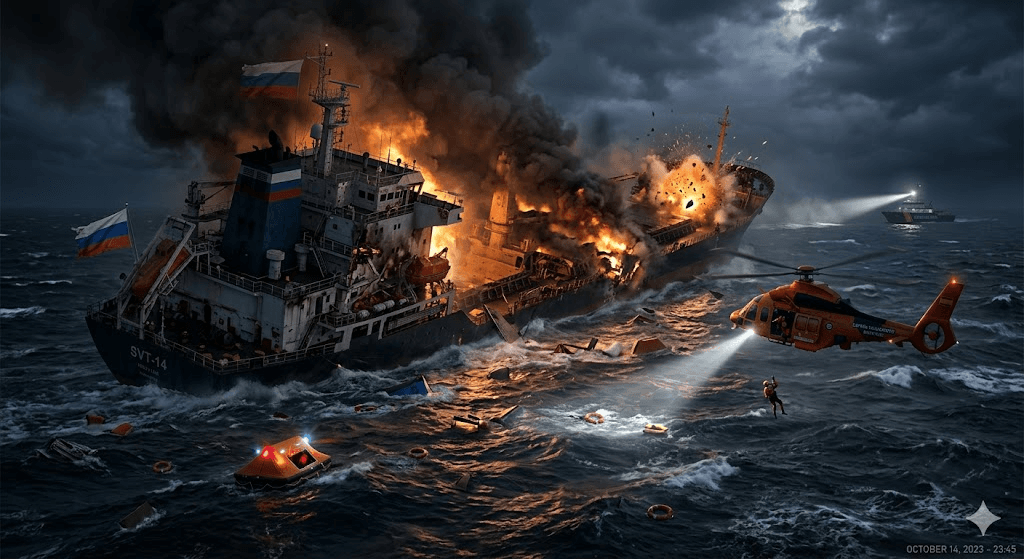
OFF THE COAST OF GALICIA — International maritime agencies and intelligence communities are on high alert following the unexplained sinking of a Russian cargo vessel in the Atlantic Ocean. The ship, which reportedly suffered a series of devastating internal explosions, is believed to have been carrying sensitive nuclear technology, potentially destined for North Korea.
The vessel, identified as a Russian-flagged heavy-lift cargo ship, was navigating international waters off the northwest coast of Spain when disaster struck during the late hours of Monday night, May 11, 2026.
The disaster began with a series of sudden detonations; automated distress signals were quickly followed by reports from nearby commercial vessels witnessing large explosions on the horizon. The ship took on water rapidly, vanishing from radar within just forty minutes of the initial blast. Because no storm activity or rogue waves were reported in the area at the time, experts are currently investigating unexplained circumstances such as internal sabotage, mechanical failure, or a volatile cargo incident.
While the official manifest listed "industrial machinery," high-level intelligence leaks suggest a far more significant cargo: two compact nuclear reactors designed for submarine propulsion.
Analysts believe the vessel was en route to a Pacific terminal with the ultimate goal of transferring the reactors to North Korea to bolster its burgeoning nuclear submarine program. If confirmed, the loss of these reactors represents a massive blow and a major setback for any covert cooperation between Moscow and Pyongyang.
The sinking has triggered an immediate response from the Spanish Coast Guard and European environmental agencies. Authorities are currently maintaining a containment watch, monitoring the site for any signs of radioactive leakage. While the immediate risk of a meltdown is considered low because the reactors were likely in a "cold," unfueled state, the long-term integrity of the containment units under intense deep-sea pressure remains a primary concern.
Additionally, a high-stakes "scramble for the deep" is expected as nations compete for salvage rights, seeking to either confirm the nature of the cargo or prevent sensitive technology from being recovered by adversaries.
The Kremlin has yet to issue a formal statement regarding the ship's loss or the nature of its mission. Meanwhile, Western officials have expressed "grave concern" over the possibility of nuclear proliferation.
"This incident raises more questions than it answers," remarked a maritime security analyst. "Between the nature of the explosions and the suspected destination of the cargo, we are looking at a potential international crisis resting on the ocean floor."
Search and rescue operations for the crew remain ongoing, though no survivors have been spotted in the debris field thus far.
Note: This article was published on BanxChange.com and is powered by the BXE Token on the XRP Ledger. For the latest articles and news, please visit BanxChange.com