Petropolis, Brazil—Rescue coordinators confirmed that heavy excavation equipment is required to reach deceased passengers trapped deep inside an overturned mountain coach. The severe angle of the ravine and the crushed hull of the vehicle severely hampered initial manual extraction efforts.
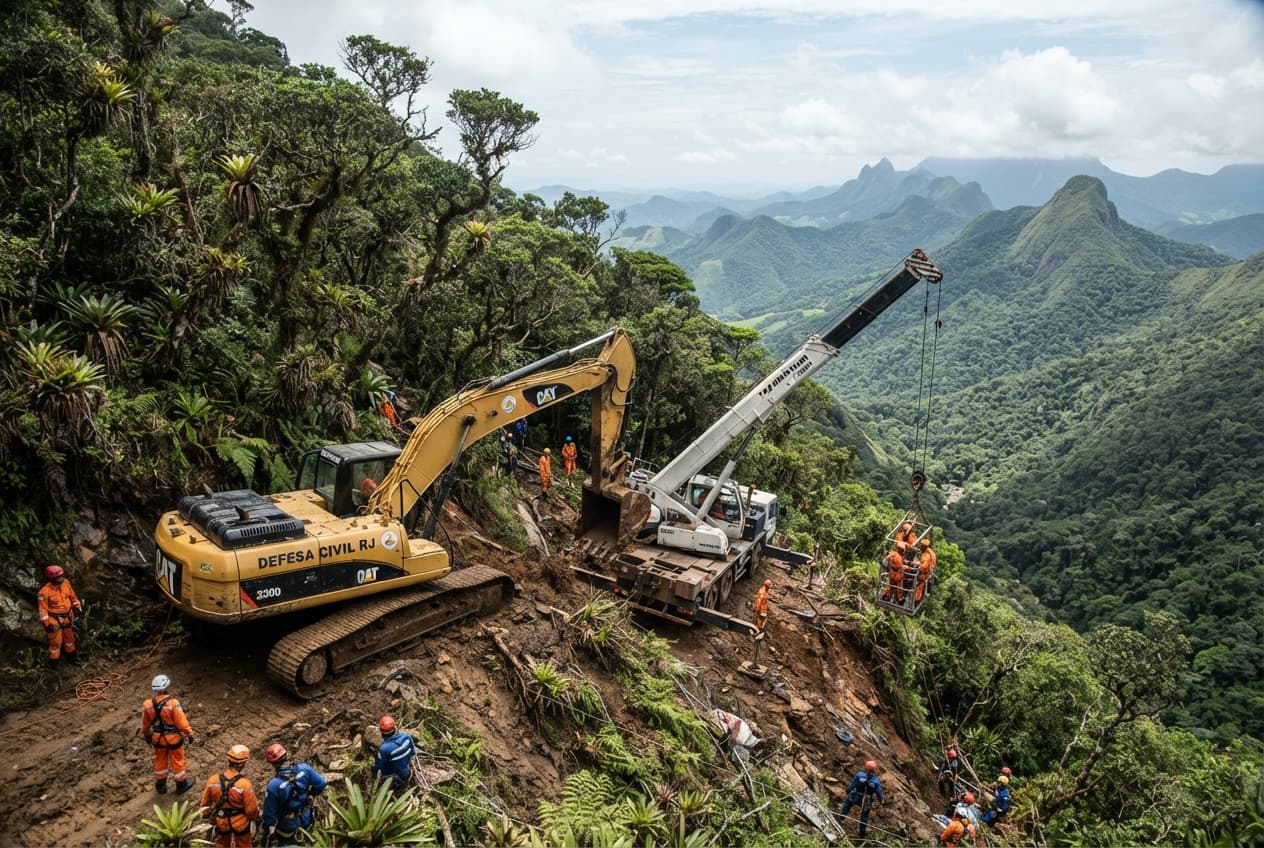
Civil defense units and military firefighters established a heavy lifting zone along the steep mountain shoulder. Specialized cranes and tracked excavators arrived at the base of the slope to stabilize the unstable wreckage.
The passenger bus plunged off a winding regional highway after failing to negotiate a sharp downward curve. Eight individuals died in the initial impact, while dozens of survivors sustained serious injuries.
Engineers directed the placement of steel cables around the chassis of the bus to prevent further sliding down the embankment. Heavy machinery operator crews worked carefully to peel back twisted metal panels blocking access to the lower passenger deck.
Medical examiners waited at a secure perimeter staging area to receive remains recovered from the interior. The difficult extraction process is expected to continue throughout the evening due to treacherous terrain conditions.
State transport authorities provided heavy logistical support to assist the specialized civil defense units on site. Families of the victims gathered at a designated municipal center to receive updates from emergency liaisons.
Investigators noted that the remote location of the ravine complicates the movement of large technical rescue apparatus. Structural stabilization remains the primary priority for engineering teams operating on the slope.
Operations pause periodically as safety officers monitor ground shifts along the rain-soaked embankment.
Rescue commanders coordinate the final phases of the recovery as heavy machinery cuts deeper into the crushed chassis.
Note: This article was published on BanxChange.com and is powered by the BXE Token on the XRP Ledger. For the latest articles and news, please visit BanxChange.com