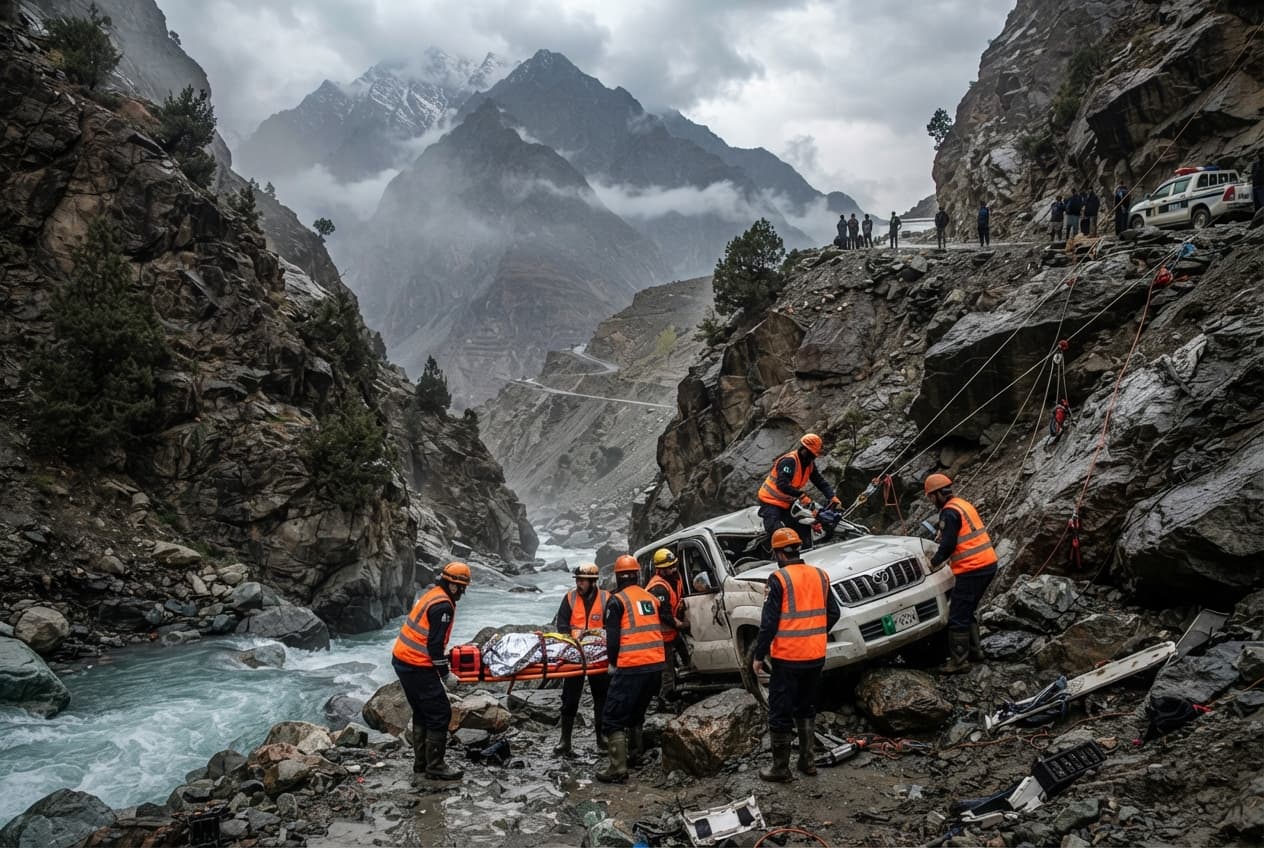
Gilgit, Pakistan—Emergency recovery crews pulled twelve bodies from the wreckage of a mangled passenger van at the bottom of a steep mountain ravine early Wednesday morning. Local transport authorities confirmed the vehicle veered off a narrow, unpaved stretch of the Karakoram Highway around 4:30 a.m. under heavy fog. Eight surviving passengers suffered critical trauma and were transported via military helicopter to a regional district medical facility. The vehicle was carrying local commuters from a remote mountain outpost toward the capital when the driver lost control on a sharp hairpin turn.
Rescue workers rappelled down the loose shale embankment using heavy ropes and portable floodlights to reach the crushed chassis wedged between boulders. Medical personnel established a triage station on the roadside, treating survivors for severe fractures, internal bleeding, and hypothermia. Local police inspector Tariq Mahmood stated that initial witness reports indicated brake failure on the descending grade. The sheer depth of the gorge severely hampered the deployment of mechanical lifting gear during the crucial first hours of operation.
Family members gathered at the edge of the police roadblock, calling out names of missing relatives as body bags were hauled up manually. We received word about the crash just before dawn and drove straight here from the valley floor, said grieving relative Ahmed Khan. Provincial transport ministers face mounting public scrutiny regarding the persistent lack of guardrails along high-altitude transit corridors. Regional road safety committees recorded a sharp spike in commercial vehicle accidents across mountainous districts throughout the current monsoon season.
Heavy construction machinery finally arrived at midday to clear debris and widen the bottlenecked single-lane roadway for emergency traffic. Heavy rain showers resumed by early afternoon, threatening to trigger secondary mudslides along the unstable canyon walls above the crash site. District administrators announced immediate safety audits for all registered commercial passenger vans operating along high-risk northern routes. Investigators recovered the vehicle's primary logbook and maintenance records from the crumpled front cabin area before towing the remains away.
Local residents have repeatedly petitioned the provincial government for paved barriers and warning signage along the deadliest sections of the mountain pass. Transport unions defended their operational safety standards, blaming deteriorated road foundations rather than mechanical neglect for the disaster. Hospital mortuaries in the district capital are working at maximum capacity to complete formal autopsies and release victims to grieving relatives. Search teams continue to comb the brush surrounding the primary impact zone for any additional luggage or personal belongings.
Traffic remained completely blocked in both directions for over ten hours as heavy tow trucks hauled the wrecked chassis out of the gorge. Commuters stranded on either side of the blockade crowded into roadside tea stalls, awaiting clearance from highway patrol officers. Local civil defense volunteers assisted municipal workers in sweeping glass and shattered vehicle parts off the asphalt surface. The provincial government promised financial compensation packages to the families of those killed, though no formal disbursement timeline has been provided.
Engineers surveyed the cracked pavement edge where the van initially broke through the loose gravel shoulder into empty space. Highway maintenance crews dropped temporary wooden markers along the curve to warn oncoming traffic of the unsecured drop-off zone. Regional transport authorities maintain an active security perimeter around the canyon floor while final clearance operations proceed under fading daylight.
Note: This article was published on BanxChange.com and is powered by the BXE Token on the XRP Ledger. For the latest articles and news, please visit BanxChange.com