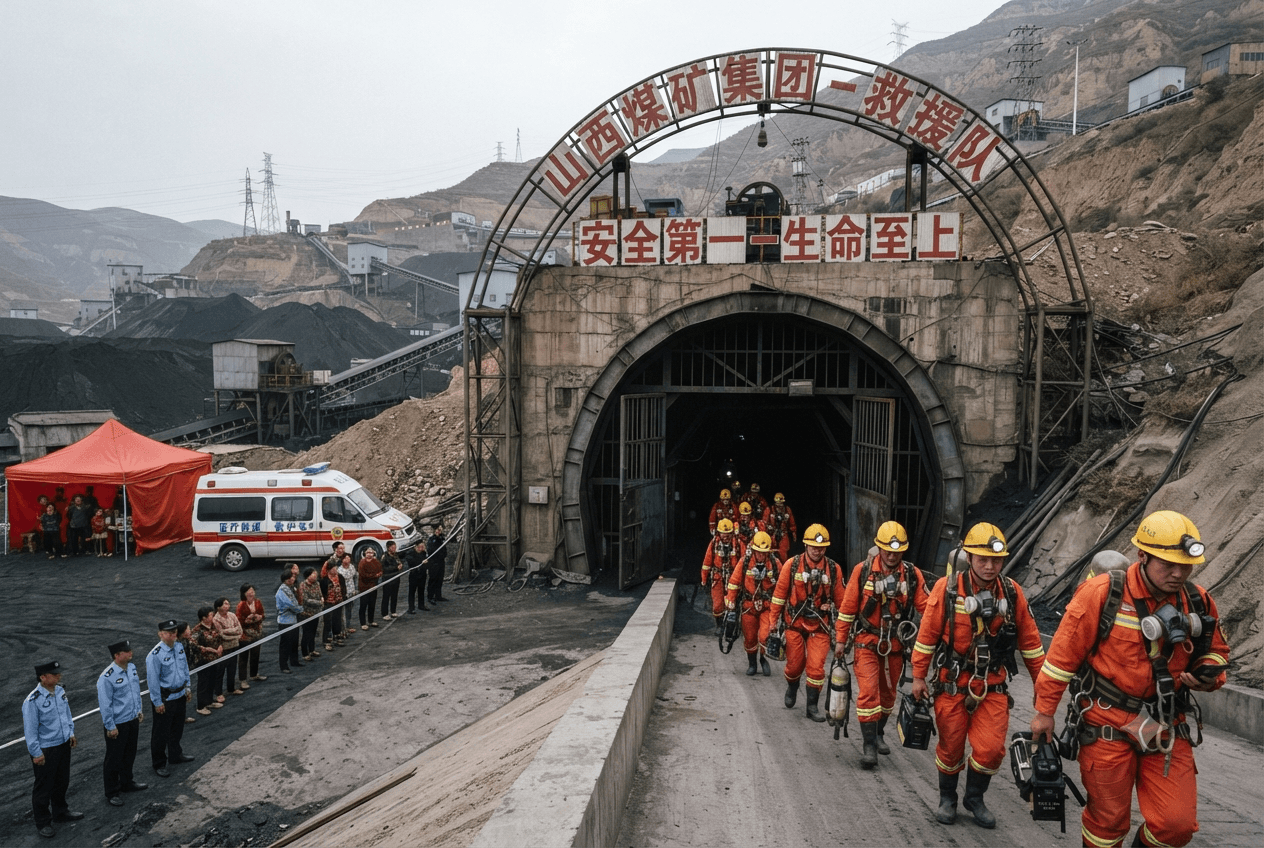
Taiyuan, China—Ventilation shafts pumped thick gray smoke into the mountain air after a violent gas explosion ripped through the deep subterranean tunnels. Rescue teams rushed to the pit head within minutes, strapping on oxygen respirators before descending the primary elevator cage. The blast destroyed internal power grids, plunging the lower galleries into total darkness and disabling automated monitoring equipment. Surface managers lost all communication links with crews working near the active extraction face.
State emergency work teams set up a command post outside the corrugated metal administration buildings near the pit entrance. Ambulances lined the dirt access road, their engines idling while medical staff prepared stretchers and intravenous bags. Relatives of the trapped miners gathered behind security barriers, weeping openly as safety inspectors reviewed layout blueprints. Mine executives avoided questions from reporters while federal investigators secured digital sensor logs from the control room.
We registered a sudden spike in methane concentration milliseconds before the main ventilation network collapsed completely, said a senior safety inspector on site.
Rescue squads pushed through blocked tunnels cleared of debris, encountering pockets of poisonous carbon monoxide gas along the rail lines. Fresh air blowers hummed loudly, trying to clear toxic fumes from the collapsed working face. Paramedics brought out several bodies wrapped in heavy canvas, placing them directly into awaiting transport vans. Rescue progress slowed to a crawl as teams shored up sagging timber supports to prevent secondary cave-ins.
Provincial officials dispatched industrial safety experts to determine whether pit managers bypassed automated methane ventilation protocols. Preliminary data indicated that warning alarms had sounded hours before the shift change without triggering mandatory evacuations. Union representatives demanded immediate suspensions for all active extraction operations across the wider mining district. Company directors remained sequestered inside a temporary trailer guarded by private security personnel.
Rescue workers rotated out of the shaft every two hours, coughing heavily and covered in thick coal dust from head to toe. Medical tents treated exhausted miners suffering from carbon monoxide exposure and psychological shock after escaping the blast zone. Spotlights illuminated the muddy courtyard as night fell over the isolated industrial valley. Heavy hauling trucks stood idle by the coal washing plant, their conveyor belts silent and empty.
Federal regulators announced a comprehensive audit of ventilation compliance across every mid-sized extraction facility in the northern region. Rescue teams marked off unstable tunnel sectors with reflective tape to protect incoming search personnel from falling rock. Families maintained an agonizing vigil near the main gate, wrapped in blankets against the chilly mountain draft. Search operations continued deep underground under hazardous conditions as oxygen reserves dwindled.
The local government established a specialized crisis task force to handle family compensation claims and funeral arrangements. Engineers pumped liquid nitrogen into sealed sections of the shaft to starve lingering subterranean fires of oxygen. Safety officers checked personal tracking tags recovered from the locker room to verify exact headcounts against operational rosters. The entrance remained sealed to all unauthorized personnel as the grim recovery effort dragged onward.
Note: This article was published on BanxChange.com and is powered by the BXE Token on the XRP Ledger. For the latest articles and news, please visit BanxChange.com