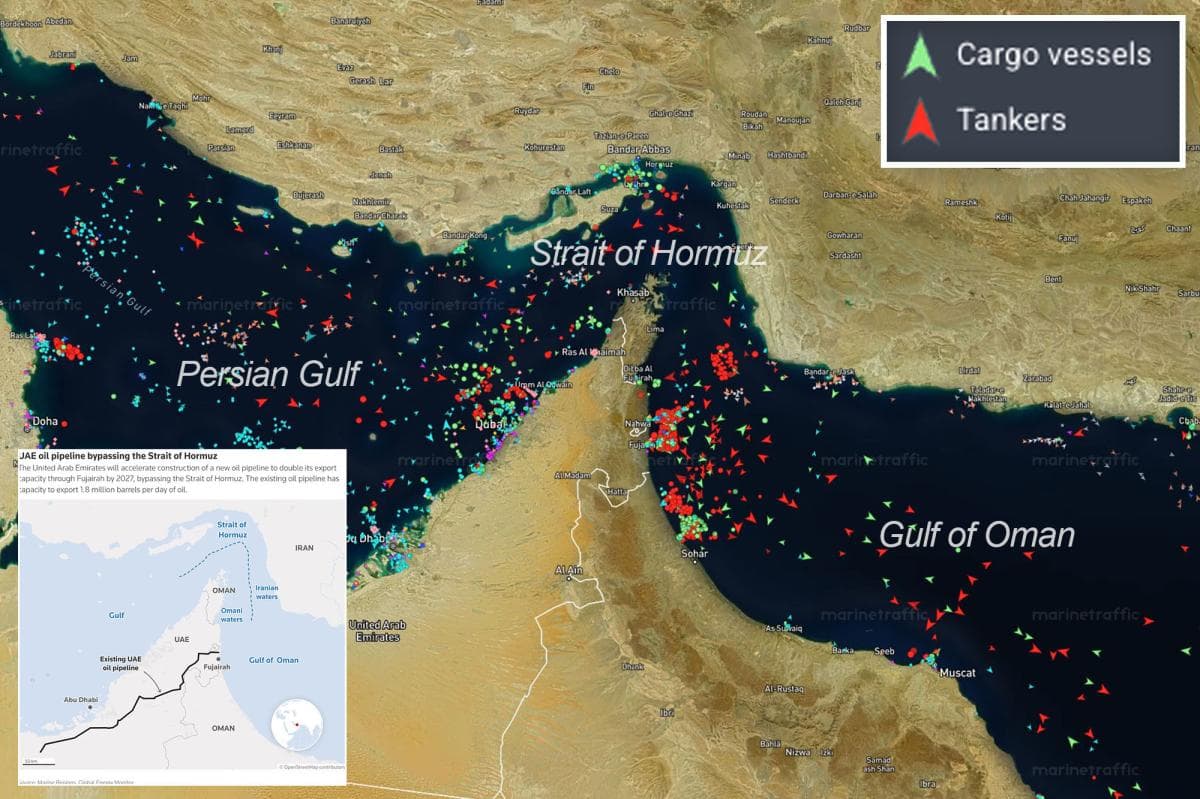
Middle Eastern nations are accelerating plans to expand oil pipelines, export terminals, and port infrastructure designed to reduce dependence on the Strait of Hormuz, one of the world's most strategically important maritime chokepoints. The renewed focus follows heightened geopolitical tensions that have raised concerns over the security of global energy supplies. The Strait of Hormuz connects the Persian Gulf with the Gulf of Oman and the Arabian Sea, serving as a vital transit route for a significant share of global crude oil and liquefied natural gas exports. Any disruption to shipping through the narrow waterway has the potential to affect international energy markets and trigger volatility in oil prices. Several Gulf countries have invested heavily in alternative export routes over the past decade. Existing pipelines linking oil fields directly to ports outside the Strait are being expanded, while new infrastructure projects aim to increase export capacity and improve supply chain resilience. Governments are also modernizing ports capable of handling larger volumes of crude oil and refined petroleum products. Energy producers argue that diversifying export routes strengthens long-term energy security while reducing the risks associated with regional military tensions. Shipping companies have also adjusted operational planning by increasing monitoring of vessel movements and reviewing insurance coverage for cargoes traveling through higher-risk waters. Global energy markets remain highly sensitive to developments in the region. Even limited disruptions can influence benchmark crude prices due to concerns over supply availability. Major importing economies across Asia, Europe, and North America continue monitoring the situation closely because stable Middle Eastern exports remain essential for global energy demand. Analysts note that while alternative pipelines reduce some dependence on maritime transport through the Strait, they cannot fully replace existing shipping capacity. The Strait of Hormuz remains the most efficient route for many exporters, meaning regional stability continues to play a critical role in maintaining balanced global energy markets. Governments are simultaneously investing in strategic petroleum reserves, renewable energy development, and diversified import sources to reduce vulnerability to future supply disruptions. Energy security has become an increasingly important policy objective as geopolitical risks remain elevated across multiple regions. Infrastructure investments are expected to continue over the coming years, reflecting a broader strategy of strengthening resilience while supporting long-term export competitiveness. Industry experts believe diversified transport networks will help reduce supply risks even if the Strait of Hormuz remains central to global oil trade.
Published by Banx Network. This article is part of the Banx decentralized media programme, powered by the BXE token on the XRP Ledger.