
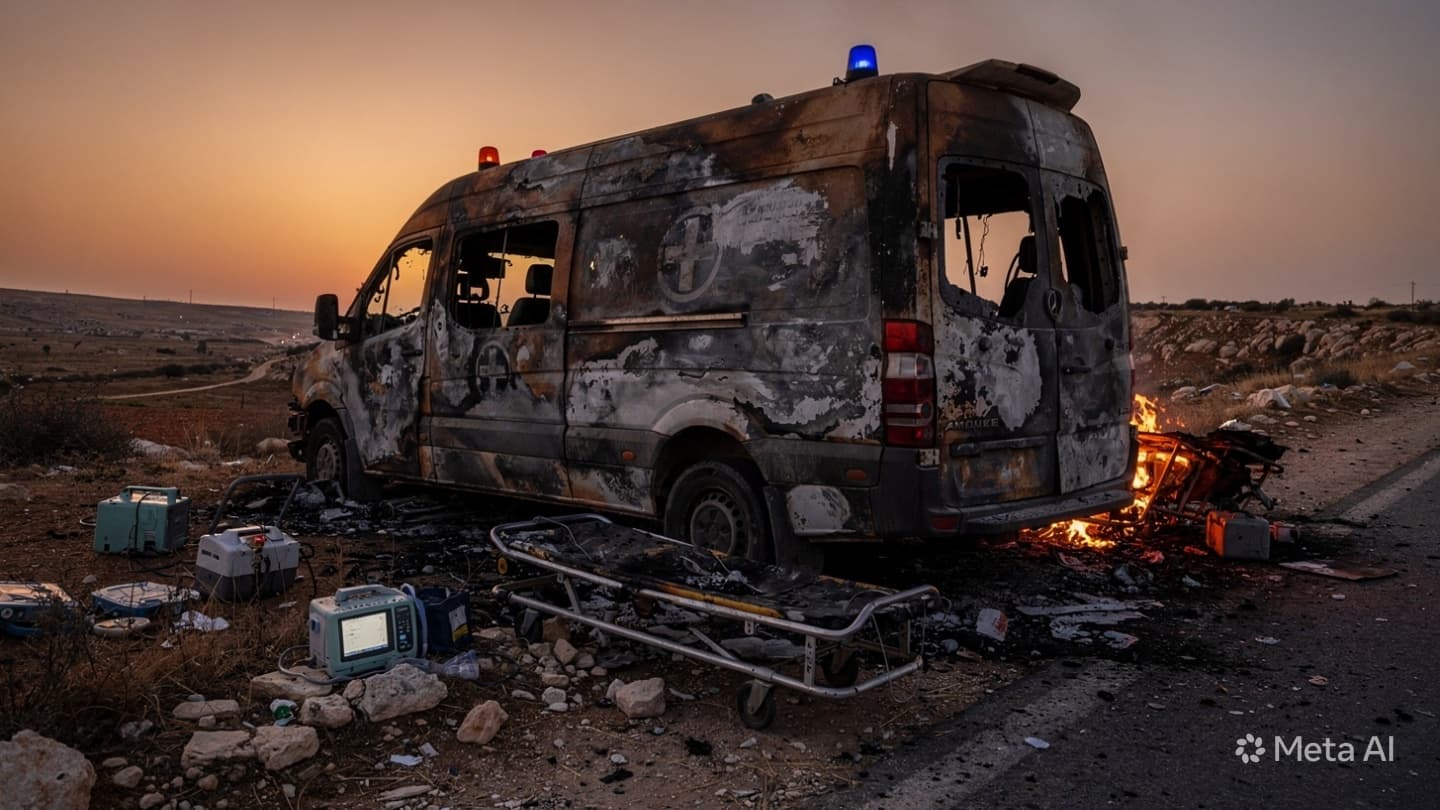
Nabatieh, Lebanon—Two paramedics were killed instantly when an airstrike targeted their medical vehicle while they were navigating a road in South Lebanon. The responders were moving toward a site to evacuate injured civilians when the blast disabled their transport. Their deaths were confirmed by regional authorities shortly after the smoke cleared from the road.
The ambulance had been clearly marked with international medical insignia, intended to provide safety for those performing life-saving work. That visibility offered no protection against the precision strike. Colleagues who arrived later to recover the bodies described the vehicle as a total loss, shredded by the force of the munitions.
This is not the first time emergency teams have been hit in this sector. Organizations providing aid have repeatedly reported that their routes are increasingly precarious due to the risk of repeated strikes. Many crews now limit their time at blast sites to mere minutes to avoid becoming targets themselves.
Local hospitals are struggling to fill the gaps left by the loss of these experienced staff members. The morale among the remaining volunteer corps has plummeted as the danger to their own lives reaches a point of near-certainty. They continue to operate, but they do so with the knowledge that their protective gear is insufficient.
International aid groups have expressed outrage, calling for an immediate investigation into the targeting of medical assets. These pleas have largely been met with silence from those directing the military operations in the area. The reality for the medics is that the rules of engagement do not seem to account for their presence.
Fuel shortages and damage to primary road networks further complicate every emergency call. When a vehicle is lost, it is rarely replaced, forcing crews to combine teams and delay their response times. Every delay reduces the chance of survival for the civilians they are trying to reach.
The families of the two deceased paramedics were notified by their colleagues before the official reports were released to the press. A quiet, somber gathering took place outside the regional hospital where the bodies were transported. No official statement from the military responsible for the strike has been forthcoming as of this hour.
The emergency services headquarters in the district has suspended all non-essential movements until they can assess the current risk to their remaining crews. Ambulances remain parked in the garage, leaving the southern villages effectively without medical transport for the time being.
Note: This article was published on BanxChange.com and is powered by the BXE Token on the XRP Ledger. For the latest articles and news, please visit BanxChange.com