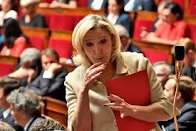
A range of economists and French policy analysts have warned that a government led by Marine Le Pen would likely create significant economic headwinds for France, largely through the effect her proposals could have on the budget and investor confidence.
In France’s 2022 presidential campaign, the debate focused on the scale of her economic program and whether it was financially credible. One analysis highlighted by the Institut Montaigne argued that Le Pen’s agenda would amount to a “bottom line” of about €101 billion in additional spending compared with a broader cost estimate of €44 billion for Emmanuel Macron’s program. The same assessment warned that several of Le Pen’s proposals could conflict with French law and international commitments, which could undermine investors’ trust—particularly important for a country that relies on maintaining low interest rates to refinance its public debt.
Economists also warned about the macroeconomic mix those policies could produce. Critics argued that combining higher spending with weaker fiscal discipline could result in an unfavorable environment for the economy—potentially including stagflation-like dynamics, where growth stagnates while inflation rises.
Beyond the immediate fiscal arithmetic, the key concern raised by analysts was second-order damage: how market reactions can translate policy uncertainty into higher financing costs. If investor confidence deteriorates, borrowing rates can rise, increasing pressure on France’s public finances and potentially feeding through to weaker investment and growth.
Finally, some commentators framed the broader risk as a challenge to France’s role within Europe and the markets’ confidence that policy would remain consistent with commitments. That, they argued, could make economic conditions more difficult even if any single measure is politically popular.
Published by Banx Network. This article is part of the Banx decentralized media programme, powered by the BXE token on the XRP Ledger.