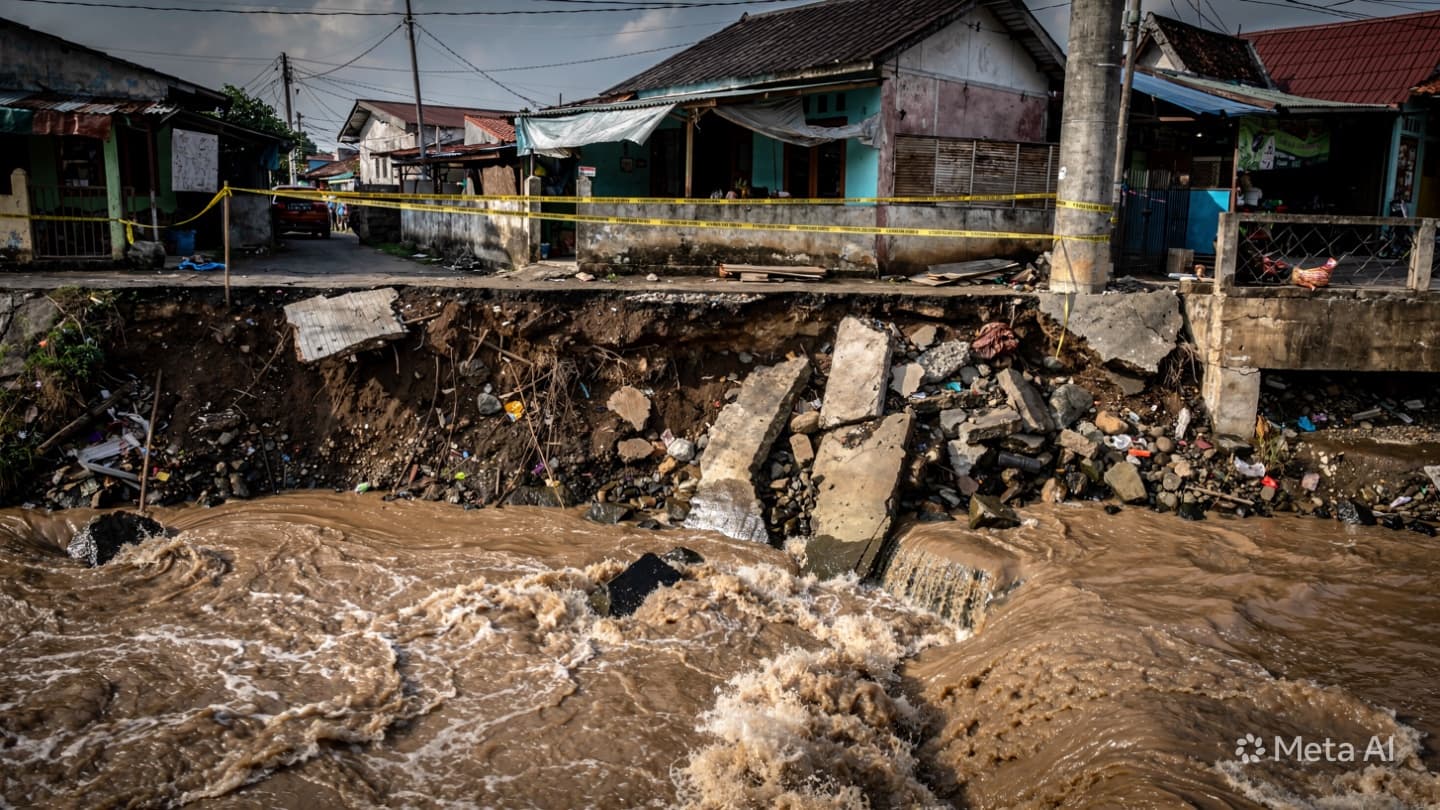
Makassar, Indonesia—A severe, localized cloudburst triggered a fatal riverbank collapse in a densely populated district of Makassar on the afternoon of June 11, 2026, resulting in the drowning of four children. The victims, all aged between six and eleven, were playing near the edge of the reinforced earth embankment when the rain-weakened soil foundation completely sheared away under the pressure of the rising current. The rapid, mud-laden water swept the children into the main river channel before nearby adults could organize any intervention.
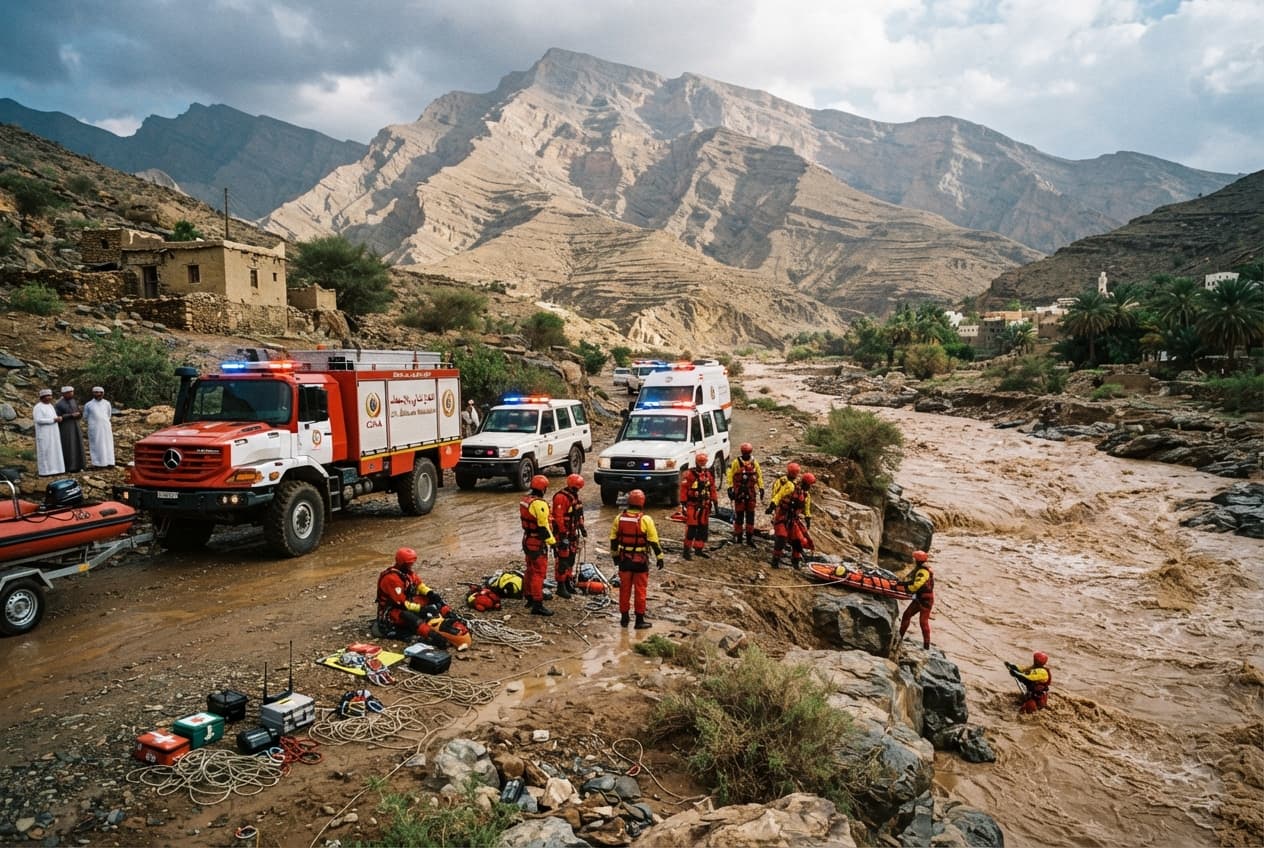
Search and rescue personnel deployed inflatable zodiac boats and specialized diving units to search the downstream sections of the waterway immediately following the disaster notification. Neighborhood volunteers lined the concrete retaining walls, using long bamboo poles and ropes to skim the surface of the turbulent currents. Divers recovered the bodies of three children trapped beneath submerged timber debris two kilometers from the incident site, while the fourth was located hours later near a river mouth.
The regional disaster management agency confirmed that the embankment had been deteriorating for months due to poor maintenance and unmanaged urban runoff. Severe downpours over the preceding twenty-four hours exacerbated the structural deficit, allowing water to infiltrate the underlying sandy clay strata. When the water level rose rapidly during the afternoon storm, the outward pressure forced a twenty-meter section of the bank to slide into the riverbed.
Dozens of informal settlements built directly along the river's path faced immediate evacuation orders as municipal engineers warned of potential secondary collapses. The local police department cordoned off the pedestrian pathways running parallel to the water, forcing residents into emergency shelters established at a district government warehouse. Emergency water pumps were brought in to drain flooded alleys where stagnant overflow threatened residential properties.
Municipal authorities faced harsh criticism from neighborhood association representatives who claimed that formal stabilization requests had been ignored by the city council since the previous winter. The river corridors have seen unchecked encroachment as rural migrants build temporary wooden structures directly on top of protective levees. This spatial density limits the space available for proper structural reinforcing and leaves thousands of families exposed to seasonal flash erosion.
The provincial social affairs department dispatched trauma counselors to assist the families of the deceased children at the local medical center. Municipal leaders promised an immediate investigation into the structural integrity of all retaining structures lining the city’s primary drainage systems. However, independent civil engineers noted that fixing the municipal infrastructure will require billions of rupiah and the wholesale relocation of riverside communities.
Weather forecast arrays indicate that the convective storm cell will remain stationary over southern Sulawesi for another twelve hours, raising the risk of widespread urban inundation. Heavy transport vehicles struggle to navigate the clogged streets of Makassar as unpowered traffic signals and localized pooling slow logistics networks. Public transit operations along the river routes have been suspended indefinitely to ensure public safety.
The mayor's office declined to comment on whether compensation would be paid to the affected families, stating that the immediate priority remains securing the unstable sections of the damaged embankment. Construction crews began dumping large granite boulders into the breach late in the evening to arrest further soil loss. Residents remain on high alert as the water levels show no sign of receding before dawn.
Published by Banx Network. This article is part of the Banx decentralized media programme, powered by the BXE token on the XRP Ledger.