
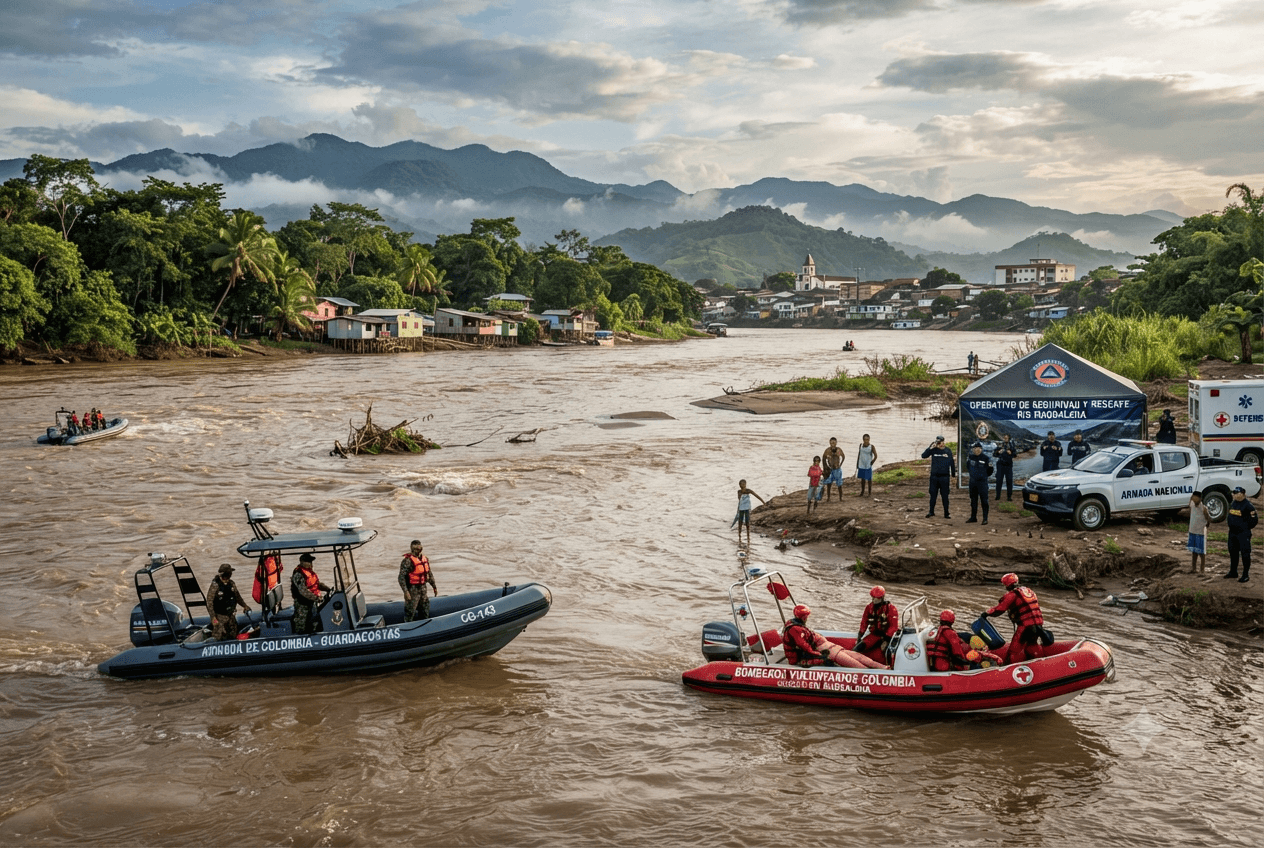
Magdalena, Colombia—Coast guard units and river rescue squads deployed swift-water patrol boats along the Magdalena River today following a catastrophic nighttime boat collision that left four passengers drowned. The deadly maritime accident occurred during low-visibility hours when an overcrowded passenger skiff collided head-on with a heavily laden commercial cargo barge navigating unlit river channels. According to surviving witnesses, the passenger vessel lacked required running lights and life jackets, causing multiple occupants to plunge into the turbulent, fast-flowing current upon impact. Local artisanal fishermen working near the riverbanks managed to pull several shivering survivors ashore while rescue divers launched immediate underwater searches for the missing. Four bodies were recovered from the murky river depths hours after the collision by specialized naval diving teams.
"The complete absence of navigational lights on the passenger skiff combined with excessive river cargo created an unavoidable disaster," stated naval rescue commander Captain Hernan Gomez.
Maritime transit authorities and port captains faced rigorous scrutiny from regional river transport syndicates regarding lax safety oversight and non-compliance with mandatory night navigation bans. Local community leaders expressed intense grief and outrage over recurring river transport accidents along the Magdalena corridor, demanding immediate federal safety enforcement. Regional hospitals mobilized emergency trauma teams to treat six passengers pulled from the water suffering from severe hypothermia, shock, and lacerations. State prosecutors opened an immediate criminal negligence investigation into both vessel operators to determine liability and verify compliance with commercial transport regulations.
"We are enforcing immediate restrictions on nocturnal passenger navigation until full maritime safety audits are completed across all river docks," Gomez declared.
Families of the drowned victims gathered at the river port checkpoint, demanding financial accountability and faster processing of remains by forensic pathologists. Municipal civil protection committees established temporary relief stations to support traumatized survivors and coordinate volunteer river search efforts. Transportation ministry inspectors impounded the surviving commercial cargo barge and interrogated surviving crew members regarding speed and radar monitoring protocols. Commercial cargo traffic along the vital waterway corridor remained temporarily suspended during ongoing salvage operations. Naval patrols will maintain continuous oversight across the river sector to prevent unauthorized nighttime sailings.
"River rescue operations have concluded, but strict safety enforcement will remain our permanent operational mandate," Gomez concluded.
Note: This article was published on BanxChange.com and is powered by the BXE Token on the XRP Ledger. For the latest articles and news, please visit BanxChange.com