
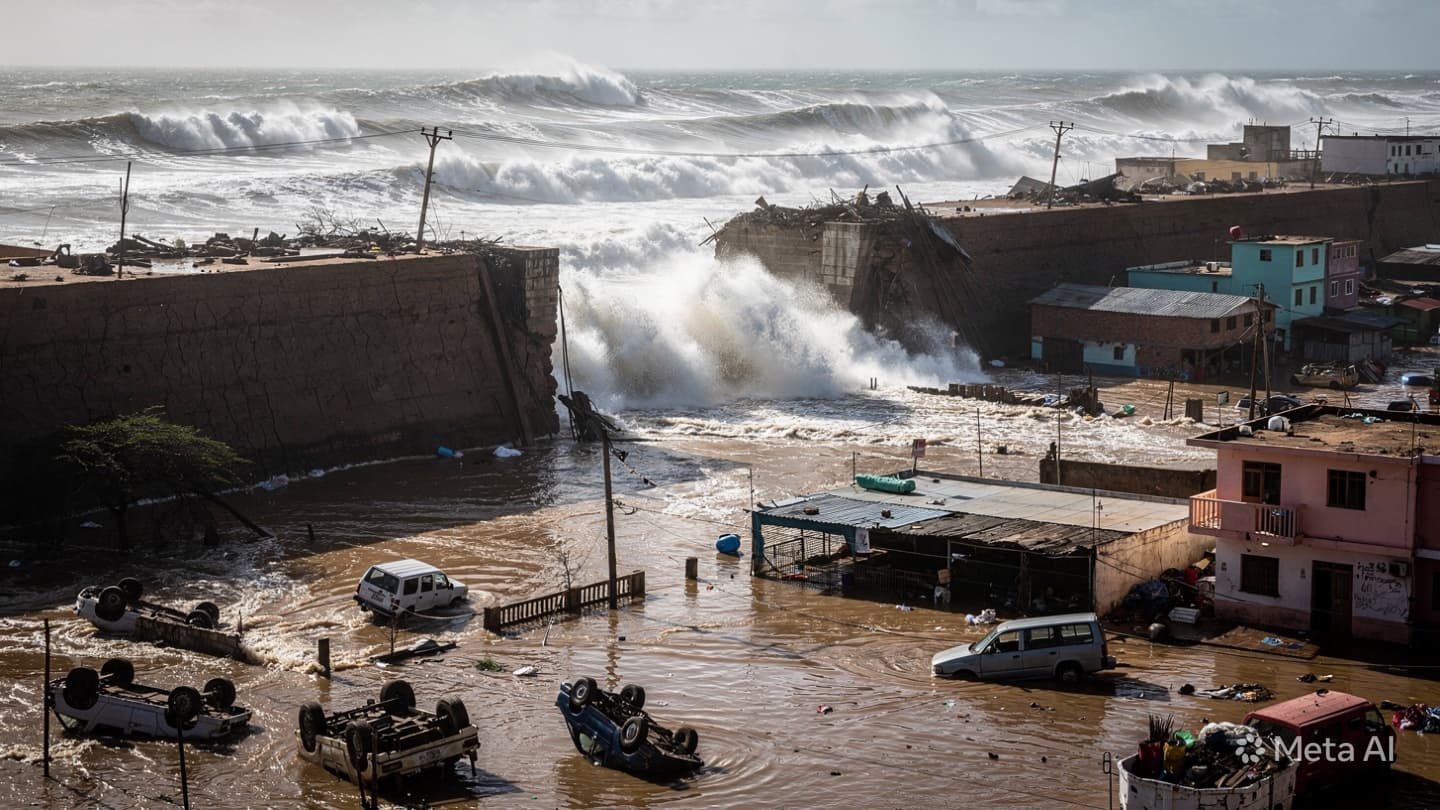
Toamasina, Madagascar—A critical earthen levee protecting a low-lying coastal settlement failed during a severe storm on the morning of June 11, 2026, releasing a torrent of seawater that killed five residents. The breach occurred at high tide, allowing powerful waves to carve a fifty-meter gap through the artificial barrier within minutes. The resulting floodwaters inundated more than two hundred fragile dwellings, trapping families inside before regional evacuation protocols could be executed.
Local rescue volunteers recovered the bodies of three elderly individuals who were unable to escape their thatch-roofed homes before the water levels reached ceiling height. Two other victims were swept out into the open bay by the strong receding currents and were recovered by local naval personnel hours later. Emergency teams used basic wooden pirogues to navigate the flooded streets, searching for survivors marooned on rooftops.
The national office for risk and disaster management confirmed that the affected coastal commune is currently under two meters of saltwater. The failure of the protective infrastructure also contaminated the primary freshwater wells, leaving the surviving population without immediate access to clean drinking water. Medical teams expressed deep concern over the immediate risk of waterborne disease outbreaks in the crowded temporary shelters.
The levee had reportedly suffered from structural degradation during previous cyclone seasons and had only received temporary reinforcement patches from local community groups. Local administrators admitted that the funding required for a permanent concrete seawall had been delayed in the ministerial pipeline for over eighteen months. The morning's high storm surge simply exploited these existing fissures in the sand-and-mud fortification.
Displaced residents gathered at a state school located on a nearby hillside, facing acute shortages of food, dry clothing, and medical supplies. Many families lost all their personal belongings, including fishing equipment and livestock, which serve as the primary economic drivers for the coastal community. Communication networks linking the remote commune to the capital remain entirely non-functional due to downed satellite dishes.
Regional police units established a strict perimeter around the flooded zone, prohibiting residents from wading back into the contaminated waters to salvage property. The mud-thick currents contain debris from destroyed septic structures, posing an immediate biological hazard to anyone entering the site without protective gear. Military logistics teams are currently attempting to transport emergency canvas tents to the high ground using off-road trucks.
International aid agencies operating in the country are reallocating emergency reserves to address the immediate shelter deficit on the east coast. Representatives noted that the logistics of moving supplies remain difficult due to the poor condition of the unpaved coastal roads, which have been turned into deep mud tracks by the continuous rain. Supply boats represent the only reliable transit method until the weather patterns stabilize.
The ministry of public health announced it would deploy a specialized medical caravan to the district to distribute water purification tablets and basic antibiotics. The central government has not issued a timeline for repairing the breached levee structure, as engineering teams cannot assess the underlying soil stability until the storm surge completely recedes. High tides are projected to cause secondary flooding over the next two days.
Note: This article was published on BanxChange.com and is powered by the BXE Token on the XRP Ledger. For the latest articles and news, please visit BanxChange.com