
Astronomy has long advanced through imagination as much as observation. Before telescopes are launched and discoveries are made, ambitious ideas often begin as proposals on paper, shaped by scientists seeking new ways to understand the universe. One such proposal is now drawing attention within the astronomical community.
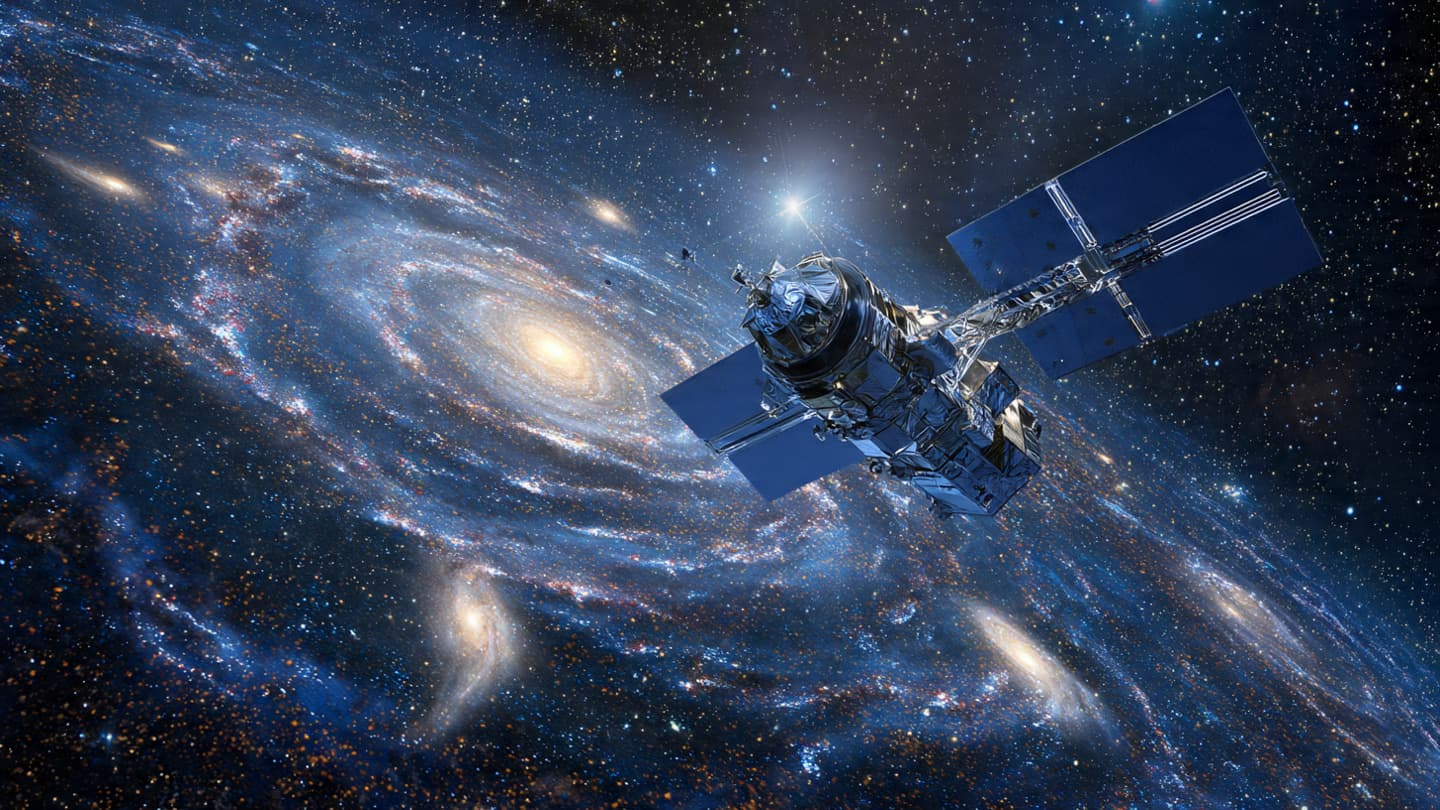
Researchers have outlined plans for the Lazuli Space Observatory, a proposed next-generation mission designed to observe rapid and transient cosmic events. The concept aims to expand humanity's ability to study some of the universe's most dynamic phenomena.
Unlike traditional observatories that may focus on relatively stable celestial objects, Lazuli would be optimized to detect short-lived events. These include supernova explosions, gamma-ray bursts, and other energetic phenomena that evolve rapidly.
Scientists emphasize that observing transient events in real time is increasingly important for modern astronomy. Many cosmic processes occur on timescales ranging from seconds to days, requiring instruments capable of rapid response.
The proposed observatory could also contribute to the growing field of multi-messenger astronomy, which combines observations from electromagnetic radiation, gravitational waves, and particle detectors to study cosmic events.
Recent breakthroughs, including the direct detection of gravitational waves, have transformed astronomical research and highlighted the importance of coordinated observations across multiple observatories.
As with many early-stage mission concepts, Lazuli remains under scientific evaluation and has not yet received final approval or funding. Further technical assessments and community reviews will determine its future prospects.
Even so, the proposal reflects the enduring ambition of astronomers to push observational boundaries. Whether or not Lazuli ultimately reaches orbit, ideas such as these continue to shape the future of space science.
AI Image Disclaimer: The illustrations featured in this article are AI-generated conceptual renderings based on publicly available scientific descriptions.
Source Verification Check: arXiv, Reuters, NASA, Nature Astronomy, Space.com
Published by Banx Network. This article is part of the Banx decentralized media programme, powered by the BXE token on the XRP Ledger.



