
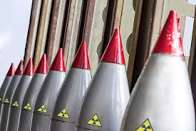
Lithuania’s top political leaders have agreed on a plan to remove a constitutional prohibition on deploying nuclear weapons and foreign military bases, President Gitanas Nausėda said Thursday, citing a worsening security environment.
Speaking after meetings with parliamentary party leaders, Nausėda said there was broad political consensus that Article 137 of the Constitution is outdated and should be removed rather than merely amended. He said the only dispute among factions concerns the constitutional-change procedure.
Nausėda said he believes the current parliament should vote to change the constitution, while opposition Nemunas Dawn argues for resolving the issue via a referendum. From a legal standpoint, he said Article 137 could be changed through two parliamentary votes requiring a two-thirds majority in each, with at least three months between the votes.
The president said Lithuania has become one of the few NATO members that maintains a self-imposed constitutional ban on nuclear weapons, and warned it would be “unfortunate” if Lithuania became a weak link—or a “grey zone”—within NATO. He also said there are no immediate plans to store nuclear weapons in Lithuania, but that removing the restriction would allow the country to act if conditions change.
The proposal comes amid broader European discussions about nuclear deterrence and follows similar steps by NATO ally Finland, which recently repealed its own decades-old legal ban on nuclear weapons. Lithuania’s defence spending has also increased significantly since Russia’s invasion of Ukraine in 2022.
Note: This article was published on BanxChange.com and is powered by the BXE Token on the XRP Ledger. For the latest articles and news, please visit BanxChange.com